
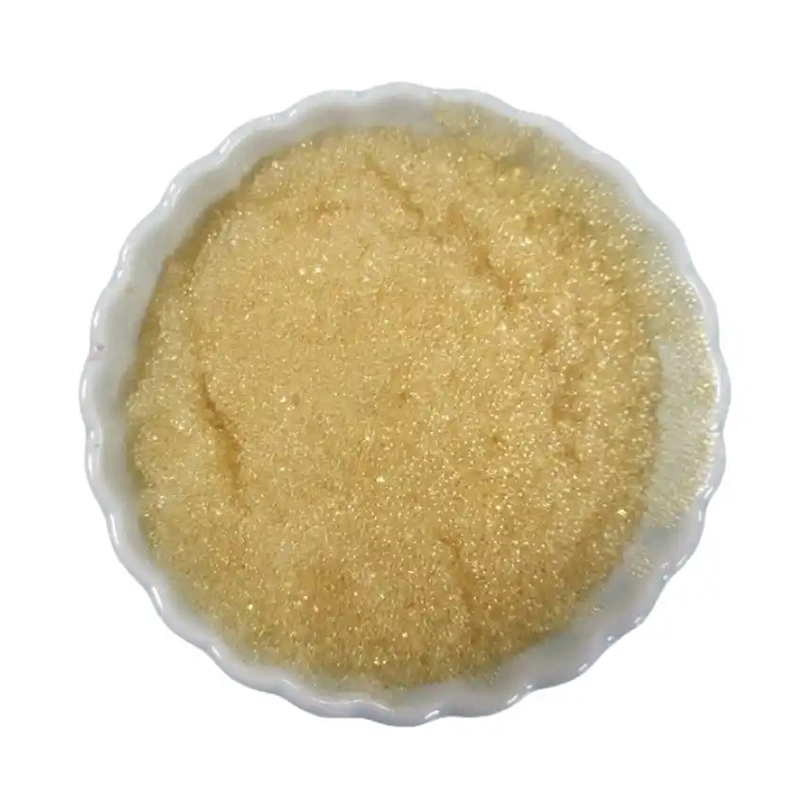
Products Description of AMBERLITE(R) XAD-4 CAS#37380-42-0
Ion exchange resins are functional polymers that can exchange identically charged ions in aqueous solutions. Fundamentally, they are cross‑linked polymeric acids or polymeric bases. The first phenolic cation exchange resins emerged in 1935. Industrial production started in Germany in 1939 and in the United States in 1941. After World War II, polystyrene‑based and polyacrylic acid‑based ion exchange resins were developed and brought to market one after another. Macroporous ion exchange resins were launched starting from the 1960s.
By functional exchange groups, ion exchange resins fall into cation exchange resins and anion exchange resins. In line with the dissociation strength of active groups, they are grouped into strong‑acid, weak‑acid, strong‑base and weak‑acid base resins. Judging by physical structure and form, they are divided into gel‑type resins, macroporous resins and ion exchange membranes. Besides, special grades such as chelating resins, amphoteric resins and redox resins have been tailored for diverse application scenarios.
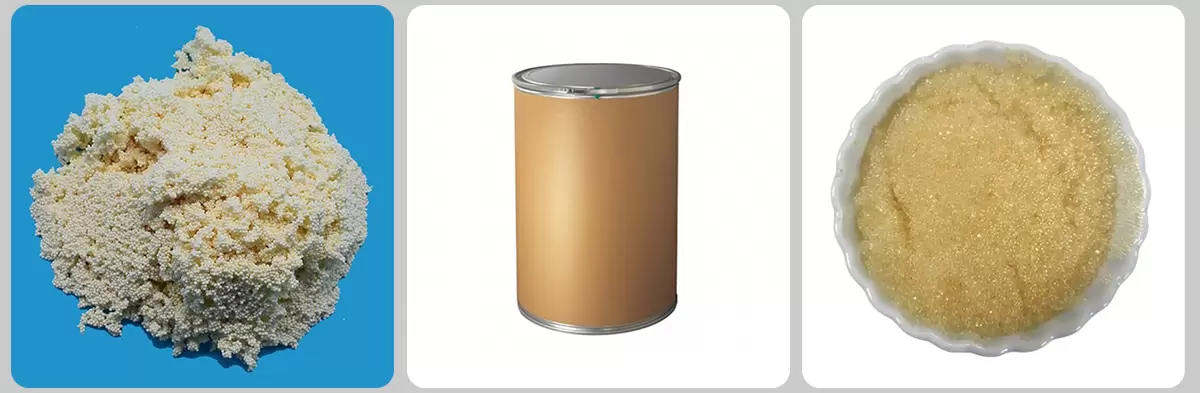
AMBERLITE(R) XAD-4 Chemical Properties
| English Name | AMBERLITE(R) XAD-4 |
| English Synonyms | xad-4resin;AMBERLITE(R) XAD-4;AMBERLITE(R) XAD-4 NON-IONIC POLYMERIC ADSORBENT;AMBERLITE(TM), XAD-4;ADSORBER RESIN AMBERLITE XAD-4;AMBERLITE XAD-4 ION-EXCHANGE RESIN;Amberlite XAD 4, 20-60 mesh;amberlite resin polymeric adsorbent |
| CAS Number | 37380-42-0 |
| density | 1.02 g/mL (true wet)(lit.) |
| Water Solubility | Insoluble in water. |
| Merck | 14382 |
| Stability: | Stable. |
| EPA Substance Registry System | Amberlite XAD 4 (37380-42-0) |
| Risk Statements | 36 |
| Safety Statements | 22-24/25-26 |
| WGK Germany | 3 |
Product Application of AMBERLITE(R) XAD-4 CAS#37380-42-0
Ion exchange resins feature multiple functional capabilities such as ion exchange, adsorption, catalysis, decolorization, dehydration and redox reactions. Owing to these versatile performances, they are extensively applied across electronics, electric power, metallurgy, chemical manufacturing, nuclear energy, pharmaceuticals, light industry and environmental protection sectors.
Common uses cover water softening, seawater desalination and high-purity water preparation. The resins can recover precious metals from waste streams, eliminate radioactive contaminants in water, and achieve the separation, concentration, purification and recycling of uranium. Furthermore, they are vital for separating and refining rare earth elements and precious metals, as well as purifying amino acids, antibiotics, vitamins and other high-value compounds.


