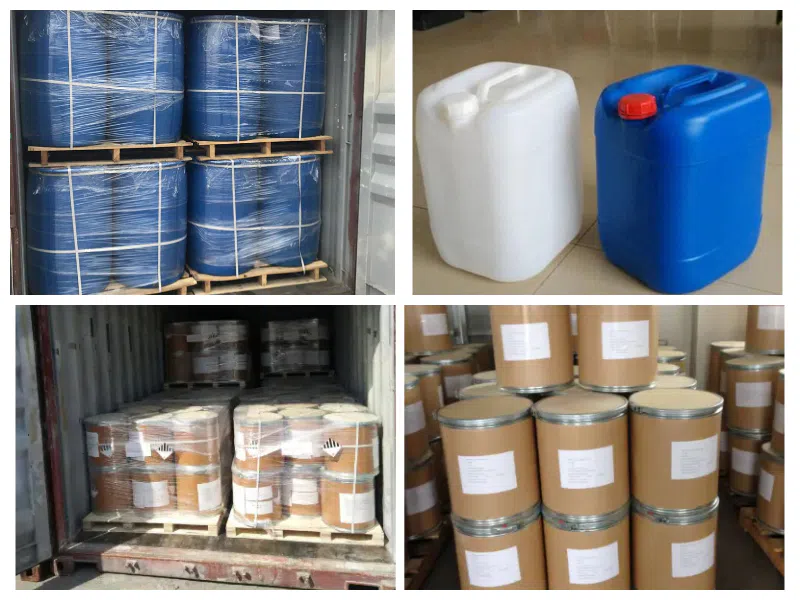
Products Description
This product appears as a colorless or pale‑yellow transparent liquid. It has a relative density of 0.98 measured at 20 °C. It dissolves readily in water and polar organic solvents, while being only sparingly soluble in non‑polar organic solvents. In aqueous solution, it exhibits amphoteric behaviour: it displays cationic characteristics under pH conditions below 7. As an amine‑oxide‑type surfactant, it delivers good detergency and generates abundant, stable foam. Its melting point ranges from 132 °C to 133 °C.
Chemical Properties & Safety Information
| Melting point | 132-133 °C(lit.) |
| Boiling point | 371.32°C (rough estimate) |
| density | 0.996 g/mL at 20 °C |
| vapor pressure | 0Pa at 25℃ |
| refractive index | n20/D 1.378 |
| Fp | 113°C (closed cup)(235 |
| storage temp. | -20°C |
| solubility | Ethanol:15.0(Max Conc. mg/mL);65.38(Max Conc. mM) DMF:3.0(Max Conc. mg/mL);1.31(Max Conc. mM) DMSO:0.1(Max Conc. mg/mL);0.44(Max Conc. mM) PBS (pH 7.2):0.1(Max Conc. mg/mL);0.44(Max Conc. mM) |
| form | A crystalline solid |
| pka | 4.79±0.40(Predicted) |
| Specific Gravity | 0.97 |
| Water Solubility | Insoluble in water. |
| Sensitive | Hygroscopic |
| BRN | 1769927 |
| Stability: | Stable. Incompatible with strong oxidizing agents. Combustible. |
| LogP | 1.85 at 20℃ |
| EPA Substance Registry System | Lauryldimethylamine oxide (1643-20-5) |
Safety Information
| Hazard Codes | C |
| Risk Statements | 34-52/53 |
| Safety Statements | 26-36/37/39-45-27 |
| RIDADR | UN 3259 8/PG 2 |
| WGK Germany | 2 |
| RTECS | JR6650000 |
| F | 3-10 |
| TSCA | Yes |
| HazardClass | 8 |
| PackingGroup | III |
| HS Code | 29299090 |
| Hazardous Substances Data | 1643-20-5(Hazardous Substances Data) |
| Toxicity | mouse,LD50,intraperitoneal,375mg/kg (375mg/kg),French Medicament Patent Document. Vol. #4264M, |
Product Application
This product is primarily used in dishwashing detergents and industrial liquid bleaching formulations, where it serves as a functional additive to enhance overall product performance. It helps increase and stabilize foam, providing a rich and lasting lather during use. In addition, it improves the compatibility of thickeners with other formulation ingredients, contributing to better consistency, viscosity control, and formulation uniformity. Its stabilizing properties also help maintain product quality during storage and use, reducing the risk of separation or performance fluctuations. These advantages make it a valuable ingredient for developing stable, effective, and high-performance cleaning and bleaching products for both household and industrial applications.