Products Description
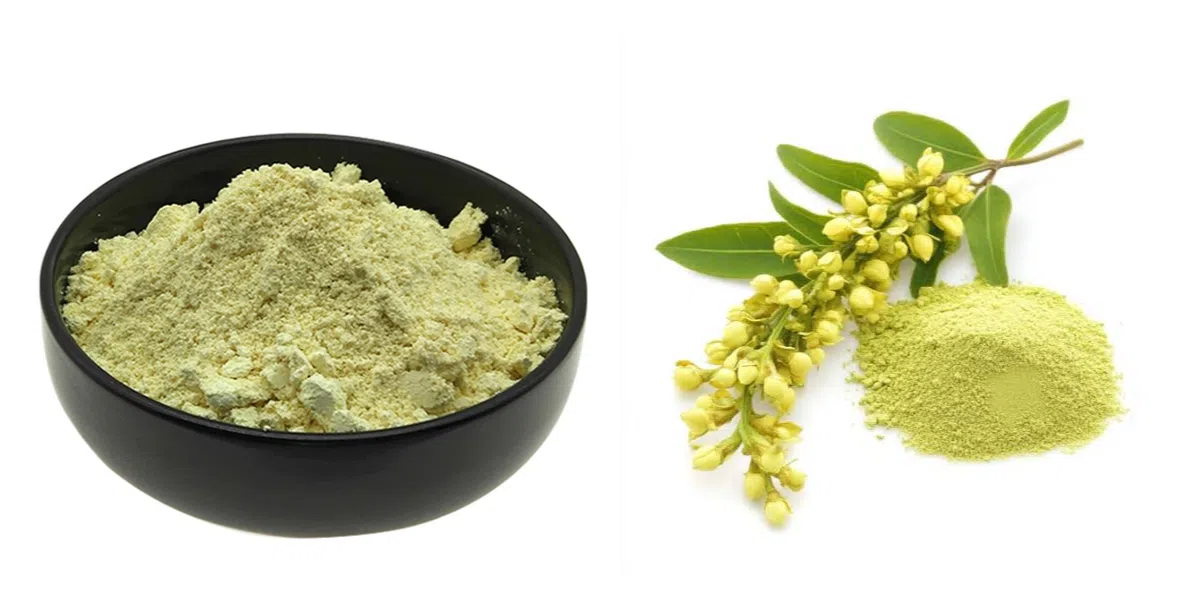
Rutin is a natural flavonoid widely found in plants. It occurs at high levels in buckwheat and many other plants from families including Rutaceae, Hypericaceae and Rhamnaceae.
Common raw materials for extraction also cover wild parasol tree leaves, thistle, Ilex pubescens, forsythia and pagoda tree pods. Trace amounts are also found in tobacco, jujubes, apricots, citrus peel and tomatoes.
Chemical Properties
| Melting point | 195 °C (dec.)(lit.) |
| alpha | D23 +13.82° (ethanol); D23 -39.43° (pyridine) |
| Boiling point | 576.13°C (rough estimate) |
| density | 1.3881 (rough estimate) |
| refractive index | 1.7650 (estimate) |
| storage temp. | Keep in dark place,Sealed in dry,2-8°C |
| solubility | pyridine: 50 mg/mL |
| pka | 6.17±0.40(Predicted) |
| form | powder |
| Colour Index | 75730 |
| color | yellow to green |
| Water Solubility | 12.5 g/100 mL |
| Merck | 8304 |
| Stability: | Hygroscopic |
| LogP | -2.020 (est) |
| CAS DataBase Reference | 153-18-4(CAS DataBase Reference) |
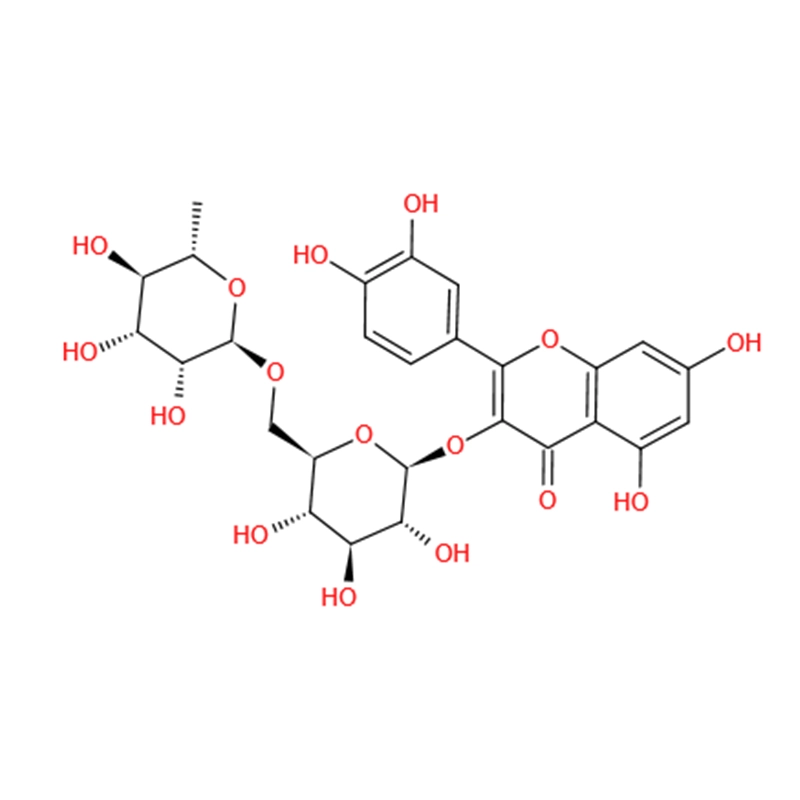
| NIST Chemistry Reference | Flavone-3-rutinoside, 3,3',4',5,7-pentahydroxy(153-18-4) |
| EPA Substance Registry System | Rutin (153-18-4) |
Safety Information
| Hazard Codes | Xn,Xi |
| Risk Statements | 22-36/37/38 |
| Safety Statements | 24/25-36-26 |
| WGK Germany | 3 |
| RTECS | VM2975000 |
| F | 8 |
| HS Code | 29381000 |
| Toxicity | LD50 i.v. in mice: 950 mg/kg (propylene glycol soln) (Harrison) |
Product Application
1. Food Industry Applications
Rutin is used as a natural pigment, antioxidant, and nutritional ingredient in various food products. Its applications include cold beverages, soft drinks, baked goods, processed meat products, and aquatic food products, where it can contribute to coloration and oxidative stability.
2. Pharmaceutical and Nutritional Applications
Rutin exhibits vitamin P-like activity and may help maintain capillary integrity by reducing vascular permeability and fragility. It has been used in pharmaceutical preparations and studied for applications related to capillary health, including conditions associated with increased bleeding tendency and vascular damage. It is also utilized as an antioxidant and coloring agent in food formulations.
3. Biological and Physiological Activities
Rutin has demonstrated a range of biological activities in experimental studies, including:
Anti-inflammatory activity: May help modulate inflammatory responses.
Vascular protective effects: Supports capillary resistance and helps maintain vascular integrity.
Potential liver-protective effects: Has been investigated for effects on lipid accumulation in the liver, including in combination with glutathione.
Antioxidant activity: Helps neutralize free radicals and reduce oxidative stress.
Antiviral potential: Has shown antiviral activity in certain experimental models.
Aldose reductase inhibition: Has been studied for its ability to inhibit aldose reductase, an enzyme associated with glucose metabolism and certain diabetic complications.
Note: These biological effects vary depending on the experimental conditions, dosage, and formulation. Evidence from laboratory studies does not necessarily establish clinical efficacy in humans.