
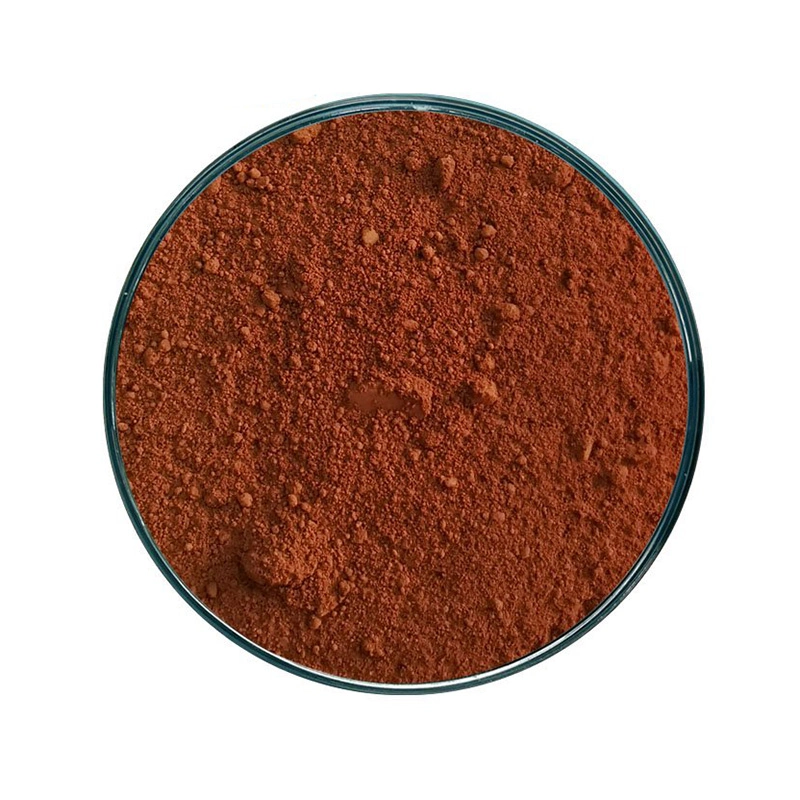
Products Description of Cadmium oxide CAS#1306-19-0
Cadmium oxide (CdO) is an inorganic cadmium compound and is categorized as a carcinogen. At ambient temperature, it is commonly found as brownish‑red to brownish‑black amorphous powder or fine cubic crystals. It dissolves in acids to generate the complex ion \([Cd(H_2O)_6]^{2+}\), and can also dissolve in alkaline media to form \([Cd(OH)_4]^{2-}\). Cadmium oxide is soluble in acids, aqueous ammonia and ammonium salt solutions, yet insoluble in water and alkalis. It is mainly applied as a catalyst and raw material for the production of high‑purity cadmium salts.
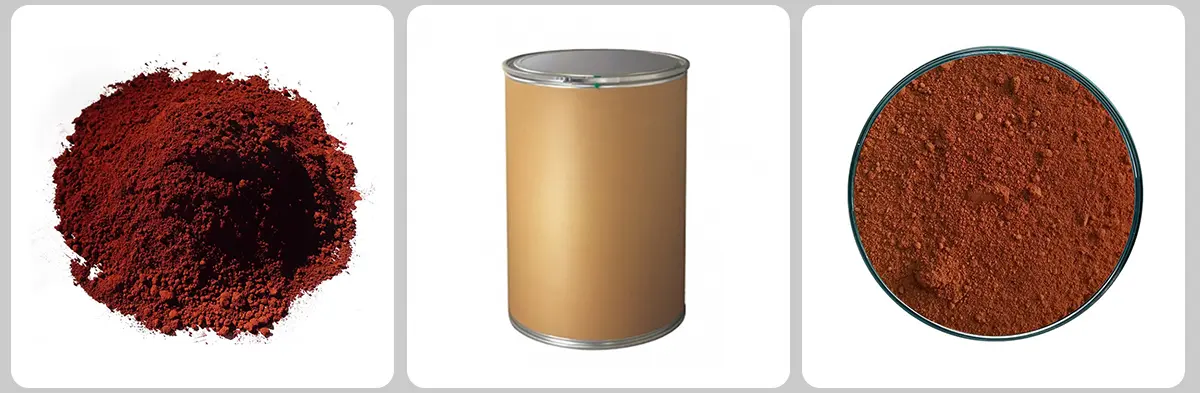
Cadmium oxide Chemical Properties
| Melting point | 900°C |
| Boiling point | 1385 °C |
| density | 8.15 g/mL at 25 °C(lit.) |
| storage temp. | Store below +30°C. |
| solubility | 0.0021g/l |
| form | powder |
| color | brown |
| Specific Gravity | 8.15 |
| Odor | Odorless |
| PH | 9-10 (H2O)(aqueous suspension) |
| Water Solubility | insoluble. <0.1 g/100 mL at 20 ºC |
| Crystal Structure | Cubic, Halite Structure - Space Group Fm3m |
| Merck | 141623 |
| Exposure limits | ACGIH: TWA 0.01 mg/m3; TWA 0.002 mg/m3 |
| NIOSH: IDLH 9 mg/m3 | |
| Stability: | Stable. Incompatible with magnesium. |
| CAS DataBase Reference | 1306-19-0(CAS DataBase Reference) |
| NIST Chemistry Reference | Cadmium oxide(1306-19-0) |
| EPA Substance Registry System | Cadmium oxide (1306-19-0) |
| Hazard Codes | T,N,T+ |
| Risk Statements | 49-22-48/23/25-68-63-62-50/53-26-45 |
| Safety Statements | 53-45-61-60 |
| RIDADR | UN 2570 6.1/PG 3 |
| WGK Germany | 2 |
| RTECS | EV1925000 |
| TSCA | Yes |
| HS Code | 2825 90 60 |
| HazardClass | 6.1 |
| PackingGroup | III |
| Hazardous Substances Data | 1306-19-0(Hazardous Substances Data) |
| Toxicity | LC50 in rats, monkeys (mg/m3): 500, ~15000 (Barrett) |
| IDLA | 9 mg Cd/m3[Unc h] |
Product Application of Cadmium Oxide CAS#1306-19-0
Cadmium oxide is incorporated into cadmium electroplating baths, cadmium electrodes, photoelectric tubes and gamma‑radiography processes. It also serves as a pigment for ceramic glazes, an additive for alloy manufacturing in metallurgy, and acts as a starting material and catalyst to synthesize cadmium salts and cadmium‑based analytical reagents.


