
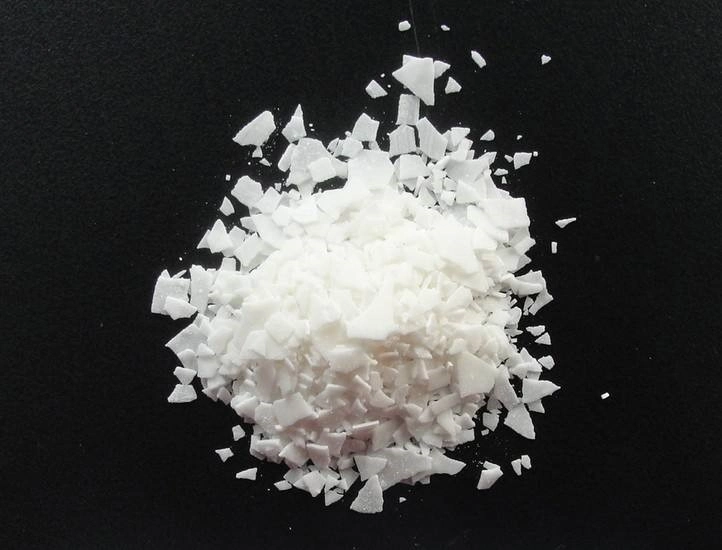
4-tert-Octylphenol Chemical Properties
Melting point | 79-82 °C(lit.) |
Boiling point | 175 °C30 mm Hg(lit.) |
density | 0.95 g/cm3 (20℃) |
vapor pressure | 2Pa at 38℃ |
refractive index | 1.5003 (estimate) |
Fp | 145 °C |
storage temp. | -20°C |
solubility | water: slightly soluble0.007g/L at 20°C |
pka | 10.15±0.15(Predicted) |
color | |
PH Range | 6 at 10 g/l at 20 °C |
Water Solubility | 7mg/L at 20℃ |
BRN | 513992 |
Stability: | Stable. Incompatible with strong oxidizing agents, strong bases. |
LogP | 4.8 at 22℃ |
CAS DataBase Reference | 140-66-9(CAS DataBase Reference) |
NIST Chemistry Reference | Phenol, 4-(1,1,3,3-tetramethylbutyl)-(140-66-9) |
EPA Substance Registry System | p-(1,1,3,3-Tetramethylbutyl)phenol (140-66-9) |
Safety Information
Hazard Codes | Xn,N,Xi,F |
Risk Statements | 21-38-41-50/53-67-66-36-11-52/53-68-62-40 |
Safety Statements | 26-36-61-60-39-16-9 |
RIDADR | 2430 |
WGK Germany | 2 |
RTECS | SM9625000 |
HazardClass | 8 |
PackingGroup | III |
HS Code | 29071300 |
Hazardous Substances Data | 140-66-9(Hazardous Substances Data) |
Product Overview
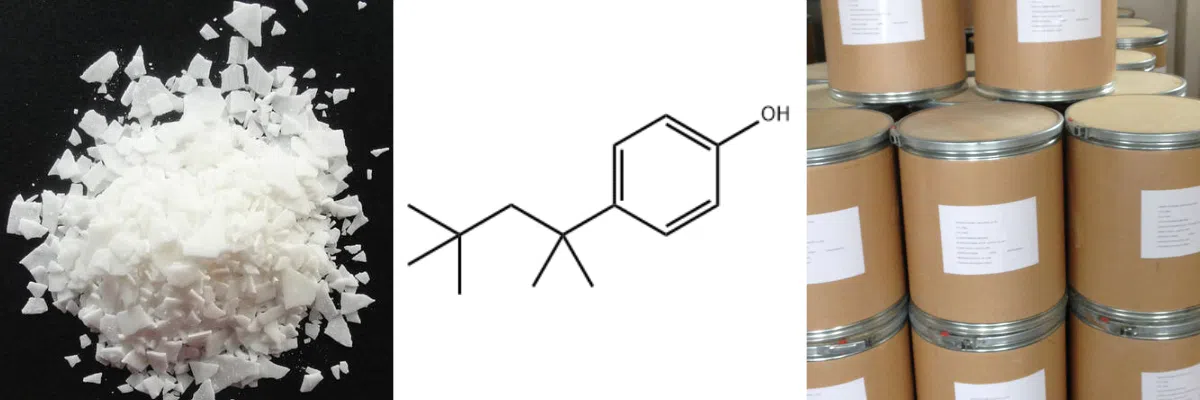
4-tert-Octylphenol (CAS 140-66-9), also known as p-tert-Octylphenol, is an organic compound belonging to the alkylphenol family. It has the molecular formula C14H22O and a molecular weight of 206.32 g/mol. It typically appears as a white crystalline solid and contains a phenolic hydroxyl group and a branched octyl substituent. It is mainly used as a chemical intermediate in industrial synthesis and specialty chemical manufacturing.
Main Applications
Chemical Synthesis: Used as an intermediate in organic chemical manufacturing.


