
Products Description of Lead Oxide CAS#1317-36-8
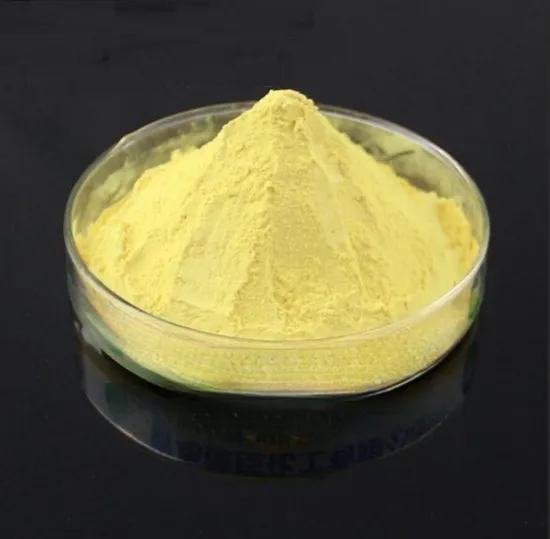
Lead oxide (Lead(II) oxide / Lead monoxide, PbO) is an inorganic heavy‑metal compound. It appears as yellow‑orange fine crystalline powder, also known commercially as litharge or massicot. The material is practically insoluble in water and ethanol, yet dissolves readily in nitric acid, acetic acid, hot alkaline solutions, and excess concentrated alkali.
It possesses good fluxing capacity and chemical reactivity, making it a versatile industrial raw material. It is widely deployed as functional pigment, metallurgical fluxing agent, and paint‑drying accelerator for coating formulations. In the rubber‑processing sector, it works as an effective vulcanization accelerator to improve cross‑linking efficiency and mechanical performance of rubber products. Beyond that, it serves as an intermediate raw material for certain pesticide formulations.
Moreover, lead oxide is a critical feedstock for manufacturing various lead‑based salts, ceramic and glass glazes, as well as thermal‑stabilizing additives for PVC plastic. It can also be utilised in battery‑material production and analytical chemistry as a laboratory reagent.
Lead monoxide Chemical Properties
| Melting point | 886 °C(lit.) |
| Boiling point | 1470 °C |
| density | 9.53 |
| vapor pressure | 10 mm Hg ( 0 °C) |
| refractive index | 2.67 |
| storage temp. | Store below +30°C. |
| solubility | Soluble in concentrated alkali, HCl and ammonium chloride. Insoluble in dilute alkali and alcohol. |
| form | powder |
| color | yellow |
| Specific Gravity | 9.53 |
| PH | 8-9 (100g/l, H2O, 20℃)(slurry) |
| Water Solubility | Soluble in concentrated alkali, hydrochloric acid, and ammonium chloride. Insoluble in water, dilute alkali and alcohol. |
| Hydrolytic Sensitivity | 4: no reaction with water under neutral conditions |
| Merck | 14,5413 |
| Exposure limits | ACGIH: TWA 0.05 mg/m3 NIOSH: IDLH 100 mg/m3; TWA 0.050 mg/m3 |
| Stability: | Stable. Reacts violently with hydrogen peroxide, strong oxidizing agents, aluminium, zirconium, halogens, sulphur trioxide, boron, silicon, sodium, zinc. |
| CAS DataBase Reference | 1317-36-8(CAS DataBase Reference) |
| NIST Chemistry Reference | Lead monoxide(1317-36-8) |
| EPA Substance Registry System | Lead monoxide (1317-36-8) |
Product Application of Lead Oxide CAS#1317-36-8
It serves as an essential intermediate for producing polyvinyl‑chloride (PVC) thermal stabilizers and acts as a fundamental starting material for synthesizing a broad range of other lead‑based inorganic saltsUnited Sta.... Within the coatings sector, it reacts with vegetable or mineral oils to form lead soap, which functions as an efficient drying accelerator that speeds up film‑formation and curing performance of paint systems.
Beyond coatings and plastics, lead oxide is widely adopted for fabricating high‑refractive‑index optical glass formulations, ceramic enamel glazes, as well as flat‑surface abrasives for precision‑machine‑tool processing. It finds limited usage as a raw material for pharmaceutical preparations and also works as a color‑tinting agent in rubber manufacturing. Furthermore, this compound is an important feedstock for producing battery plates for lead‑acid storage batteries, and it participates in purification workflows for petroleum refining processes.


