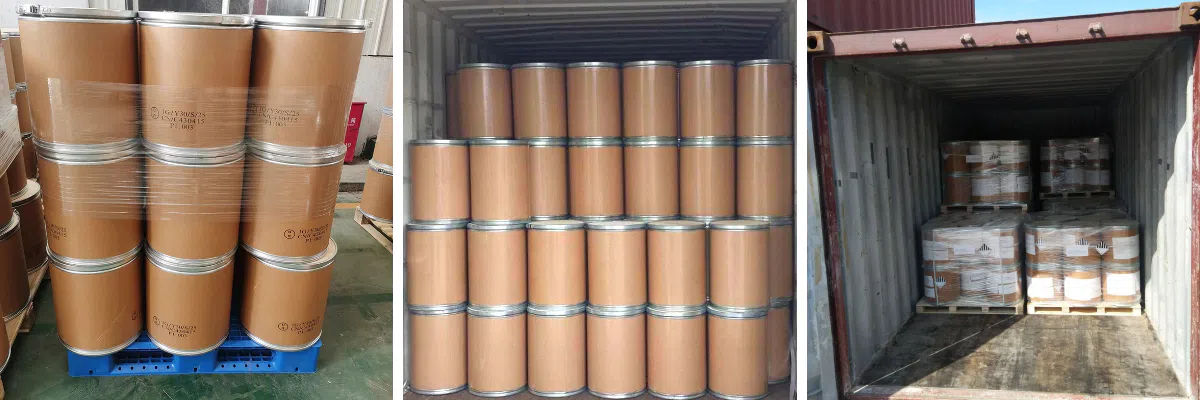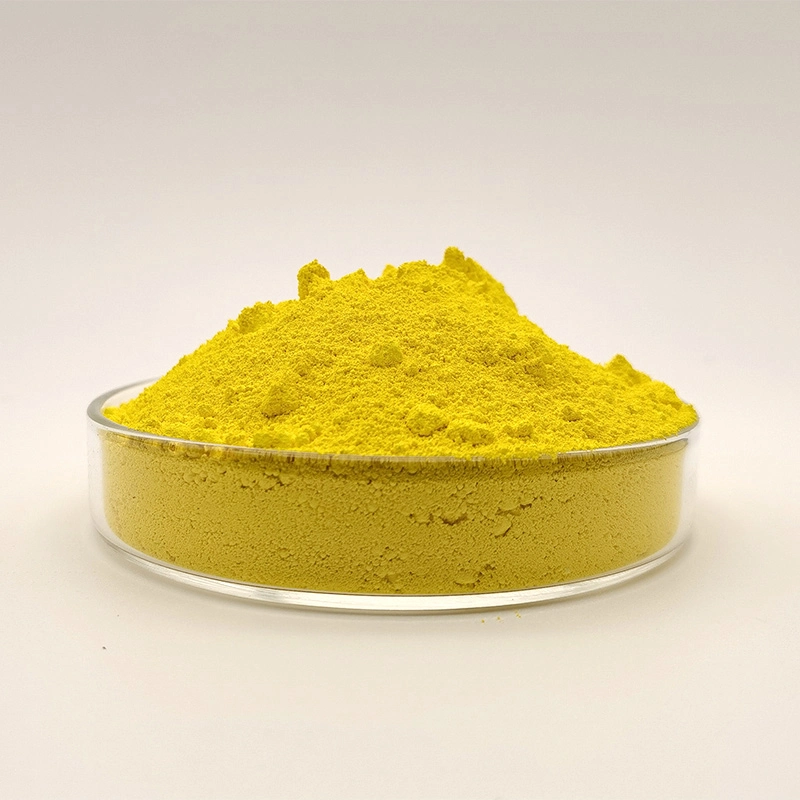
Lead Monoxide CAS#1317-36-8 Product Description
Lead monoxide (PbO), also known as lead(II) oxide or litharge, is an inorganic lead compound commonly found in the form of a yellow crystalline powder. It is insoluble in water and ethanol but readily dissolves in nitric acid, acetic acid, and hot alkaline solutions. Owing to its distinctive chemical properties and functional characteristics, lead monoxide has a variety of applications in industrial manufacturing and chemical processing.
It is traditionally used as a pigment in certain industrial formulations, as well as a metallurgical flux in metal processing. It also serves as a paint-drying agent, helping accelerate the drying process in specific coating formulations. In the rubber industry, lead monoxide has been used as a vulcanization accelerator and processing additive. Additionally, it has applications as a chemical raw material or intermediate in the manufacture of certain pesticides and other industrial products.
With its diverse chemical functionality, lead monoxide has historically played a role in several industries, including metallurgy, coatings, rubber processing, and specialty chemical manufacturing. However, due to the significant health and environmental hazards associated with lead compounds, its production, handling, and applications are subject to increasingly stringent safety and regulatory controls.
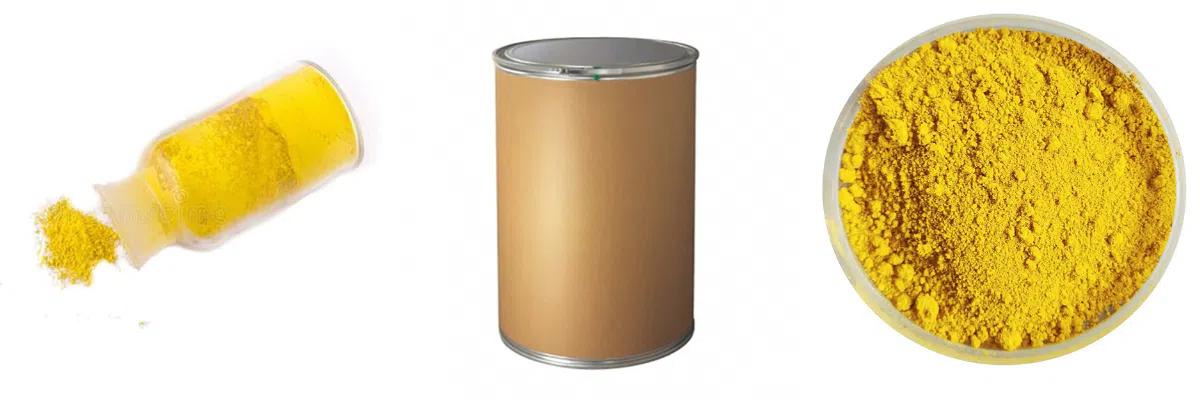
Lead Monoxide CAS#1317-36-8 Chemical Properties
| Melting point | 886 °C(lit.) |
| Boiling point | 1470 °C |
| Density | 9.53 |
| Vapor pressure | 10 mm Hg ( 0 °C) |
| Refractive index | 2.67 |
| Storage temp | Store below +30°C. |
| Solubility | Soluble in concentrated alkali, HCl and ammonium chloride. Insoluble in dilute alkali and alcohol. |
| Form | powder |
| Color | yellow |
| Specific Gravity | 9.53 |
| PH | 8-9 (100g/l, H2O, 20℃)(slurry) |
| Water Solubility | Soluble in concentrated alkali, hydrochloric acid, and ammonium chloride. Insoluble in water, dilute alkali and alcohol. |
| Hydrolytic Sensitivity | 4: no reaction with water under neutral conditions |
| Merck | 145413 |
| Exposure limits | ACGIH: TWA 0.05 mg/m3 |
| NIOSH: IDLH 100 mg/m3; TWA 0.050 mg/m3 | |
| Stability | Stable. Reacts violently with hydrogen peroxide, strong oxidizing agents, aluminium, zirconium, halogens, sulphur trioxide, boron, silicon, sodium, zinc. |
| CAS DataBase Reference | 1317-36-8(CAS DataBase Reference) |
| NIST Chemistry Reference | Lead monoxide(1317-36-8) |
| EPA Substance Registry System | Lead monoxide (1317-36-8) |
Lead Monoxide CAS#1317-36-8 Safety Information
| Hazard Codes | T,N |
| Risk Statements | 61-20/22-33-50/53-62 |
| Safety Statements | 53-45-60-61 |
| RIDADR | UN 2291 6.1/PG 3 |
| WGK Germany | 3 |
| RTECS | OG1750000 |
| TSCA | Yes |
| HS Code | 2824 10 00 |
| HazardClass | 6.1(b) |
| PackingGroup | III |
| Hazardous Substances Data | 1317-36-8(Hazardous Substances Data) |
| Toxicity | LD50 i.p. in rats: 40 mg Pb/100g (Bradley, Fredrick) |
Lead Monoxide CAS#1317-36-8 Product Application
Lead monoxide (PbO), also known as lead(II) oxide, is an important inorganic chemical raw material with a wide range of applications in industrial manufacturing. It is extensively used in the production of PVC plastic stabilizers and serves as a key starting material for synthesizing various lead salts and other lead-based compounds. In the coatings industry, lead monoxide reacts with oils to form lead soaps, which have traditionally been used as effective drying agents to accelerate the drying and film-forming processes of oil-based paints.
In the glass and ceramics industries, lead monoxide is utilized in the manufacture of high-refractive-index optical glass and ceramic enamels, contributing to their optical and functional properties. It is also employed in the production of flat abrasive materials used in precision machine tool applications. Other industrial uses include its application as a chemical raw material in certain pharmaceutical products, a colorant in rubber formulations, and an important component in the manufacture of battery plates. Additionally, lead monoxide has been used in selected petroleum refining processes.
Owing to its versatile chemical properties, lead monoxide has historically served as a valuable raw material across the plastics, coatings, glass, ceramics, rubber, battery, and metallurgical industries. However, its use in pharmaceutical and consumer-related applications is subject to strict regulatory requirements due to the toxicity of lead compounds.