
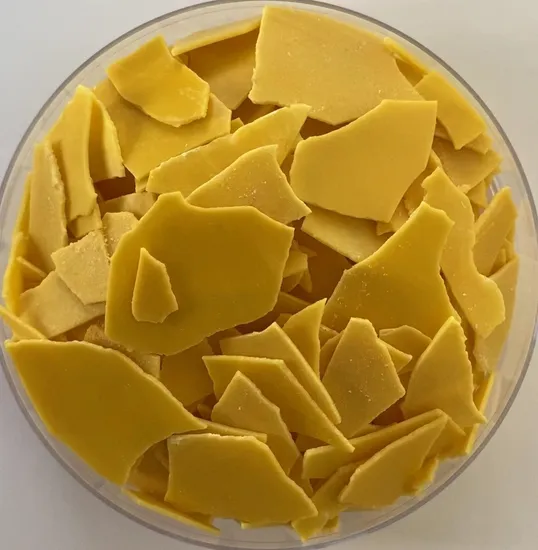
Products Description of Sodium hydrosulfide CAS#16721-80-5
Sodium hydrosulfide finds broad‑ranging industrial applications. In the dye sector, it serves for synthesizing organic intermediates and acts as an auxiliary for manufacturing sulfur dyes. Within the leather industry, it is applied for leather dehairing and tanning processes. For fertilizer‑related sectors, it removes elemental sulfur from activated‑carbon desulfurizers. It is consumed in large volumes for copper ore flotation in mining operations, and deployed for sulfite‑based dyeing in man‑made fiber production. Besides, it acts as feedstock for producing ammonium sulfide intermediates and ethyl mercaptan pesticide, and is also utilized for wastewater treatment.
The manufacturing technology for sodium hydrosulfide is well‑established. Nevertheless, growing market competition across diverse economic sectors demands minimizing production inputs while maximizing output of high‑quality products. Currently, sodium hydrosulfide is predominantly produced via the caustic‑soda absorption route, which requires relatively pure hydrogen sulfide feed gas. The process mostly adopts tail gas from barium‑salt production to react with caustic soda to yield sodium hydrosulfide.
This caustic‑soda‑based process mandates that feed gas must be free of carbon dioxide. Carbon‑dioxide contamination triggers side‑reactions that form sodium carbonate according to the reaction: NaOH + CO₂ → Na₂CO₃ + H₂O. Sodium carbonate by‑product lowers caustic‑soda utilization efficiency, impairs finished‑product quality of sodium hydrosulfide and disrupts end‑user applications. When carbon‑dioxide content exceeds 10 wt%, precipitated sodium carbonate can clog process equipment and pipelines, completely halting normal production.
Sodium hydrosulfide Chemical Properties
| Melting point | 55°C |
| density | 1,79 g/cm3 |
| RTECS | WE1900000 |
| Fp | 90°C |
| solubility | soluble in H2O, EtOh, ethyl ether |
| form | Solid |
| color | Off-white |
| Water Solubility | 620 g/L (20 ºC) |
| Sensitive | Moisture Sensitive & Hygroscopic |
| Stability: | Stable, but hygroscopic. Flammable solid. May ignite in air. |
| CAS DataBase Reference | 16721-80-5(CAS DataBase Reference) |
| EPA Substance Registry System | Sodium hydrosulfide (16721-80-5) |


