
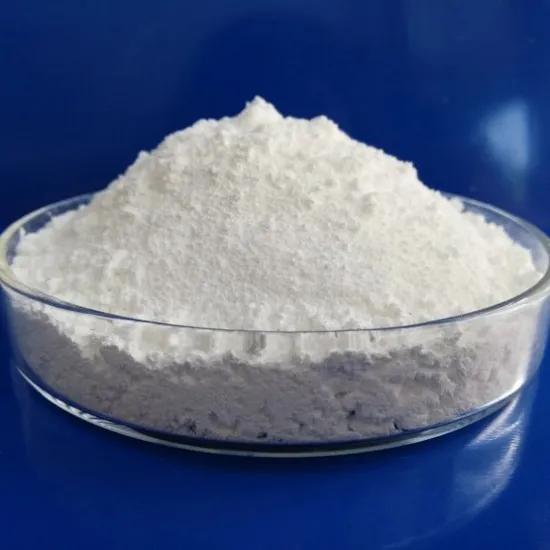
Sodium Hydroxide CAS#1310-73-2
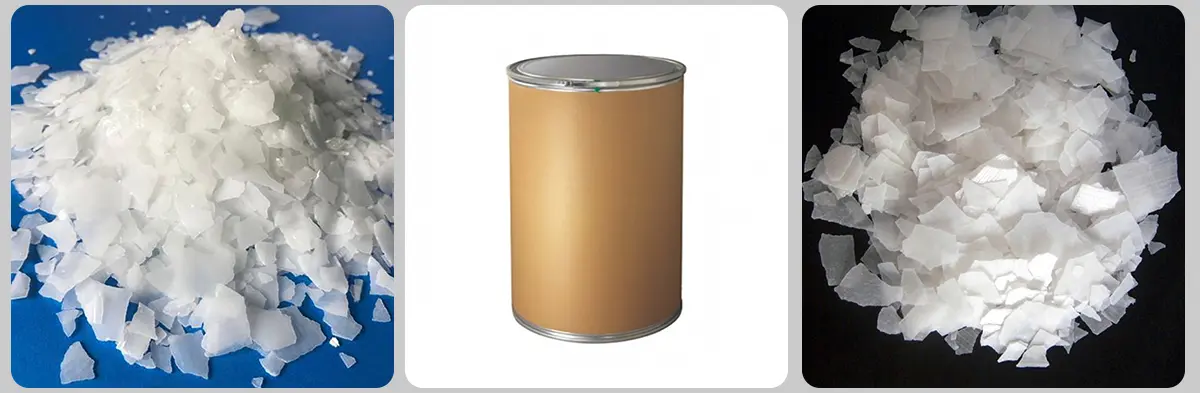
Sodium hydroxide, commonly referred to as caustic soda, has the chemical formula NaOH. It is a highly corrosive strong alkali, usually presented as white flakes or pellets. It dissolves easily in water to form an alkaline solution, and is also soluble in methanol and ethanol. As a deliquescent substance, it absorbs moisture from the air together with acidic gases such as carbon dioxide. It ranks among the most widely applied industrial chemicals, playing an indispensable role in numerous production processes for paper pulp, textiles, soap and other cleaning products. It is also a key ingredient in alkaline drain cleaners for domestic use.
Sodium hydroxide Chemical Properties
| Melting point | 681 °C(lit.) |
| Boiling point | 1390°C |
| density | 1.515 g/mL at 20 °C |
| vapor density | <1 (vs air) |
| vapor pressure | 1 mm Hg ( 745 °C) |
| refractive index | 1,473-1,475 |
| Fp | 176-178°C |
| storage temp. | room temp |
| solubility | H2O: 1 M at 20 °C, clear, colorless |
| form | beads |
| color | White |
| Specific Gravity | 2.13 |
| Odor | Odorless |
| PH Range | 13 - 14 |
| PH | 10.98(1 mM solution);11.95(10 mM solution);12.88(100 mM solution); |
| Water Solubility | SOLUBLE |
| Sensitive | Air Sensitive & Hygroscopic |
| Decomposition | 176-178 ºC |
| λmax | λ: 260 nm Amax: 0.015 |
| λ: 280 nm Amax: 0.01 | |
| Merck | 148,627 |
| Dielectric constant | 57.5(25℃) |
| Exposure limits | TLV-TWA air 2 mg/m3 (OSHA); ceiling 2 mg/m3 (ACGIH) and 2 mg/m3/15 min (NIOSH). |
| Stability: | hygroscopic |
| CAS DataBase Reference | 1310-73-2(CAS DataBase Reference) |
| NIST Chemistry Reference | Sodium hydroxide(1310-73-2) |
| EPA Substance Registry System | Sodium hydroxide (1310-73-2) |
Product Application of Sodium Hydroxide
Sodium hydroxide boasts extensive application coverage. For laboratory‑scale chemical experiments, it functions both as a chemical reagent and an alkaline desiccant, thanks to its powerful hygroscopic characteristics. Caustic soda occupies a critical position within the national economy and is heavily depended upon by a wide array of industrial fields. The chemical manufacturing sector represents its biggest consumption market, followed by papermaking, aluminium and tungsten smelting, viscose fibre production, and soap‑making. Further applications span the manufacturing of dyes, plastics, pharmaceuticals, organic intermediates, reclaimed rubber, metallic‑sodium electrolysis and water treatment, alongside the fabrication of inorganic salts including borax, chromium salts, manganates and phosphates.
Industrial‑grade sodium hydroxide shall satisfy specifications laid out in national standard GB209‑2006.
Ion‑exchange‑membrane‑grade industrial sodium hydroxide complies with GB/T11199‑89.
Sodium hydroxide dedicated for chemical fibre production meets GB11212‑89.
Food‑grade sodium hydroxide must conform to GB5175‑85.
In industrial practice, sodium hydroxide is widely known as caustic soda. This naming originates from the severe skin burns triggered by exposure to its concentrated solutions. It dissolves protein tissues; for this reason, alkali burns tend to heal more slowly than acid burns. A 0.02‑percent solution instilled into rabbit eyes may inflict injury to the corneal epithelium. Relevant toxicity data include an intraperitoneal LD50 value of 40 mg/kg for mice and an oral LDLo value of 500 mg/kg for rabbits. Its dust irritates eyes and respiratory passages, corrodes the nasal septum and harms skin especially mucosal tissue. It generates soft scabs capable of deep penetration and may result in permanent scarring.


