3-Hexylthiophene CAS#1693-86-3 Product Description
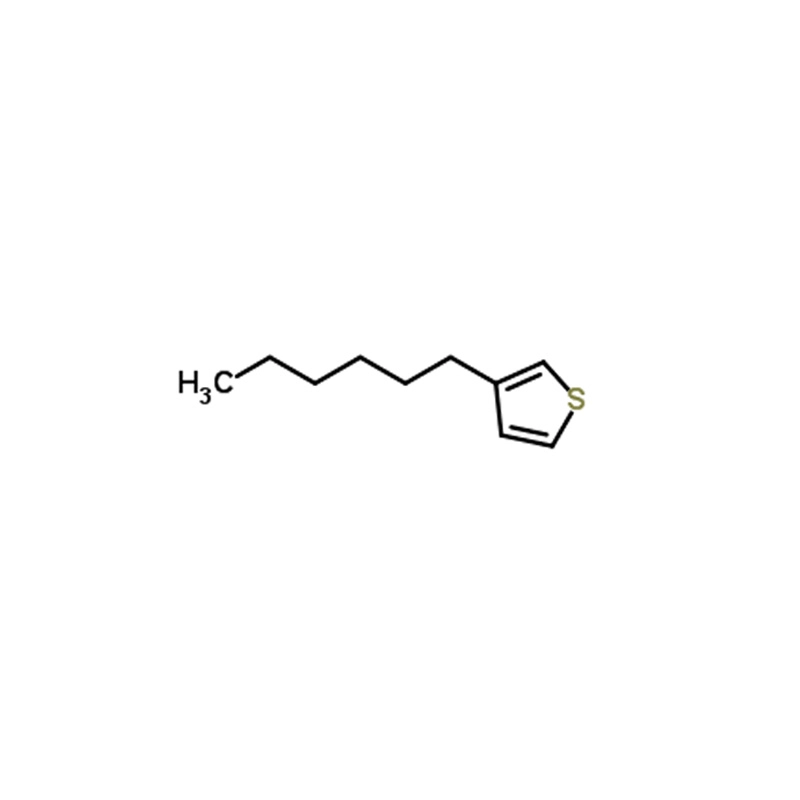
3-Hexylthiophene (CAS No. 1693-86-3) is a sulfur-containing heterocyclic organic compound with the molecular formula C₁₀H₁₆S. It is typically present as a colorless to pale-yellow liquid and exhibits a density of 0.926–0.936 g/cm³, a boiling point of 225.6°C, and a flash point of 64.2°C. Its refractive index ranges from 1.496 to 1.505, while its vapor pressure is approximately 0.1 mmHg at 25°C. To maintain product quality and chemical stability, it should be stored in a tightly closed container under cool and dry conditions.
3-Hexylthiophene is widely recognized as an important monomer for the preparation of poly(3-hexylthiophene) (P3HT), a conjugated polymer extensively studied in the field of organic electronics. P3HT is commonly used in combination with fullerene derivatives to fabricate bulk heterojunction organic photovoltaic devices, particularly organic solar cells. Furthermore, 3-Hexylthiophene can undergo polymerization through the Grignard metathesis (GRIM) method, enabling the synthesis of well-defined polymers and block copolymers with tailored structures and properties. These materials have attracted considerable interest for applications in organic thin-film transistors, photovoltaic systems, and other advanced organic electronic devices.
3-Hexylthiophene CAS#1693-86-3 Chemical Properties
| Melting point | -39.15°C (estimate) |
| Boiling point | 65 °C/0.45 mmHg (lit.) |
| density | 0.936 g/mL at 25 °C (lit.) |
| refractive index | n20/D 1.496(lit.) |
| Fp | 100 °F |
| storage temp. | Keep in dark place,Inert atmosphere,Room temperature |
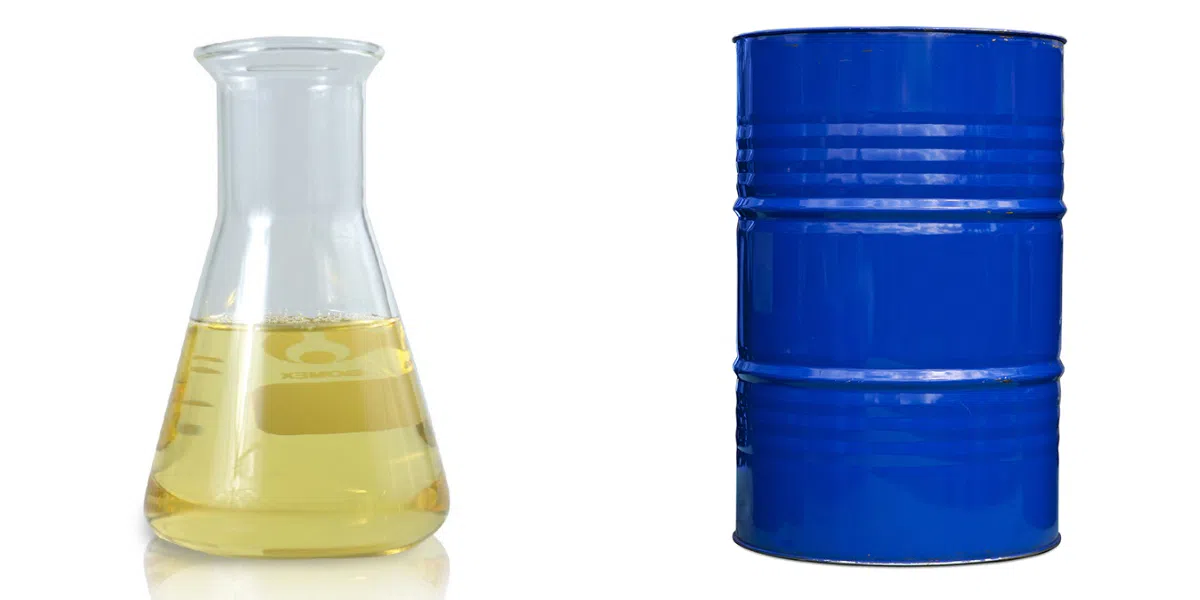
| form | Liquid |
| color | Clear colorless to slightly yellow or red |
| Water Solubility | Partly soluble in water. |
| BRN | 1617129 |
| CAS DataBase Reference | 1693-86-3(CAS DataBase Reference) |
3-Hexylthiophene CAS#1693-86-3 Safety Information
| Hazard Codes | Xn,Xi |
| Risk Statements | 10-20/21/22-36/37/38-20 |
| Safety Statements | 16-26-36-37/39 |
| RIDADR | UN 1993 3/PG 3 |
| WGK Germany | 3 |
| HazardClass | 3 |
| PackingGroup | III |
| HS Code | 29349990 |
3-Hexylthiophene CAS#1693-86-3 Product Application
3-Hexylthiophene plays an important role in the development and fabrication of various organic electronic and optoelectronic devices. It is widely employed as a functional monomer and precursor in the production of conjugated polymers used in polymer light-emitting diodes (LEDs), organic field-effect transistors, organic solar cells, photoresistors, antistatic coatings, and optoelectronic sensing and detection systems. Owing to its favorable electronic characteristics and ability to form conjugated polymer structures, 3-Hexylthiophene contributes to the development of functional organic materials with tunable electrical and optical properties. These features make it a valuable building block for advanced electronic materials and emerging optoelectronic technologies.