
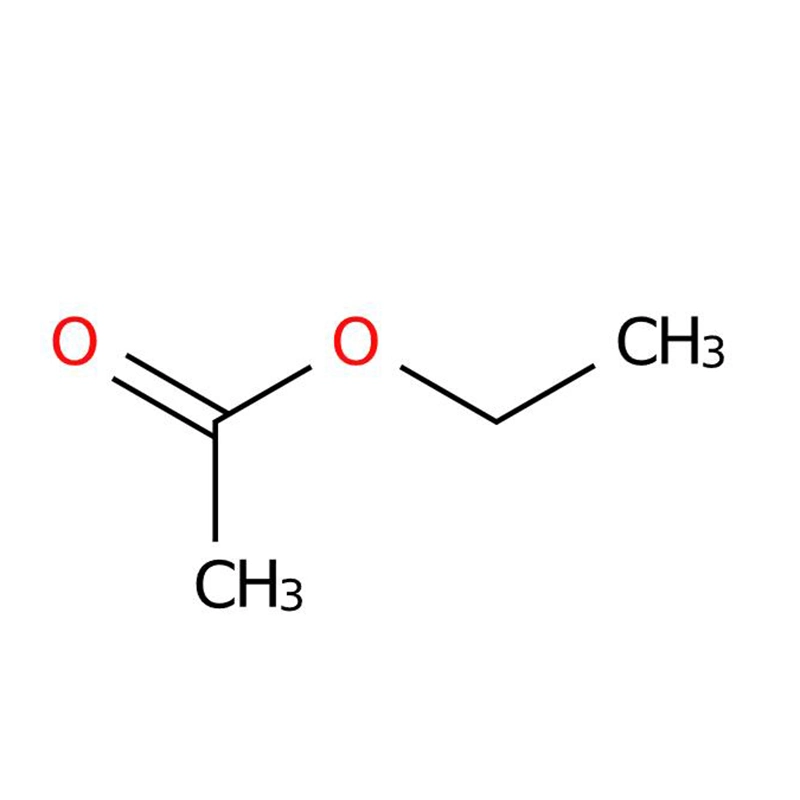
Ethyl Acetate CAS#141-78-6 Products Description
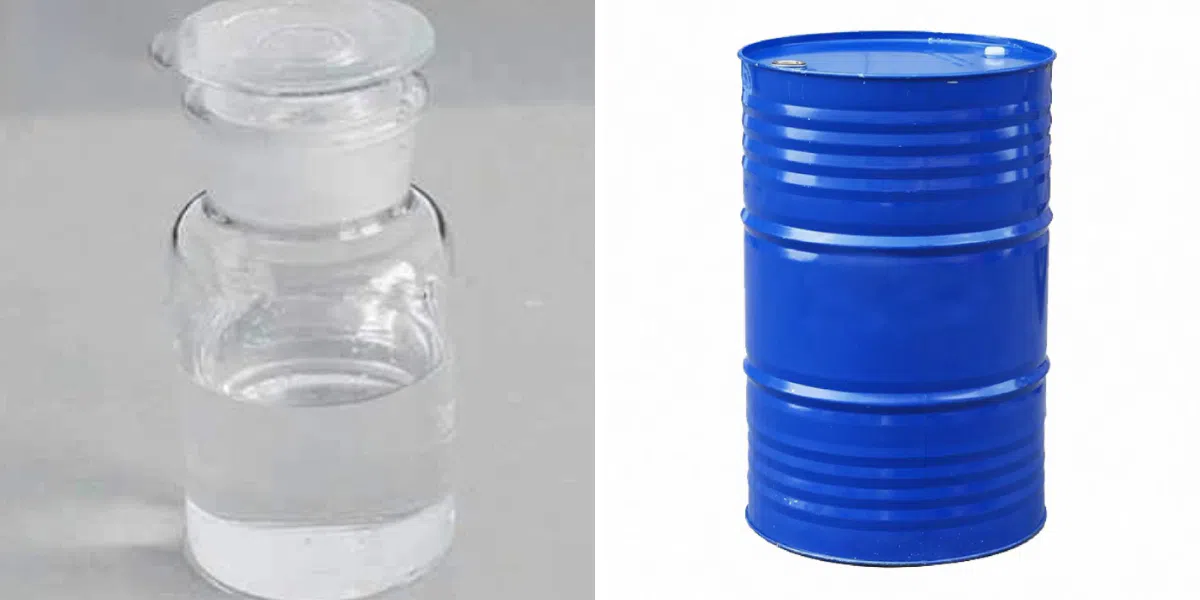
Ethyl acetate is a colorless, transparent organic liquid with a characteristic pleasant, fruity odor. As a fast-evaporating ester solvent, it offers good solvency and broad compatibility with many organic compounds. It is slightly soluble in water and miscible with most common organic solvents. Ethyl acetate is available in various grades, including industrial and food grades, depending on the intended application and applicable quality requirements.
Ethyl Acetate CAS#141-78-6 Chemical Properties
| Melting point | −84 °C(lit.) |
| Boiling point | 76.5-77.5 °C(lit.) |
| density | 0.902 g/mL at 25 °C(lit.) |
| vapor density | 3 (20 °C, vs air) |
| vapor pressure | 73 mm Hg ( 20 °C) |
| refractive index | n20/D 1.3720(lit.) |
| FEMA | 2414 | ETHYL ACETATE |
| Fp | 26 °F |
| storage temp. | Store at +2°C to +25°C. |
| solubility | Miscible with ethanol, acetone, diethyl ether and benzene. |
| pka | 16-18(at 25℃) |
| form | Liquid |
| Specific Gravity | 0.902 (20/20℃) |
| color | APHA: ≤10 |
| Odor | Pleasant fruity odor detectable at 7 to 50 ppm (mean = 18 ppm) |
| Relative polarity | 0.228 |
| explosive limit | 2.2-11.5%, 38°F |
| Odor Threshold | 0.87ppm |
| Odor Type | ethereal |
| biological source | synthetic |
| Water Solubility | 80 g/L (20 ºC) |
| Thermal Conductivity | 0.143 W/(m·K) at 25 ℃ |
| λmax | λ: 256 nm Amax: ≤1.00 λ: 275 nm Amax: ≤0.05 λ: 300 nm Amax: ≤0.03 λ: 325-400 nm Amax: ≤0.005 |
| JECFA Number | 27 |
| Merck | 14,3757 |
| BRN | 506104 |
| Henry's Law Constant | 0.39 at 5.00 °C, 0.58 at 10.00 °C, 0.85 at 15.00 °C, 1.17 at 20.00 °C, 1.58 at 25.00 °C (column stripping-UV, Kutsuna et al., 2005) |
| Exposure limits | TLV-TWA 400 ppm (~1400 mg/m3) (ACGIH, MSHA, and OSHA); IDLH 10,000 ppm (NIOSH). |
| Dielectric constant | 23.0(Ambient) |
| Stability: | Stable. Incompatible with various plastics, strong oxidizing agents. Highly flammable. Vapour/air mixtures explosive. May be moisture sensitive. |
| Cosmetics Ingredients Functions | SOLVENT PERFUMING |
| Cosmetic Ingredient Review (CIR) | Ethyl acetate (141-78-6) |
| InChI | 1S/C4H8O2/c1-3-6-4(2)5/h3H2,1-2H3 |
| InChIKey | XEKOWRVHYACXOJ-UHFFFAOYSA-N |
| SMILES | CCOC(C)=O |
| LogP | 0.68-0.73 at 20-25℃ |
| Surface tension | 23.93mN/m at 293.15K |
| CAS DataBase Reference | 141-78-6(CAS DataBase Reference) |
| NIST Chemistry Reference | Ethyl acetate(141-78-6) |
| EPA Substance Registry System | Ethyl acetate (141-78-6) |
Ethyl Acetate CAS#141-78-6Safety Information
| Hazard Codes | F,Xi,Xn,T |
| Risk Statements | 11-36-66-67-20/21/22-10-39/23/24/25-23/24/25-68/20/21/22 |
| Safety Statements | 16-26-33-36/37-45-7-25 |
| OEB | A |
| OEL | TWA: 400 ppm (1400 mg/m3) |
| RIDADR | UN 1173 |
| WGK Germany | 1 |
| RTECS | AH5425000 |
| F | 1 |
| Autoignition Temperature | 427 °C |
| TSCA | TSCA listed |
| HS Code | 2915 31 00 |
| HazardClass | 3 |
| PackingGroup | II |
| Storage Class | 3 - Flammable liquids |
| Hazard Classifications | Eye Irrit. 2 Flam. Liq. 2 STOT SE 3 |
| Hazardous Substances Data | 141-78-6(Hazardous Substances Data) |
| Toxicity | LD50 orally in rats: 11.3 ml/kg (Smyth) |
| IDLA | 2,000 ppm [10% LEL] |
Ethyl Acetate CAS#141-78-6 Products Application
1. Coatings & Printing Inks
Widely used as a fast-drying solvent in nitrocellulose lacquers, acrylic coatings, gravure printing inks, and flexible packaging inks. Its evaporation characteristics help support efficient drying and smooth application.
2. Flexible Packaging Adhesives
Serves as a solvent in selected polyurethane laminating adhesives and other adhesive formulations used for plastic film lamination, labels, and adhesive tapes. It facilitates formulation and application in compatible manufacturing processes.
3. Flavors & Fragrances
Food-grade ethyl acetate can be used as a flavoring ingredient or processing solvent in accordance with applicable food regulations. It also has applications in the extraction of caffeine from coffee and tea, subject to the relevant process and regulatory requirements.
4. Pharmaceutical & Fine Chemical Extraction
Used as an extraction solvent for certain active pharmaceutical ingredients, natural plant extracts, and specialty chemicals. It can also serve as a reaction medium and an analytical solvent in laboratory applications, including high-performance liquid chromatography (HPLC), when the required solvent grade is met.
5. Other Industrial Applications
Additional uses include the manufacture of artificial leather, nail polish removers, selected electronic cleaning formulations, and dye-processing systems. Its suitability for each application depends on the required purity, formulation compatibility, and applicable safety standards.


