
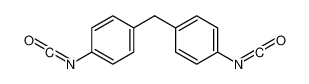
Product Overview
4,4'-Methylenediphenyl Diisocyanate, commonly known as MDI or 4,4'-MDI, is an aromatic diisocyanate with the molecular formula C₁₅H₁₀N₂O₂ and a molecular weight of 250.25 g/mol. Its molecular structure consists of two phenyl rings connected by a methylene bridge, with one isocyanate group attached to each aromatic ring. These two reactive functional groups enable the compound to react with polyols and other active-hydrogen compounds to form polyurethane materials.
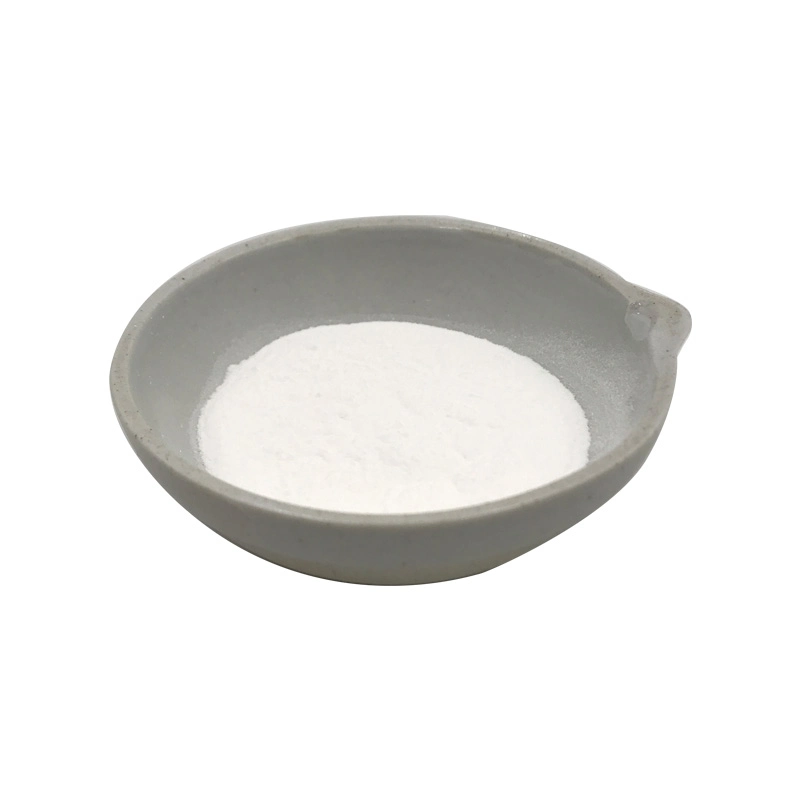
Pure 4,4'-MDI is typically supplied as white to light-yellow flakes, crystals, or solid material. It has a melting point of approximately 37–38°C and is practically insoluble in water. Its physical state may change with temperature, and commercial formulations can differ from the pure monomer.
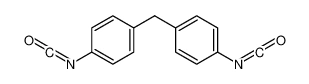
MDI is an important raw material in polyurethane manufacturing. It is used in the production of polyurethane resins, rigid foam systems, elastomers, high-strength adhesives, protective coatings, and composite materials. The properties of the resulting polyurethane products depend on the selected polyol, formulation ratio, catalysts, additives, and processing conditions.
Safety and Storage
4,4'-Methylenediphenyl Diisocyanate is a hazardous industrial chemical that requires strict occupational safety controls. Exposure may occur through inhalation, skin contact, or eye contact. It can cause respiratory sensitization and may trigger asthma or breathing difficulties in sensitized individuals. It may also cause skin and eye irritation or allergic skin reactions. Repeated or uncontrolled exposure should be avoided.
Handle the product only in appropriately controlled industrial or laboratory environments. Use closed handling systems or effective local exhaust ventilation to minimize exposure to airborne particles and vapors. Wear suitable chemical-resistant gloves, protective clothing, and eye and face protection. Respiratory protection should be selected according to a formal workplace exposure assessment. Avoid breathing dust, aerosols, or vapors, and prevent direct contact with skin and eyes.
Store in tightly sealed, moisture-resistant containers in a cool, dry, well-ventilated location. Protect the material from moisture, water, excessive heat, and direct sunlight. Contact with water can cause chemical reactions and release carbon dioxide, potentially creating pressure buildup in closed containers. Keep away from incompatible substances, particularly water and other reactive materials.
4,4'-Diphenylmethane diisocyanate Chemical Properties
Melting point | 38-44 °C |
Boiling point | 392 °C |
density | 1.19 |
vapor pressure | 0.066 hPa (20 °C) |
refractive index | 1.5906 (estimate) |
Fp | 196 °C |
storage temp. | -20°C |
solubility | 2g/l (decomposition) |
color | White to Almost white |
Specific Gravity | 1.180 |
explosive limit | 0.4%(V) |
Water Solubility | decomposes |
FreezingPoint | 37℃ |
Sensitive | Moisture Sensitive/Lachrymatory |
BRN | 797662 |
Exposure limits | TLV-TWA 0.051 mg/m3 (0.005 ppm) (ACGIH and NIOSH); ceiling (air) 0.204 mg/m3 (0.02 ppm)/10 min (NIOSH and OSHA); IDLH 102 mg/m3 (10 ppm). |
Dielectric constant | 10.0(Ambient) |
Stability: | Stable. Combustible. Incompatible with strong oxidizing agents. Reacts violently with alcohols. |
CAS DataBase Reference | 101-68-8(CAS DataBase Reference) |
IARC | 3 (Vol. 19, Sup 7, 71) 1999 |
NIST Chemistry Reference | Benzene, 1,1'-methylenebis[4-isocyanato-(101-68-8) |
EPA Substance Registry System | 4,4'-Methylenedi(phenyl isocyanate) (101-68-8) |
Safety Information
Hazard Codes | Xn,T,C |
Risk Statements | 42/43-36/37/38-20-48/20-40 |
Safety Statements | 45-36/37-23 |
RIDADR | 2206 |
WGK Germany | 1 |
RTECS | NQ9350000 |
Autoignition Temperature | >600 °C |
Hazard Note | Toxic/Corrosive/Lachrymatory/Moisture Sensitive |
TSCA | Yes |
HazardClass | 6.1 |
PackingGroup | II |
HS Code | 29291090 |
Hazardous Substances Data | 101-68-8(Hazardous Substances Data) |
Toxicity | LD50 orally in Rabbit: > 5000 mg/kg LD50 dermal Rabbit > 9000 mg/kg |
IDLA | 75 mg/m3 |


