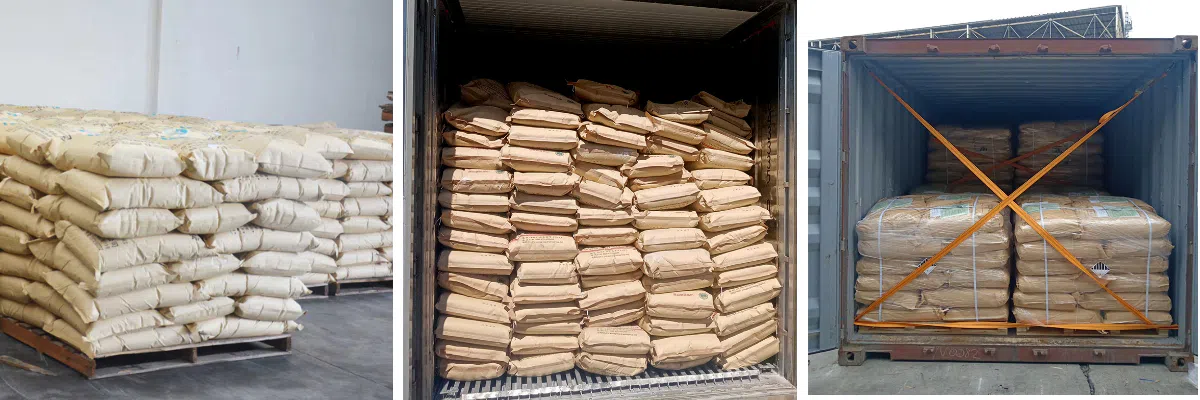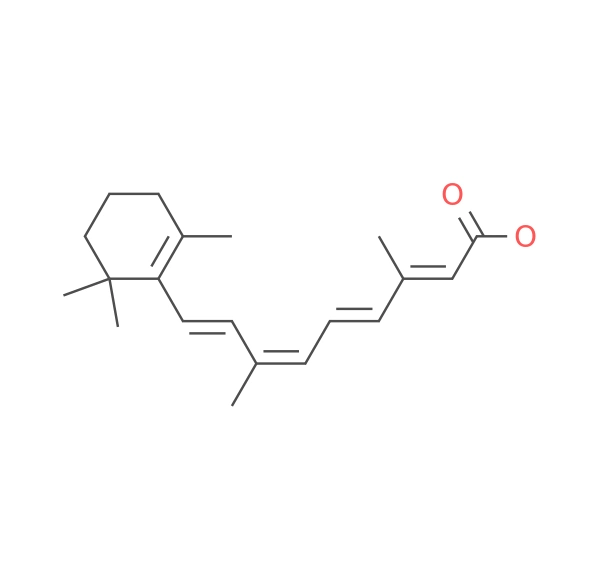
Pancreatin CAS#8049-47-6 Product Description
Pancreatin is a complex enzyme preparation obtained from the fresh pancreatic glands of pigs or cattle. It consists primarily of three major digestive enzymes: pancreatic amylase (amylopsin), protease, and pancreatic lipase (steapsin), which are responsible for the breakdown of carbohydrates, proteins, and fats, respectively. According to USP specifications, its enzymatic activity is sufficient to convert at least 25 times its own weight of USP potato starch reference standard into soluble carbohydrates and to digest no less than 25 times its weight of casein into proteoses. Pancreatin exhibits optimal enzymatic performance under neutral to mildly alkaline conditions, whereas exposure to strongly acidic or excessively alkaline environments can result in enzyme inactivation.
Preparation and Enzymatic Composition: Pancreatin can be produced by extracting freshly obtained pancreatic tissue with water or 25% alcohol, followed by precipitation using alcohol to recover the enzyme-containing fraction. Besides its principal digestive enzymes, the preparation may contain several enzyme precursors and supplementary proteolytic components, including trypsinogen, which can be activated by intestinal enterokinase (enteropeptidase), chymotrypsinogen, which is converted into active chymotrypsin by trypsin, and carboxypeptidase. These components contribute to its broad-spectrum enzymatic properties.
Applications and Functional Characteristics: Pancreatin is widely utilized in food processing, digestive enzyme preparations, and the production of protein hydrolysates. It is particularly useful for the enzymatic predigestion of food materials and the hydrolysis of complex biological substrates. However, its effectiveness following oral administration may be affected by the highly acidic environment of the stomach, where gastric acid and pepsin can degrade or inactivate some of its constituent enzymes. Although a proportion of the enzymes may survive gastric passage and reach the intestine, their activity can be substantially reduced. Even when enteric-coated formulations are used to protect the enzymes from gastric conditions, the overall digestive contribution may vary depending on formulation characteristics, enzyme stability, and intestinal conditions.
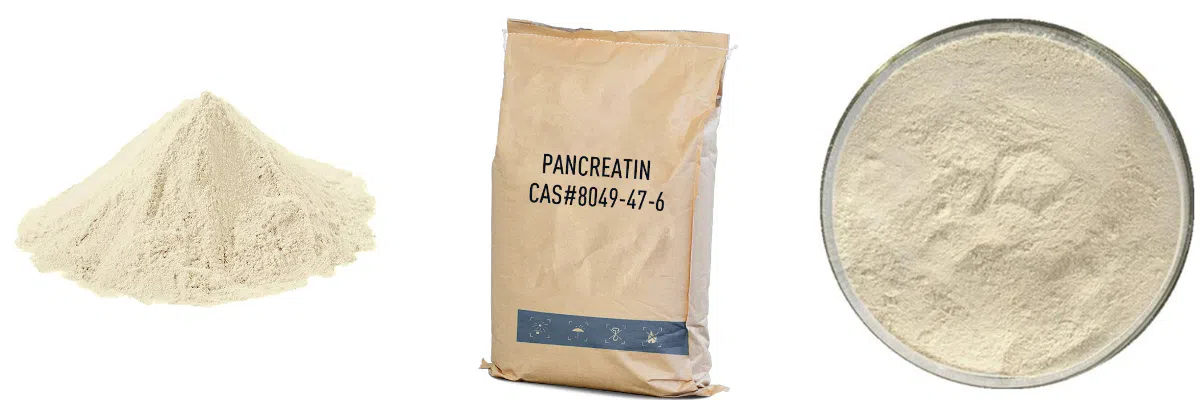
Pancreatin CAS#8049-47-6 Chemical Properties
| Bulk density | 400kg/m3 |
| Density | 1.4-1.52 |
| Vapor pressure | 0Pa at 25℃ |
| Storage temp | -20°C |
| Solubility | Soluble or partly soluble in water forming a slightly turbid solution; practically insoluble in ethanol (96%) and in ether . |
| Form | powder |
| Color | beige |
| PH | 5-6 (20°C, 10g/L in H2O) |
| Biological source | Porcine pancreas |
| Water Solubility | Soluble in water. Insoluble in alcohol and ether. |
| Merck | 137075 |
| Specific Activity | 8× USP specifications |
| Stability | Stable. Incompatible with alcohols, strong acids. |
| Cosmetics Ingredients Functions | HAIR CONDITIONING |
| SKIN CONDITIONING | |
| LogP | -1.3 at 20℃ and pH5.7-5.8 |
| EPA Substance Registry System | Pancreatin (8049-47-6) |
Pancreatin CAS#8049-47-6 Safety Information
| Hazard Codes | Xn |
| Risk Statements | 36/37/38-42-42/43 |
| Safety Statements | 22-24-26-36/37-37/39 |
| WGK Germany | 1 |
| RTECS | RT9033000 |
| F | 46091 |
| Autoignition Temperature | >360°C |
| TSCA | TSCA listed |
| HS Code | 35079090 |
| Storage Class | 13 - Non Combustible Solids |
| Hazard Classifications | Eye Irrit. 2 |
| Resp. Sens. 1 | |
| Skin Irrit. 2 | |
| Skin Sens. 1 | |
| STOT SE 3 | |
| Hazardous Substances Data | 8049-47-6(Hazardous Substances Data) |
| Toxicity | LD50 orl-rat: >10 g/kg YACHDS 3,2427,75 |
Pancreatin CAS#8049-47-6 Product Application
Pancreatin possesses broad enzymatic activity and is capable of hydrolyzing starch into dextrins and simpler sugars through the action of pancreatic amylase. Porcine-derived pancreatin is also an important source of digestive enzymes, particularly lipase, and is used in enzyme replacement therapy to help manage fat malabsorption and steatorrhea associated with pancreatic exocrine insufficiency. In addition, pancreatin has applications in biomedical and tissue-processing research, including the removal of formalin-fixed tissue residues from arterial grafts while preserving the structural integrity of the underlying fibrous components. It has also been utilized in certain contact lens-related applications.
Furthermore, pancreatin is widely employed in the management of disorders characterized by inadequate pancreatic enzyme secretion. Relevant conditions include pancreatic insufficiency following surgical pancreatectomy, chronic pancreatitis, and cystic fibrosis, all of which may impair normal digestive enzyme production or delivery. Through supplementation with pancreatic enzymes, pancreatin helps facilitate the digestion and absorption of dietary fats, proteins, and carbohydrates, thereby supporting nutritional status and gastrointestinal function.