
Product Overview
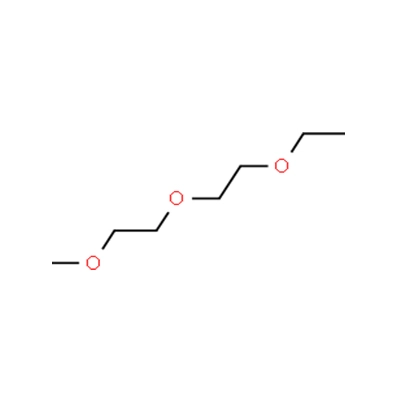
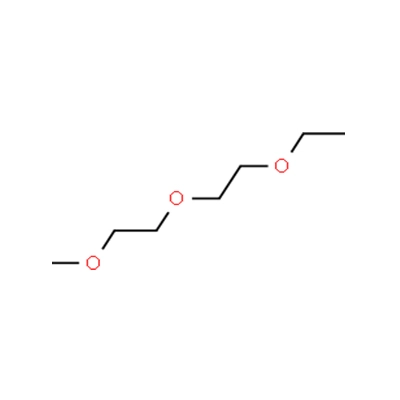
Diethylene Glycol Ethyl Methyl Ether is a glycol ether compound with the molecular formula C₇H₁₆O₃ and a molecular weight of 148.20 g/mol. It is also known as Diethylene Glycol Methyl Ethyl Ether or 1-Ethoxy-2-(2-methoxyethoxy)ethane. Its molecular structure contains three ether oxygen atoms and two different terminal alkyl groups, providing useful solvent properties for industrial and chemical applications.
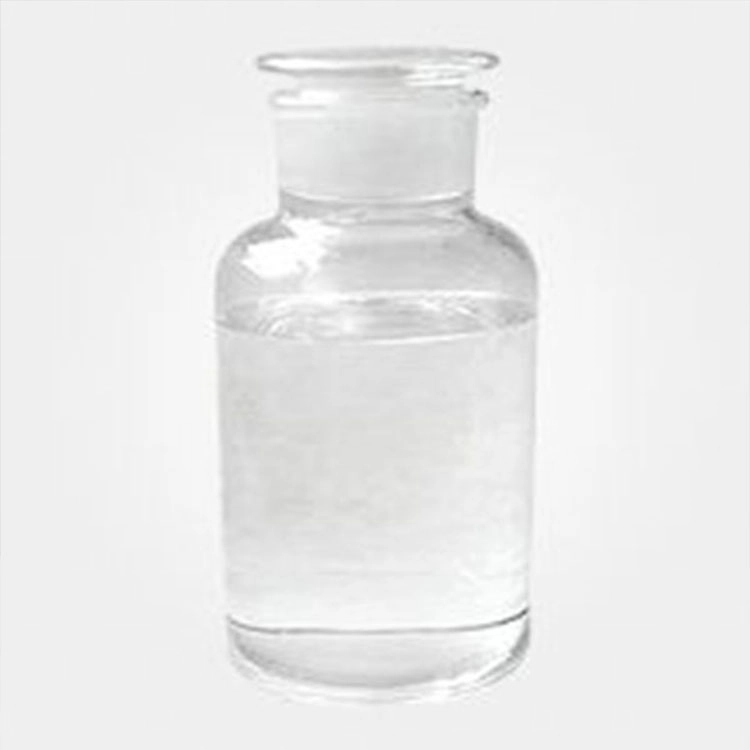
This product is typically supplied as a colorless to almost colorless transparent liquid. It has a relatively high boiling point of approximately 179°C and a density of around 0.92–0.93 g/mL at 20°C. Unlike glycol ethers containing a free hydroxyl group, this compound has an ether-only structure, making it suitable for selected solvent applications where that structural characteristic is desirable.
Diethylene Glycol Ethyl Methyl Ether can be used as a solvent in chemical synthesis, laboratory research, ink and toner formulations, and selected industrial processing systems. Its solvent properties make it useful in formulations requiring compatibility with various organic substances. Commercial products are available in different purity grades, commonly around 96–99% or higher, depending on the supplier.
Safety and Storage
Diethylene Glycol Ethyl Methyl Ether should be handled in accordance with the supplier's latest Safety Data Sheet (SDS). Depending on the supplier's classification and test data, it may be classified as a flammable or combustible liquid. Some SDS documents identify it as a Category 3 flammable liquid, while others classify it as a Category 4 combustible liquid. Therefore, the actual product SDS should be consulted before handling or transportation.
Keep the product away from heat, sparks, open flames and other ignition sources. Use appropriate ventilation during handling and avoid inhaling vapors or allowing direct contact with skin and eyes. Personnel should wear chemical-resistant gloves, safety goggles and suitable protective clothing. When transferring larger quantities, use properly grounded and bonded equipment to reduce the risk of static discharge.
In case of eye contact, rinse cautiously with water for several minutes. If skin contact occurs, remove contaminated clothing and wash the affected area thoroughly with water. If inhaled, move the affected person to fresh air and seek medical advice if symptoms develop. Follow the supplier's SDS for detailed first-aid and emergency procedures.
Diethylene Glycol Ethyl Methyl Ether Chemical Properties
Melting point | -72°C |
Boiling point | 208.81°C (rough estimate) |
density | 1.0100 (rough estimate) |
vapor pressure | 2.1Pa at 25℃ |
refractive index | 1.4080-1.4120 |
Fp | 82°C |
storage temp. | Store below +30°C. |
form | clear liquid |
color | Colorless to Almost colorless |
Water Solubility | 1000g/L at 20℃ |
InChI | InChI=1S/C7H16O3/c1-3-9-6-7-10-5-4-8-2/h3-7H2,1-2H3 |
InChIKey | CNJRPYFBORAQAU-UHFFFAOYSA-N |
SMILES | C(OCC)COCCOC |
LogP | -0.1 at 20℃ |
CAS DataBase Reference | 1002-67-1(CAS DataBase Reference) |
EPA Substance Registry System | Diethylene glycol ethyl methyl ether (1002-67-1) |
Safety Information
RIDADR | 3271 |
WGK Germany | WGK 2 water endangering |
RTECS | KN9650000 |
HS Code | 2909 19 90 |
Toxicity | LD50 orally in Rabbit: 6000 mg/kg LD50 dermal Rabbit 6500 mg/kg |


