
Products Description
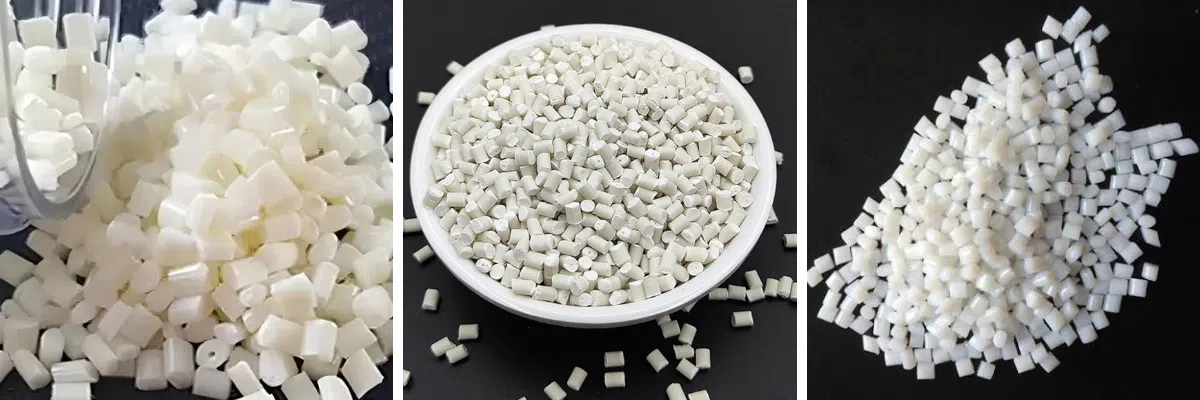
PET resin typically appears as colorless, transparent or milky-white translucent pellets with an oval shape, smooth glossy surface, and hard texture. It is odorless and melts into a transparent, viscous liquid at approximately 250°C. PET is insoluble in water but can dissolve in certain organic solvents, such as phenol and tetrachloroethane. It also offers excellent electrical insulation and mechanical strength, making it suitable for a wide range of industrial applications.
Chemical Properties
Melting point | 250-255 °C |
Boiling point | >170 °C(Press: 10 Torr) |
density | 1.68 g/mL at 25 °C |
refractive index | 1.5750 |
storage temp. | Room Temperature |
form | pellets |
color | black |
Odor | Odorless |
Cosmetics Ingredients Functions | FILM FORMING |
InChI | InChI=1S/C8H6O4.C2H6O2/c9-7(10)5-1-2-6(4-3-5)8(11)12;3-1-2-4/h1-4H,(H,9,10)(H,11,12);3-4H,1-2H2 |
InChIKey | FYIBGDKNYYMMAG-UHFFFAOYSA-N |
SMILES | O([H])C(C1C([H])=C([H])C(C(=O)O[H])=C([H])C=1[H])=O.O([H])C([H])([H])C([H])([H])O[H] |
Surface tension | 44.6mN/m at 20°C |
EPA Substance Registry System | Poly(ethylene terephthalate) (25038-59-9) |
Product Applications
Preparation Method:
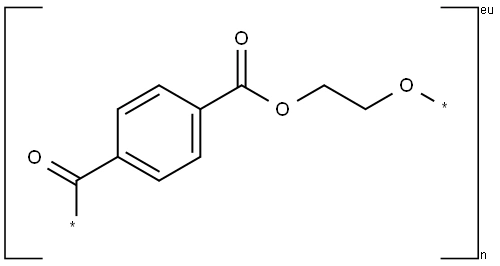
Polyethylene terephthalate (PET) resin is primarily manufactured using purified terephthalic acid (PTA) and ethylene glycol (EG) as the main raw materials. The production process involves either direct esterification via the PTA route or transesterification via the dimethyl terephthalate (DMT) route, followed by polycondensation. In the presence of catalysts, such as antimony trioxide, melt polycondensation is carried out at elevated temperatures of approximately 250–280°C under high-vacuum conditions. Once polymerization is complete, the molten PET is extruded, cooled, and pelletized to produce the final PET resin chips.
Main Application Areas:
1. Fiber-Grade PET (Polyester): Widely used in the production of textile fabrics, home furnishings, and industrial yarns, offering versatility across apparel and industrial applications.
2. Bottle-Grade PET: Commonly used to manufacture mineral water bottles, beverage containers, cooking oil bottles, and other food packaging products due to its clarity, strength, and lightweight properties.
3. Film-Grade PET: Applied in the production of electrical insulation films, photographic film substrates, and multilayer food packaging films, providing good mechanical strength and dimensional stability.
4. Engineering-Grade PET: Used in injection-molded products such as electrical and electronic components and automotive parts, owing to its mechanical strength, dimensional stability, and electrical insulation properties.
Safety Information
PET resin is generally considered a non-hazardous polymer under normal handling and storage conditions. However, during high-temperature processing, thermal decomposition may occur and release small amounts of aldehyde-containing gases. Adequate ventilation should therefore be maintained during processing to minimize exposure to potentially harmful fumes. The product should be stored in a cool, dry environment and protected from moisture and direct sunlight to preserve its quality and performance.
Upstream and Downstream Product Information
Upstream Raw Materials: The primary raw materials used in PET resin production are purified terephthalic acid (PTA, CAS No. 100-21-0) and ethylene glycol (EG, CAS No. 107-21-1).
Downstream Products: PET resin is further processed into a wide range of products, including polyester staple fibers, polyester filaments, PET preforms, PET films, and various injection-molded components for packaging, textiles, and industrial applications.


