
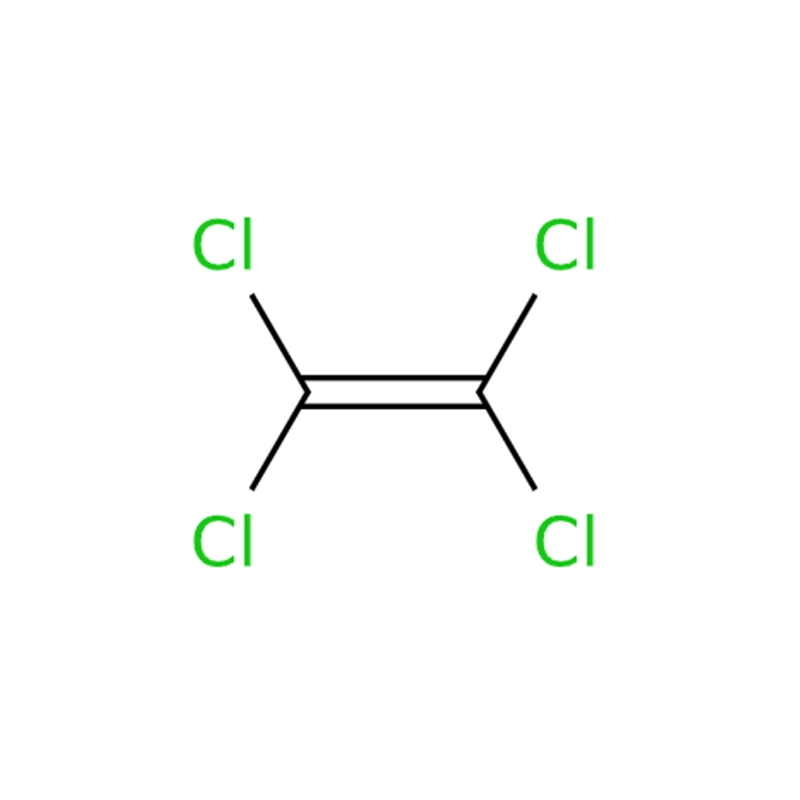
Products Description of Tetrachloroethylene CAS#127-18-4
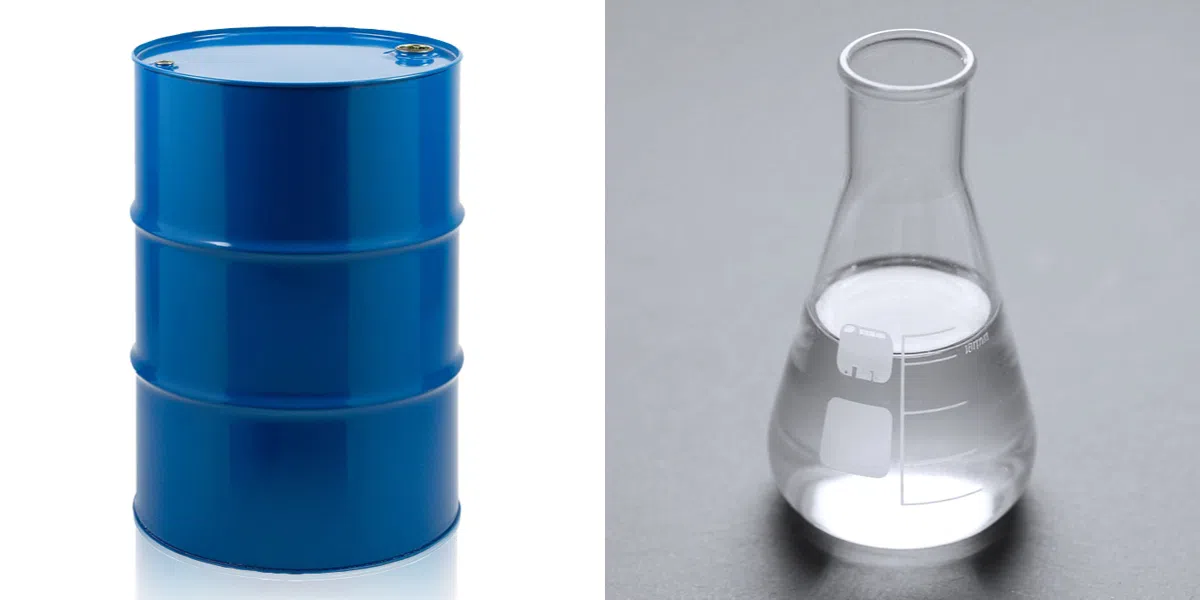
Tetrachloroethylene, also known as perchloroethylene, is a chlorinated ethylene compound in which all hydrogen atoms are replaced by chlorine atoms. It was first produced by Faraday in 1821 through the pyrolysis of hexachloroethane. Tetrachloroethylene is a colorless, transparent, non-flammable liquid with an ether-like odor.
Its relative molecular mass is 165.85, and its relative density is 1.6220. It has a melting point of -22.7°C and a boiling point of 121.2°C, with a boiling point of 33.2°C at 4.000 × 10³ Pa. Its refractive index is 1.5055, and its viscosity is 0.839 mPa·s at 20°C. The vapor pressure values are 5.466 × 10³ Pa at 40°C, 13.865 × 10³ Pa at 60°C, 30.131 × 10³ Pa at 80°C, and 58.128 × 10³ Pa at 100°C.
Tetrachloroethylene is insoluble in sugar, glycerol, and proteins, but has limited solubility in water, approximately 0.015 at 25°C. It is miscible with ethanol, ether, chloroform, benzene, and other chlorinated organic solvents. It does not undergo hydrolysis and remains highly stable at temperatures up to 500°C in the absence of air, moisture, and catalysts.
Tetrachloroethylene exhibits various chemical reactions. Hydrogenation produces tetrachloroethane, while chlorination yields hexachloroethane. It can also react with bromine to form monobromotrichloro or dibromodichloro compounds, and with hydrogen fluoride in the presence of a catalyst. Prolonged exposure to light, air, and water may cause gradual decomposition into trichloroacetaldehyde and phosgene, while also promoting corrosion of metals such as iron, aluminum, and zinc. Adding stabilizers can help inhibit this corrosion. In the presence of activated carbon, tetrachloroethylene decomposes into hexachlorobenzene and hexachloroethane when heated to 700°C. It can also be oxidized by strong oxidizing agents and react violently with barium powder, beryllium powder, lithium shavings, nitrogen tetroxide, and sodium hydroxide.
Tetrachloroethylene is toxic and acts as a central nervous system depressant. Exposure may cause headaches, nausea, vomiting, and, in severe cases, coma. Its oral LD50 in mice is 8,850 mg/kg, and the maximum allowable workplace concentration is 100 × 10⁻⁶.
Key Physical & Chemical Properties
| Property | Specification |
|---|---|
| Chemical Formula | AgC₂H₃O₂ |
| Appearance | White to grey crystalline powder |
| Solubility | Slightly soluble in water; soluble in some organic solvents |
| Light Sensitivity | Darkens on prolonged light exposure |
| Silver Content | ~65% (theoretical) |
| Grades | Reagent / high purity |


