Product Details
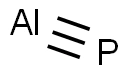
Aluminum phosphide belongs to the binary‑salt group covered under the NCHP acronym (refer to Chapter 2). A distinct hazard of these salts is that they release toxic and pyrophoric phosphine gas on exposure to humid air, water or steam, and may even self‑ignite when coming into contact with air. This substance appears as gray to dark‑yellow crystals and presents a severe fire hazard. Aluminum phosphide decomposes in contact with water; its specific gravity is 2.85, meaning it is denser than water.
Chemical Properties
| Melting point | 2000℃ |
| density | 2.42 |
| solubility | reacts with H2O |
| form | green or yellow cubic crystals |
| color | Green or yellow |
| Water Solubility | reacts with H2O to produce phosphine [MER06] |
| Crystal Structure | Cubic, Sphalerite Structure - Space Group F(-4)3m |
| Stability: | Flammable solid. Contact with acids liberates highly toxic gas (phosphine). Incompatible with acids, moisture, oxidizing agents. |
| CAS DataBase Reference | 20859-73-8(CAS DataBase Reference) |
| NIST Chemistry Reference | Aluminum monophosphide(20859-73-8) |
| EPA Substance Registry System | Aluminum phosphide (20859-73-8) |
Product Usage
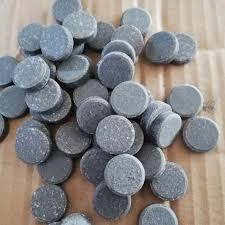
AlP is primarily used as a fumigant against insects and rodents for indoor stored food and non-food goods. It can also be used outdoors to target rodents by treating their burrows, and for pest management in grain storage sites. Owing to its extensive application for rice preservation, it is referred to as “rice tablet” in some countries.