
Products Description
Cesium iodide (CsI) belongs to inorganic halide materials. CsI and doped variants such as CsI(Tl) serve as common scintillators for detectors of high‑energy particles and ionizing radiation. Vacuum‑deposited thin films of CsI(Tl) were initially adopted in photoelectric converters for X‑ray imaging.
For modern digital X‑ray imaging systems, CsI(Tl) scintillator films are extensively deployed. They feature high X‑ray scintillation efficiency, excellent spatial resolution, and favorable spectral compatibility with silicon readout sensors.
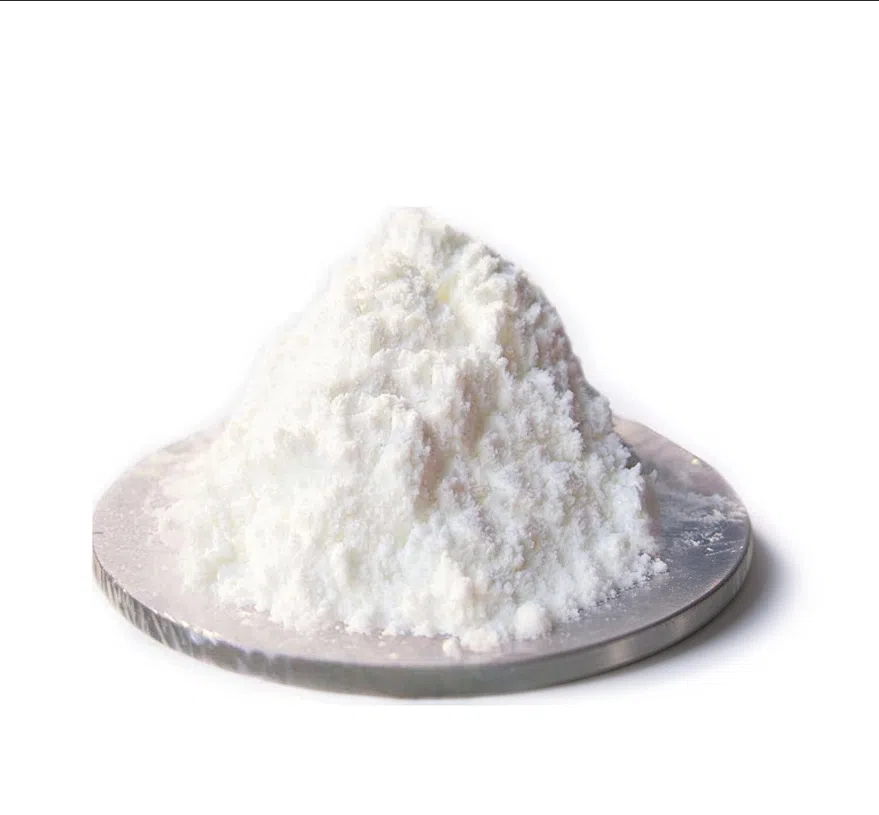
Chemical Properties
| Melting point | 626 °C (lit.) |
| Boiling point | 1280 °C |
| density | 4.51 g/mL at 25 °C (lit.) |
| refractive index | 1.7876 |
| Fp | 1280°C |
| storage temp. | Keep in dark place,Inert atmosphere,Room temperature |
| solubility | soluble in ethanol, methanol, acetone |
| form | beads |
| Specific Gravity | 4.51 |
| color | White |
| PH | pH(50g/l, 25℃) : 5.0~9.0 |
| Water Solubility | 74 g/100 mL (20 ºC) |
| Sensitive | Hygroscopic |
| Merck | 14,2014 |
| Exposure limits | ACGIH: TWA 0.01 ppm |
| Dielectric constant | 5.6(Ambient) |
| Stability: | Stable. Deliquescent. |
| CAS DataBase Reference | 7789-17-5(CAS DataBase Reference) |
| NIST Chemistry Reference | Cesium iodide(7789-17-5) |
| EPA Substance Registry System | Cesium iodide (CsI) (7789-17-5) |
Safety Information
| Hazard Codes | Xn,Xi |
| Risk Statements | 36/37/38-42/43-43 |
| Safety Statements | 22-36/37-45 |
| RIDADR | UN 3077 9 / PGIII |
| WGK Germany | 2 |
| RTECS | FL0350000 |
| F | 8 |
| TSCA | Yes |
| HS Code | 28276000 |
| Toxicity | LD50 i.p. in rats: 1.4 g/kg (Cochran) |
Product Application
Cesium iodide crystals are widely adopted as scintillators for electromagnetic calorimeters within particle‑physics experimental setups. The material also serves as a spectroscopic component for Fourier‑transform infrared (FT‑IR) spectrometers.
Compared with potassium‑based spectroscopic materials that see more widespread use, cesium iodide features an extended optical transmission range reaching deep into the far‑infrared region. Nevertheless, it presents certain processing drawbacks: optical‑grade cesium iodide crystals are relatively soft and free of natural cleavage planes, which makes it challenging to fabricate well‑polished flat surfaces.
Furthermore, optical cesium iodide crystals require storage inside dry enclosures to avoid reactions with atmospheric moisture. Applying a germanium protective coating onto the crystal surface can effectively mitigate moisture‑induced damage during component handling and replacement.