Product Description
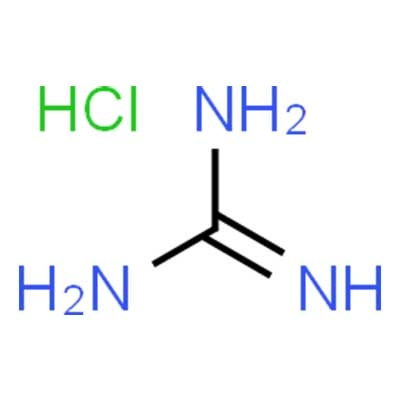
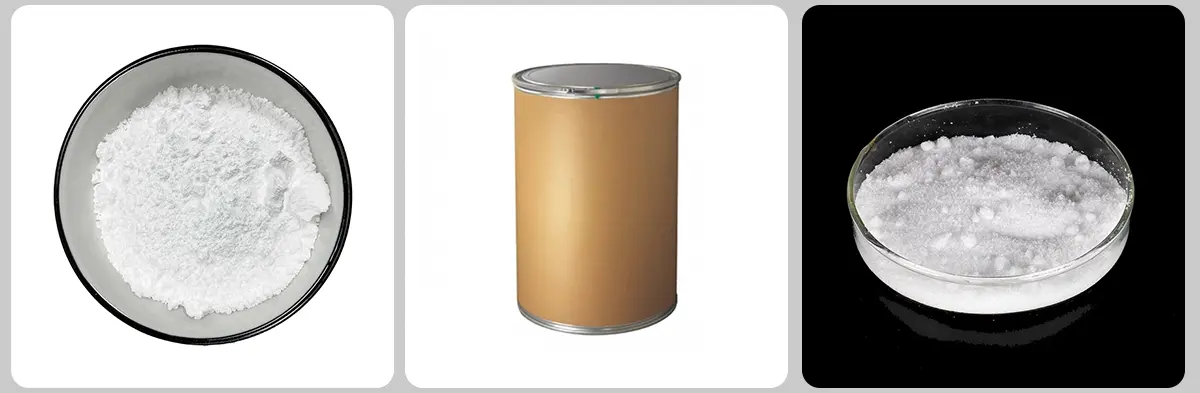
Guanidine hydrochloride, also referred to as carbamidine hydrochloride, appears as a white to pale yellow crystalline solid. It features excellent solubility in water while being nearly insoluble in organic solvents such as acetone, benzene and diethyl ether. This versatile chaotropic agent serves as a vital intermediate for the synthesis of pharmaceuticals, agrochemicals, dyestuffs and a wide range of other organic compounds.
It acts as a key building block for manufacturing multiple pharmaceutical products, prominently including sulfadiazine, sulfamethylpyrimidine, sulfadimethoxypyrimidine and folic acid. Beyond pharmaceutical synthesis, it can be utilized as an efficient antistatic agent for synthetic fibers. Additionally, it is commonly adopted in biochemistry research as a protein denaturant and nucleic acid extraction reagent, widely used for solubilizing inclusion bodies and isolating nucleic acid samples.
Chemical Properties
| CAS | No. 50-01-1 |
| CID | 5742 |
| EINECS(EC#) | 200-002-3 |
| Molecular Formula | CH6ClN3 (isomer) |
| Inchi | InChI=1S/CH5N3.ClH/c2-1(3)4;/h(H5,2,3,4);1H |
| InChIkey | PJJJBBJSCAKJQF-UHFFFAOYSA-N |
| Canonical Smiles | C(=N)(N)N.Cl |
| Isomers Smiles | C(=N)(N)N.Cl |
| Density | 1.18 g/mL at 25 °C(lit.) |
| Melting point | 180-185 °C(lit.) |
| Boiling point | 132.9 °C at 760 mmHg |
| Refractive index | n20/D 1.465 |
| Flash Point | 34.2 °C |
| Precise Quality | 95.025 |
| PSA | 75.89 |
| logP | 1.1409 |
| Solubility | H2O: 6?M, clear, colorless |
| Appearance | DryPowder; DryPowder, Liquid |
| Storage | Store at RT. |
| Chemical Properties | White cryst. powder |
| Color/Form | White to slightly yellow |
| Odo | Odorless |
| PH | 4.5-5.5 (100g/l, H2O, 20℃) |
| Water Solubility | H2O: 2280 g/L (20 oC) |
| Stability | Stable. Hygroscopic. Incompatible with strong oxidizing agents. |
| StorageTemp | Store at RT. |
Product Application
Guanidine Hydrochloride is widely used as an important intermediate in organic synthesis, particularly in the manufacture of pharmaceuticals, pesticides, dyes, and other specialty chemicals. It serves as a key raw material for producing heterocyclic compounds such as 2-aminopyrimidine, 2-amino-6-methylpyrimidine, and 2-amino-4,6-dimethylpyrimidine. It is also involved in the synthesis of various sulfonamide pharmaceuticals, including sulfadiazine, sulfamethylpyrimidine, and sulfamethazine.
Additionally, Guanidine Hydrochloride or Guanidine Nitrate can react with ethyl cyanoacetate to produce 2,4-diamino-6-hydroxypyrimidine, an important intermediate in folic acid synthesis. Beyond pharmaceutical applications, Guanidine Hydrochloride can also be used as an antistatic agent in synthetic fiber processing, helping reduce static electricity and improve fiber handling and processing performance.