
Products Description
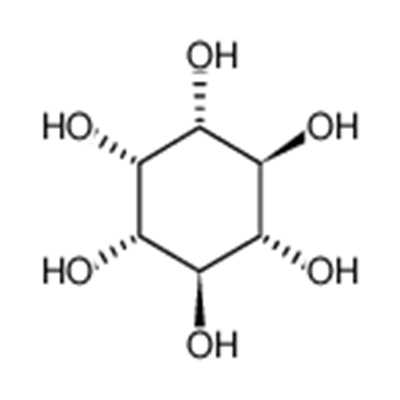
Myo‑inositol, also known as hexahydroxycyclohexane and cyclohexitol, is a B‑vitamin‑like substance. It has nine isomers arising from different orientations of hydroxyl groups relative to the ring plane: seven are optically inactive, and two are optically active (levo‑ and dextro‑rotatory).
Widely distributed in biological tissues in free or bound forms, it is a regular constituent of animal and plant cells. It can be biosynthesized by gastrointestinal microorganisms and participates in carbohydrate and lipid metabolism. In animals, it mainly exists as phosphatidylinositol, with the highest concentrations found in the brain, myocardium and skeletal muscle.
Chemical Properties
| Melting point | 222-227 °C (lit.) |
| Boiling point | 232.96°C (rough estimate) |
| density | 1.75 |
| vapor density | 6.2 (vs air) |
| refractive index | 1.6170 (estimate) |
| storage temp. | 2-8°C |
| solubility | H2O: 0.5 M at 20 °C, clear, colorless |
| pka | 12.63±0.70(Predicted) |
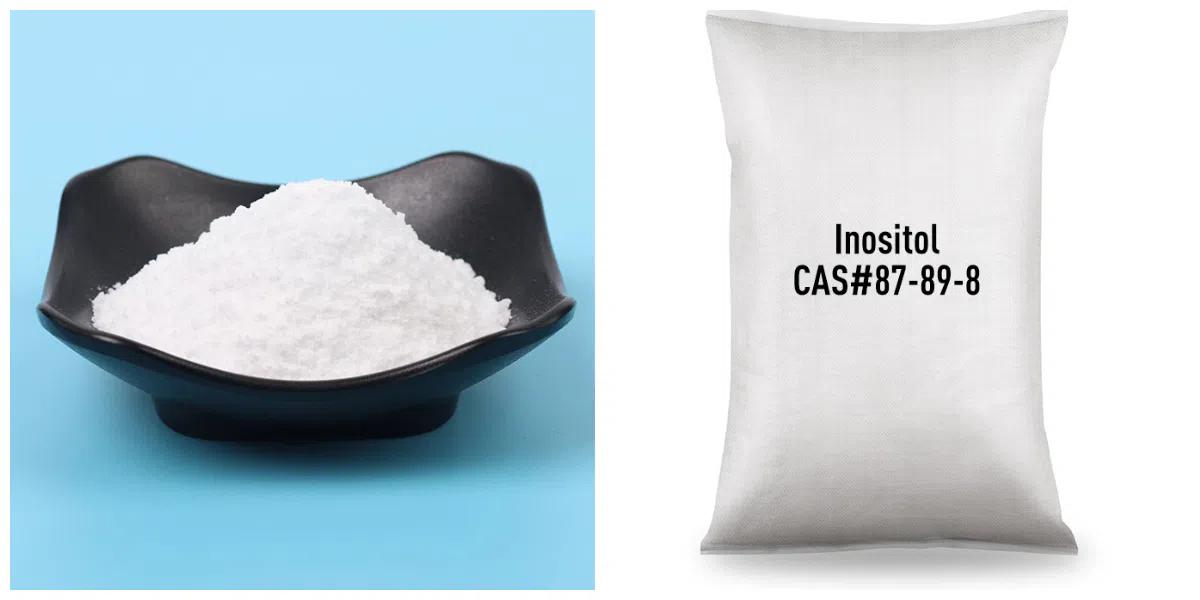
| form | Crystalline Powder |
| color | White |
| PH | 5-7 (100g/l, H2O, 20℃) |
| Odor | odorless |
| Water Solubility | 14 g/100 mL (25 ºC) |
| Merck | 144978 |
| BRN | 1907328 |
| Stability: | Stable. Combustible. Incompatible with strong oxidizing agents. |
| InChIKey | CDAISMWEOUEBRE-GPIVLXJGSA-N |
| LogP | -2.08 |
| CAS DataBase Reference | 87-89-8(CAS DataBase Reference) |
| NIST Chemistry Reference | Hexahydroxycyclohexane(87-89-8) |
| EPA Substance Registry System | myo-Inositol (87-89-8) |
| Safety Statements | 22-24/25 |
| WGK Germany | 2 |
| RTECS | NM7520800 |
| TSCA | Yes |
| HS Code | 29061390 |
Product Usage
Inositol is an important nutrient involved in lipid metabolism and various cellular functions. It helps regulate fat metabolism and supports the growth and development of liver and other tissue cells. It is also used in nutritional supplements and pharmaceutical formulations.
Inositol is widely applied in the food and feed industries as an additive for fish, shrimp, livestock, and poultry, with typical inclusion levels of 350–500 mg/kg. In addition, it is used in pharmaceutical products, food processing, and cosmetic formulations. Due to its potential role in supporting liver function and lipid metabolism, it is also incorporated into certain health-related products and high-end skincare formulations.


