Products Description
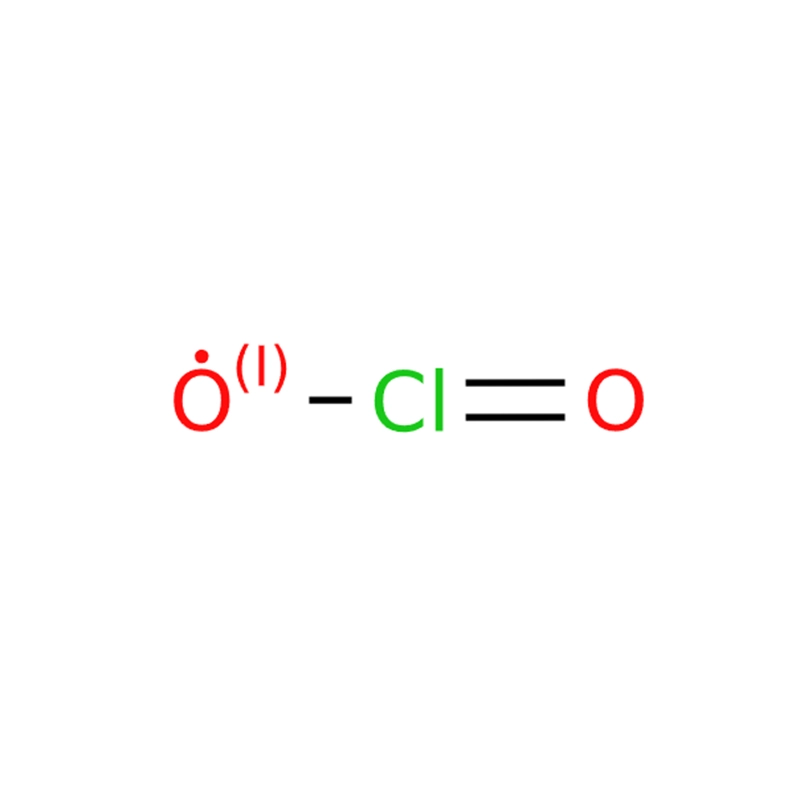
Chlorine Dioxide (CAS No. 10049-04-4), with the chemical formula ClO₂ and a molecular weight of 67.45 g/mol, is a powerful inorganic oxidizing agent widely used in water treatment, disinfection, bleaching, and industrial sanitation. Under standard temperature and pressure conditions, it appears as a yellowish-green to orange-yellow gas with a characteristic sharp, pungent odor. In aqueous solution, it typically exhibits a yellowish to reddish-brown appearance, while its solid form consists of orange-red crystals under specialized conditions.
Due to its strong oxidizing properties and potential explosion hazards, chlorine dioxide gas must be handled under strictly controlled conditions. Concentrated pure chlorine dioxide gas can become explosive, particularly at concentrations above approximately 10%. Therefore, commercial applications generally rely on appropriately stabilized aqueous solutions or controlled on-site generation systems rather than the storage and transportation of concentrated gas. It is widely applied in municipal drinking water treatment, wastewater disinfection, industrial cooling water systems, food processing sanitation, pulp and paper bleaching, and industrial cleaning. Its strong oxidation capability enables effective control of bacteria, viruses, algae, and other microorganisms, making it an important chemical for water purification and environmental hygiene applications.
Chemical Properties
| Melting point | -59°C |
| Boiling point | 11°C |
| density | 3.09g/L |
| vapor pressure | 0-22900Pa at 20-25℃ |
| solubility | slightly soluble in H2O |
| form | orange-green gas |
| color | orange-green |
| Water Solubility | Soluble ºC |
| Exposure limits | TLV-TWA 0.1 ppm (0.3 mg/m3); (ACGIH, MSHA, OSHA, and NIOSH); TLV-STEL 0.3 ppm (ACGIH); IDLH 10 ppm (NIOSH). |
| Dielectric constant | 1.7(77.0℃) |
| Stability: | May decompose explosively on shock, friction or concussion, or on heating rapidly. Strong oxidant - reacts violently with combustible and reducing materials, and with mercury, ammonia, sulphur and many organic compounds. |
| LogP | -3.22--2.9 at 20℃ |
| CAS DataBase Reference | 10049-04-4(CAS DataBase Reference) |
| NIST Chemistry Reference | Chlorine dioxide(10049-04-4) |
| EPA Substance Registry System | Chlorine dioxide (10049-04-4) |
| Hazard Codes | O,T+,N |
| Risk Statements | 6-8-26-34-50 |
| Safety Statements | 23-26-28-36/37/39-38-45-61 |
| OEB | C |
| OEL | TWA: 0.1 ppm (0.3 mg/m3), STEL: 0.3 ppm (0.9 mg/m3) |
| RIDADR | UN 9191 |
| Hazardous Substances Data | 10049-04-4(Hazardous Substances Data) |
| IDLA | 5 ppm |
Product Application
It is a high-efficiency disinfectant for drinking water, tap water, swimming pool, aquaculture and sewage treatment for sterilization, algae removal, decolorization and deodorization. It is used as bleaching agent for textile and pulp, without damaging fiber strength. In food industry, it serves as surface sanitizer for fruits, vegetables, meat processing lines and packaging materials. It can degrade harmful organic substances in wastewater and remove peculiar smell in workshops, cold storage and sewage stations. It is also widely adopted in hospital disinfection, pipeline biofilm removal and oilfield water treatment, preferred for projects requiring low disinfection by-products.