
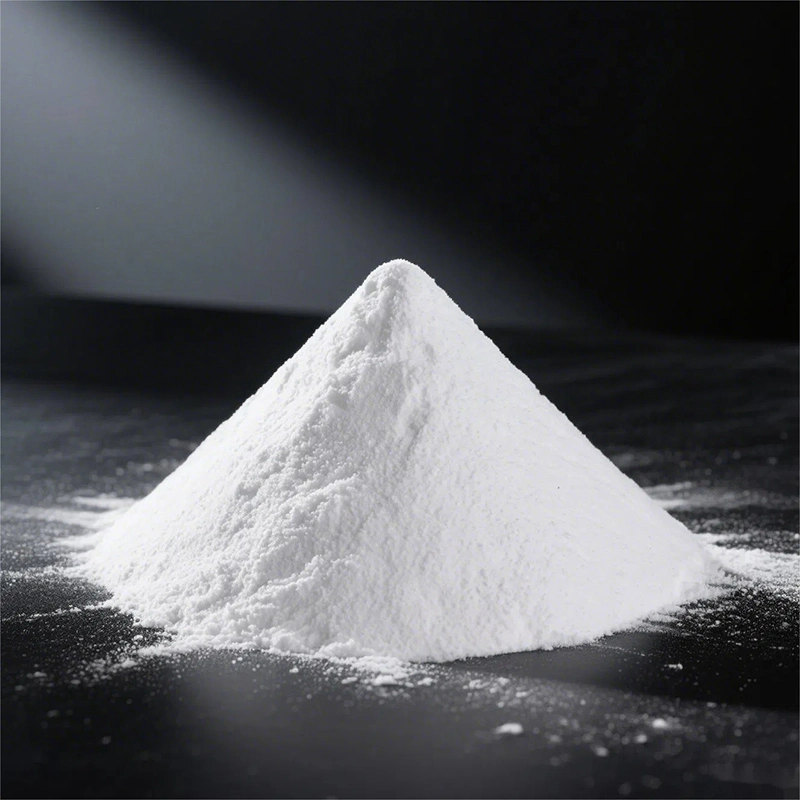
Products Description of Calcium Hypochlorite CAS#7778-54-3
Calcium hypochlorite, commonly known as bleaching powder, has the chemical formula CaCl₂·Ca(ClO)₂·2H₂O. It is a white powdery compound whose composition may differ according to production procedures. Typically, it is a hydrated complex‑salt mixture made up of calcium hypochlorite, calcium chloride and residual unreacted calcium hydroxide, with calcium hypochlorite as its active ingredient.
Calcium hypochlorite is highly oxidizing, as well as corrosive and irritating. Decomposition will take place on exposure to water, carbon dioxide from air or inorganic acids. When in contact with water or inorganic acids, it liberates hypochlorous acid. Hypochlorous acid delivers powerful oxidizing, bleaching and bactericidal effects. For this reason, the bleaching capacity of calcium hypochlorite is primarily derived from the oxidizing activity of hypochlorous acid.
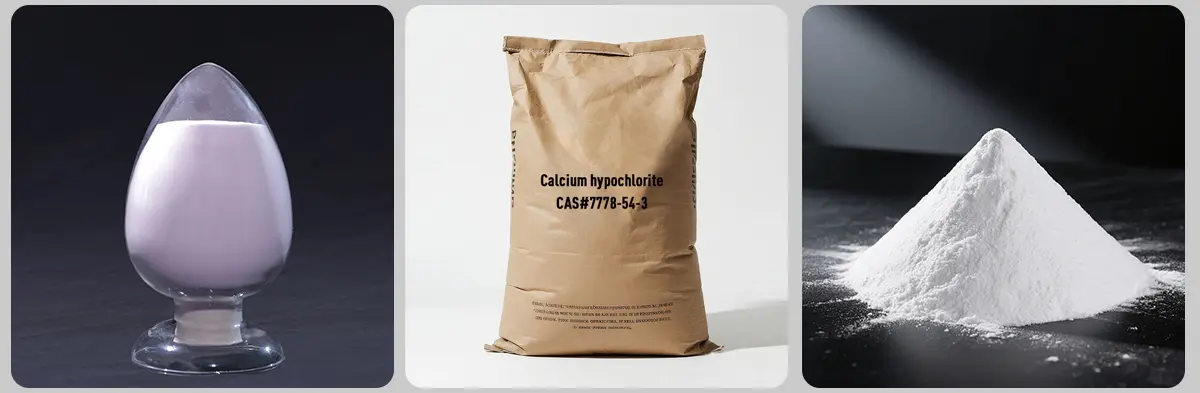
Calcium hypochlorite Chemical Properties
| Melting point | 100 °C(lit.) |
| density | 2.35 g/mL at 25 °C(lit.) |
| storage temp. | Store at +15°C to +25°C. |
| solubility | 200g/l (decomposition) |
| form | Tablets |
| Specific Gravity | 2.35 |
| color | White to off-white or faint green |
| Odor | Chlorine-like odor |
| Water Solubility | 200 g/L (20 ºC) (dec.) |
| Merck | 141674 |
| Dielectric constant | 2.3(Ambient) |
| Stability: | Stability Strong oxidizer - contact with flammable material may lead to fire. Incompatible with water, reducing agents, combustible material, phenol. |
| InChIKey | ZKQDCIXGCQPQNV-UHFFFAOYSA-N |
| CAS DataBase Reference | 7778-54-3(CAS DataBase Reference) |
| EPA Substance Registry System | Calcium hypochlorite (7778-54-3) |
| Hazard Codes | O,C,N |
| Risk Statements | 8-22-31-34-50 |
| Safety Statements | 26-36/37/39-45-61 |
| RIDADR | UN 1748 5.1/PG 2 |
| WGK Germany | 2 |
| RTECS | NH3485000 |
| TSCA | Yes |
Product Application of Calcium Hypochlorite CAS#7778-54-3
Calcium hypochlorite is an efficient bleaching agent featuring outstanding storage stability. It stays stable without decomposition for more than 200 days under room‑temperature storage. It is mainly used for bleaching cotton, linen, chemical fibers, pulp and starch.
It is also extensively adopted for disinfection and sterilization of drinking water and swimming pool water, and for mildew inhibition and preservation in leather storage. For the paper‑making industry, it is used for pulp bleaching; for the textile industry, it bleaches cotton, linen and silk fabrics.
Besides, it is applied to sanitize urban and rural drinking water, swimming pools and other water bodies. In the chemical sector, it is used for acetylene purification and the manufacture of chloroform and other organic raw materials. It can also function as a wool anti‑shrinkage agent, deodorant and for other special purposes.


