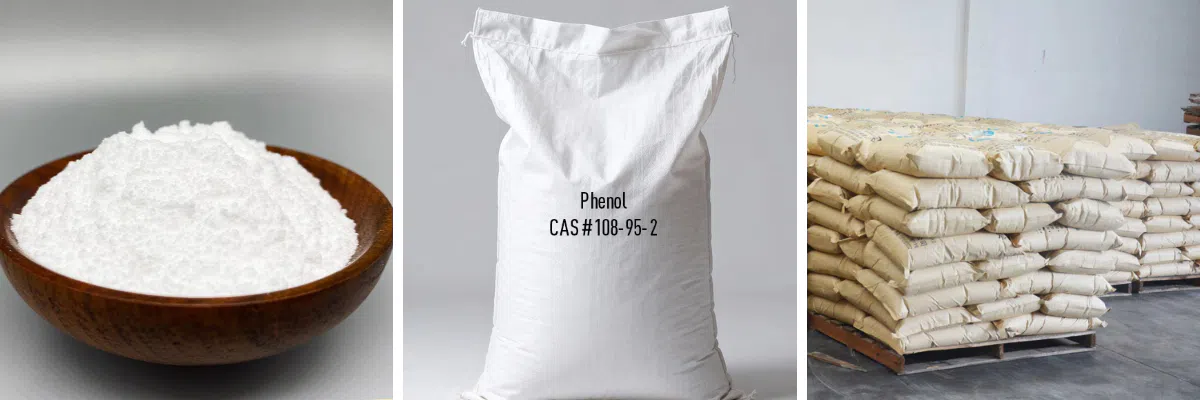
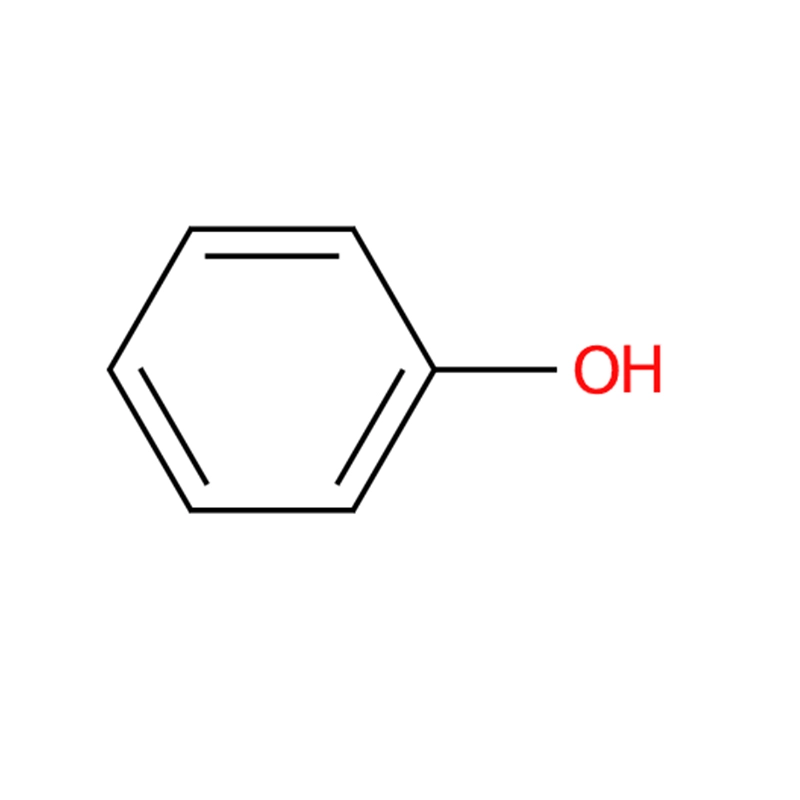
Phenol CAS#108-95-2 Product Description
Phenol, represented by the chemical formula C₆H₅OH (C₆H₆O), is a white crystalline organic compound known for its distinctive chemical properties and versatile industrial applications. Its characteristic reactivity is primarily associated with the hydroxyl group directly bonded to the benzene ring.
As a valuable chemical intermediate, phenol is extensively utilized in pharmaceutical synthesis, including the production of aspirin. It is also an essential raw material in the manufacture of various resins, plastics, and synthetic fibers, such as nylon. In addition, phenol has historically been employed in disinfectant applications because of its ability to denature proteins and damage cellular membranes.
Beyond these applications, phenol serves as an important component in detergent manufacturing and analytical chemistry. Due to its chemical reactivity and inherent toxicity, appropriate handling, storage, and occupational safety measures are essential throughout its use. Although phenol is biodegradable, proper waste management and treatment procedures are necessary to reduce potential environmental contamination.
With its distinctive molecular structure, valuable chemical characteristics, and extensive range of industrial uses, phenol continues to be an important raw material in modern chemical manufacturing and various downstream production processes.
Phenol CAS#108-95-2 Chemical Properties
| Melting point | 40-42 °C(lit.) |
| Boiling point | 182 °C(lit.) |
| density | 1.071 g/mL at 25 °C(lit.) |
| vapor density | 3.24 (vs air) |
| vapor pressure | 0.09 psi ( 55 °C) |
| refractive index | n20/D 1.53 |
| FEMA | 3223 | PHENOL |
| Fp | 175 °F |
| storage temp. | 2-8°C |
| solubility | H2O: 50 mg/mL at 20 °C, clear, colorless |
| form | liquid |
| pka | 9.89(at 20℃) |
| Specific Gravity | 1.071 |
| color | faintly yellow |
| PH | 6.47(1 mM solution);5.99(10 mM solution);5.49(100 mM solution); |
| Odor | Sweet, medicinal odor detectable at 0.06 ppm |
| explosive limit | 1.3-9.5%(V) |
| Odor Threshold | 0.0056ppm |
| Odor Type | phenolic |
| Water Solubility | 8 g/100 mL |
| FreezingPoint | 41℃ |
| Sensitive | Air & Light Sensitive |
| Merck | 147241 |
| JECFA Number | 690 |
| BRN | 969616 |
| Henry's Law Constant | 1.09 at 5 °C (average derived from six field experiments, Lüttke and Levsen, 1997) |
| Dielectric constant | 4.3(10℃) |
| Exposure limits | TLV-TWA skin 5 ppm (~19 mg/m3 ) (ACGIH, MSHA, and OSHA); 10-hour TWA 5.2 ppm (~20 mg/m3 ) (NIOSH); ceiling 60 mg (15 minutes) (NIOSH); IDLH 250 ppm (NIOSH). |
| Stability: | Hygroscopic |
| InChIKey | ISWSIDIOOBJBQZ-UHFFFAOYSA-N |
| LogP | 1.47 at 30℃ |
| CAS DataBase Reference | 108-95-2(CAS DataBase Reference) |
| IARC | 3 (Vol. 47, 71) 1999 |
| NIST Chemistry Reference | Phenol(108-95-2) |
| EPA Substance Registry System | Phenol (108-95-2) |
Phenol CAS#108-95-2 Safety Information
| Hazard Codes | T,C,F,Xn |
| Risk Statements | 23/24/25-34-48/20/21/22-68-40-39/23/24/25-11-36-20/21/22-24/25 |
| Safety Statements | 26-36/37/39-45-36/37-28A-28-24/25-1/2-36-16-7 |
| RIDADR | UN 2821 6.1/PG 2 |
| OEB | A |
| OEL | TWA: 5 ppm (19 mg/m3), Ceiling: 15.6 ppm (60 mg/m3) [15-minute] [skin] |
| WGK Germany | 2 |
| RTECS | SJ3325000 |
| F | 46257 |
| Autoignition Temperature | 715 °C |
| TSCA | Yes |
| HazardClass | 6.1 |
| PackingGroup | II |
| HS Code | 29071100 |
| Hazardous Substances Data | 108-95-2(Hazardous Substances Data) |
| Toxicity | LD50 orally in rats: 530 mg/kg (Deichmann, Witherup) |
| IDLA | 250 ppm |
Phenol CAS#108-95-2 Product Application
Phenol is an essential aromatic petrochemical intermediate that plays an important role in numerous industrial manufacturing processes. Owing to its versatile chemical properties, it is widely used in the production of polymers, pharmaceutical compounds, specialty chemicals, and various industrial materials.
Phenolic Resin Manufacturing (Major Application)
Phenol is primarily used in the production of phenol-formaldehyde (PF) resins, including Bakelite. These resins are widely applied in plywood adhesives, friction materials, refractory products, molding compounds, and thermal insulation materials.
Bisphenol A (BPA), Epoxy Resins and Polycarbonate
Phenol serves as a principal raw material for Bisphenol A (BPA), which is further processed into polycarbonate (PC) plastics and epoxy resins. These materials are extensively used in protective coatings, composite materials, and electronic components.
Caprolactam and Nylon 6 Production
Phenol is an important chemical feedstock in caprolactam manufacturing. Caprolactam serves as the primary monomer for Nylon 6, which is widely utilized in engineering plastics and synthetic fiber production.
Pharmaceutical Intermediates
Phenol is employed as a starting material in the synthesis of salicylic acid, acetylsalicylic acid (aspirin), and various other pharmaceutical active ingredients and intermediates.
Dyes, Pigments and Agrochemicals
Phenol is used in the manufacture of a variety of synthetic dyes, coloring pigments, herbicides, and fungicides, serving as an important intermediate in specialty chemical production.
Surfactants and Plastic Additives
Phenol is utilized in the production of alkylphenols, nonionic surfactants, antioxidants, and stabilizers, which contribute to the performance and durability of various industrial and consumer products.
Other Industrial and Laboratory Applications
Additional applications of phenol include:
Raw material for disinfectants and biocidal products.
Chemical reagent for analytical and laboratory applications.
Specialized solvent for selected chemical synthesis processes.