
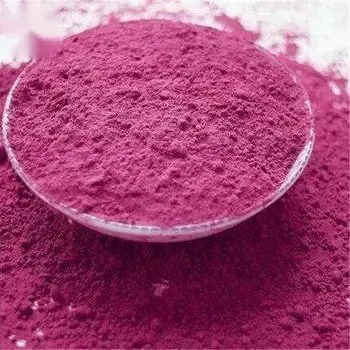
Products Description of Cobalt carbonate CAS#513-79-1
It appears as red‑colored monoclinic crystals or fine powder. It is nearly insoluble in water, ethanol, methyl acetate and aqueous ammonia solutions, while readily dissolving in mineral acids.
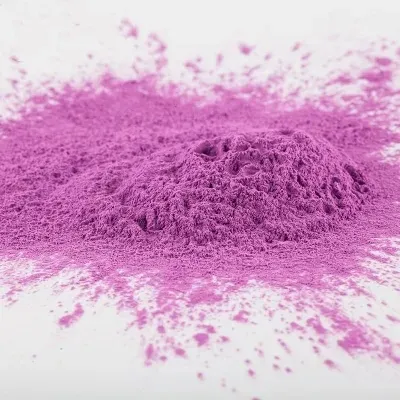
Cobalt carbonate Chemical Properties
| Melting point | decomposes [KIR79] |
| density | 4.13 g/mL at 25 °C(lit.) |
| vapor pressure | 0Pa at 20℃ |
| storage temp. | under inert gas (nitrogen or Argon) at 2-8°C |
| solubility | insoluble in ethanol |
| form | Powder |
| Specific Gravity | 4.13 |
| color | Pink |
| Water Solubility | Insoluble in water, alcohol and methyl acetate. |
| Merck | 14,2436 |
| Solubility Product Constant (Ksp) | pKsp: 12.84 |
| Exposure limits | ACGIH: TWA 0.02 mg/m3 |
| Stability: | Air sensitive. Incompatible with strong oxidizing agents. |
| InChI | InChI=1S/CH2O3.Co/c2-1(3)4;/h(H2,2,3,4);/q;+2/p-2 |
| InChIKey | ZOTKGJBKKKVBJZ-UHFFFAOYSA-L |
| SMILES | C([O-])([O-])=O.[Co+2] |
| CAS DataBase Reference | 513-79-1(CAS DataBase Reference) |
| EPA Substance Registry System | Cobalt(II) carbonate (513-79-1) |
Product Application of Cobalt carbonate CAS#513-79-1
In chemical manufacturing, it acts as a key raw material for synthesizing various cobalt‑based salts and cobalt oxide. Within the ceramic sector, it serves as an effective colorant for glazes and ceramic products. For mining operations, it functions as an ore‑dressing reagent. In organic‑chemical industries, it is applied for producing catalysts, camouflage coatings and chemical temperature indicators. In agriculture, it works as a trace‑element fertilizer. Moreover, it can be utilized as an analytical reagent in analytical‑chemistry laboratory procedures.


