
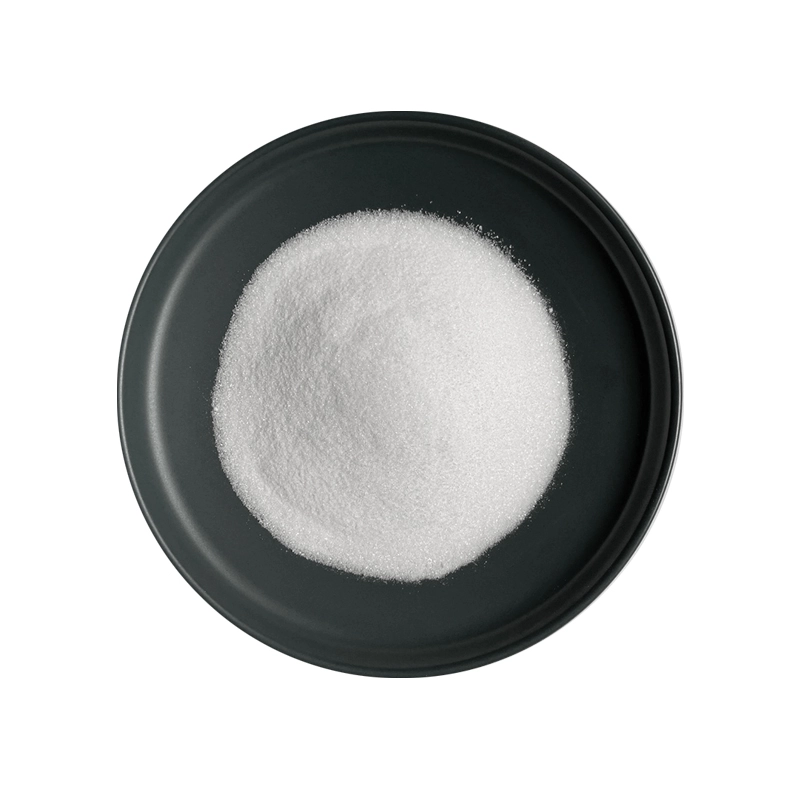
Potassium Chloride CAS# 7447-40-7
Potassium chloride (KCl) is a metal halide salt with a wide range of applications. Its primary use is as a fertilizer, supplying essential potassium to plants and helping protect them from certain diseases. In addition, it is utilized in the food and pharmaceutical industries. In medicine, potassium chloride tablets are commonly used to treat hypokalemia by restoring and maintaining normal potassium levels in the blood. In the food industry, it functions as an electrolyte replenisher, an effective salt alternative, and a firming agent that improves food texture and structural stability.
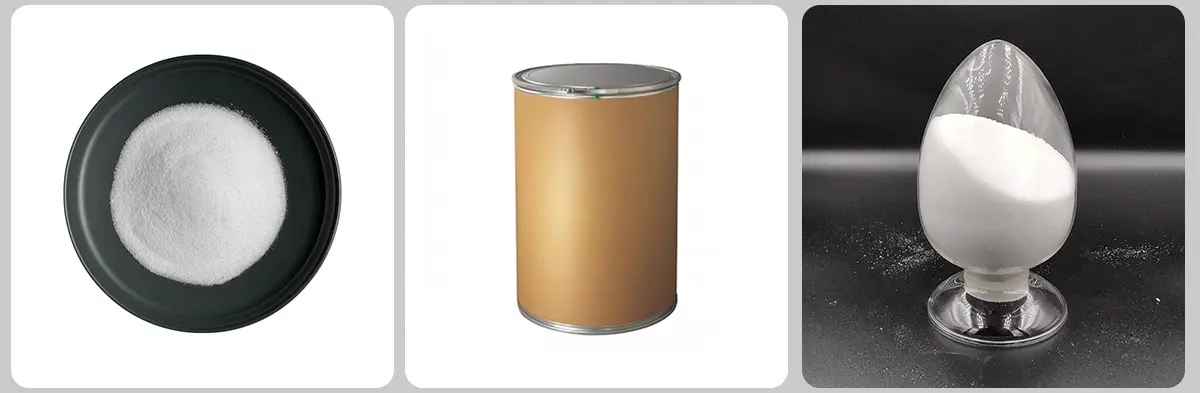
Potassium chloride Chemical Properties
| Melting point | 770 °C (lit.) |
| Boiling point | 1420°C |
| Density | 1.98 g/mL at 25 °C (lit.) |
| Bulk density | 1000kg/m3 |
| Refractive index | n20/D 1.334 |
| Fp | 1500°C |
| Storage temp. | 2-8°C |
| Solubility | H2O: soluble |
| Form | random crystals |
| Color | White |
| Specific Gravity | 1.984 |
| Odor | Odorless |
| PH Range | 7 |
| Flame Color | Light Purple |
| PH | 5.5-8.0 (20℃, 50mg/mL in H2O) |
| Biological source | rabbit |
| Water Solubility | 340 g/L (20 ºC) |
| Sensitive | Hygroscopic |
| λmax | λ: 260 nm Amax: 0.02 |
| λ: 280 nm Amax: 0.01 | |
| Crystal Structure | NaCl type |
| crystal system | Cube |
| Merck | 147,621 |
| Sublimation | 1500 ºC |
| BRN | 1711999 |
| Space group | Fm3m |
| Lattice constant | a/nmb/nmc/nmα/oβ/oγ/oV/nm30.62930.62930.62939090900.2492 |
| Dielectric constant | 4.6(Ambient) |
| BCS Class | 1 |
| Stability | Stable. Incompatible with strong oxidizing agents, strong acids. Protect from moisture. Hygroscopic. |
| InChIKey | WCUXLLCKKVVCTQ-UHFFFAOYSA-M |
| CAS DataBase Reference | 7447-40-7(CAS DataBase Reference) |
| NIST Chemistry Reference | Potassium chloride(7447-40-7) |
| EPA Substance Registry System | Potassium chloride (7447-40-7) |
Product Application of KCL CAS#7447-40-7
Potassium chloride (KCl) finds broad‑ranging application within pharmaceutical formulations, food additive systems, and as a laboratory chemical reagent. Replacing conventional table salt (sodium chloride) with potassium chloride helps reduce dietary sodium intake and delivers potential health‑promoting benefits. Furthermore, molten‑state potassium chloride serves as feedstock for electrolytic manufacturing of metallic potassium. Naturally, potassium chloride exists in seawater brine; commercially it can also be extracted from the mineral carnallite.


