
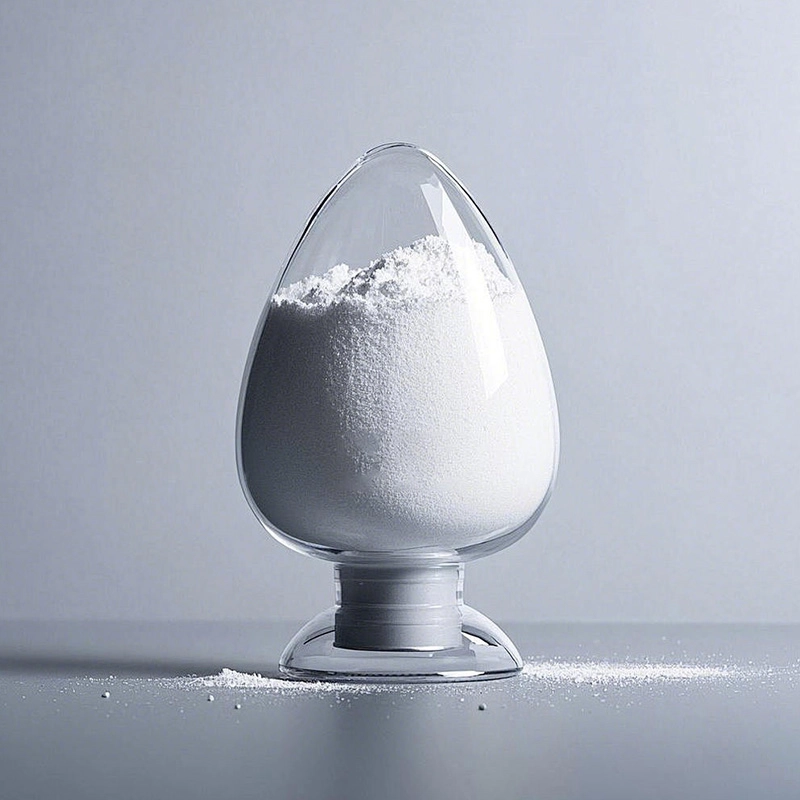
Silicon Dioxide CAS#7631-86-9
Silicon dioxide is a naturally abundant substance widely distributed across the earth. As one of the most vital oxides, it accounts for roughly 60% of the Earth’s crust, present either as pure silica or combined with other metal oxides to form silicates. It is commonly seen as sand in coastal areas, rivers and deserts, as well as in rocks and minerals. Silicon dioxide comes in multiple structural types, such as polymorphic crystalline silica, synthetic quartz, amorphous silica and vitreous silica. Moreover, extra silica variants can be artificially synthesized to fulfill specialized industrial needs.
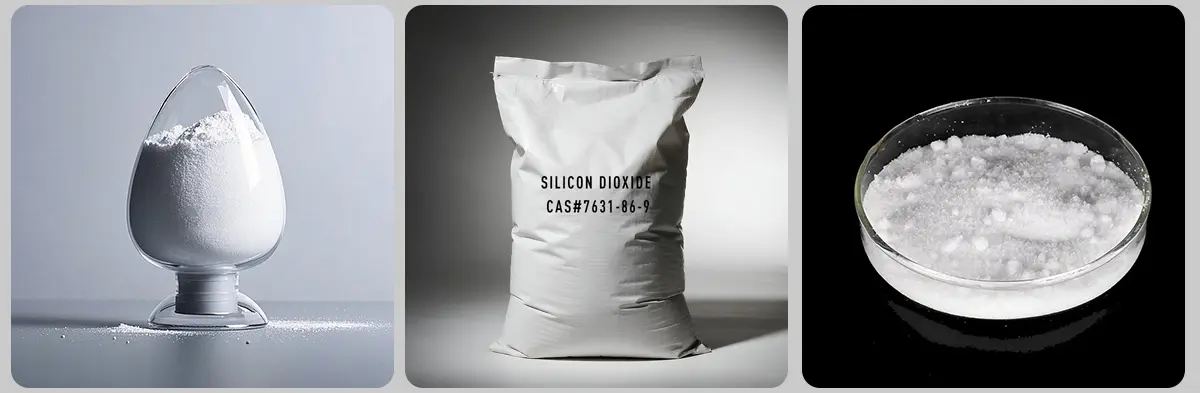
Silicon Dioxide Chemical Properties
| Melting point | >1600 °C(lit.) |
| Boiling point | >100 °C(lit.) |
| Density | 2.2-2.6 g/mL at 25 °C |
| Bulk density | 200-800kg/m3 |
| Vapor pressure | 13.3hPa at 1732℃ |
| Refractive index | 1.46 |
| Fp | 2230°C |
| Storage temp | 2-8°C |
| Solubility | Practically insoluble in water and in mineral acids except hydrofluoric acid. It dissolves in hot solutions of alkali hydroxides. |
| Form | Suspension |
| Pka | 6.65-9.8[at 20 ℃] |
| Specific Gravity | 2.2 |
| Color | White to yellow |
| Odor | at 100.00?%. odorless |
| PH | 5-8 (100g/l, H2O, 20℃)(slurry) |
| Resistivity | 1∞10*20 (ρ/μΩ.cm) |
| Water Solubility | insoluble |
| Sensitive | Hygroscopic |
| Hydrolytic Sensitivity | 6: forms irreversible hydrate |
| Crystal Structure | Trigonal |
| Merck | 14,8493 |
| Exposure limits | NIOSH: IDLH 3000 mg/m3; TWA 6 mg/m3 |
| Stability: | Stable. |
| CAS DataBase Reference | 7631-86-9(CAS DataBase Reference) |
| NIST Chemistry Reference | Silicon(iv) oxide(7631-86-9) |
| IARC | 3 (Vol. Sup 7, 68) 1997 |
| EPA Substance Registry System | Silica (7631-86-9) |
Product Application of Silicon Dioxide
Silica, or silicon dioxide, features versatile functions in different formulations. It can adjust viscosity, increase filling volume and lower transparency, while acting as an abrasive agent. It also works as a carrier for emollients and improves the sensory skin feel of finished goods. Spherical silica has a porous structure with strong absorption capacity; it can take up roughly 1.5 times its own weight of liquid, delivering excellent oil-controlling performance. It is widely incorporated into sunscreens, exfoliating scrubs, and many skincare, cosmetic and hair care products, and fits well within hypoallergenic and allergy-tested formulas.


