
Products Description
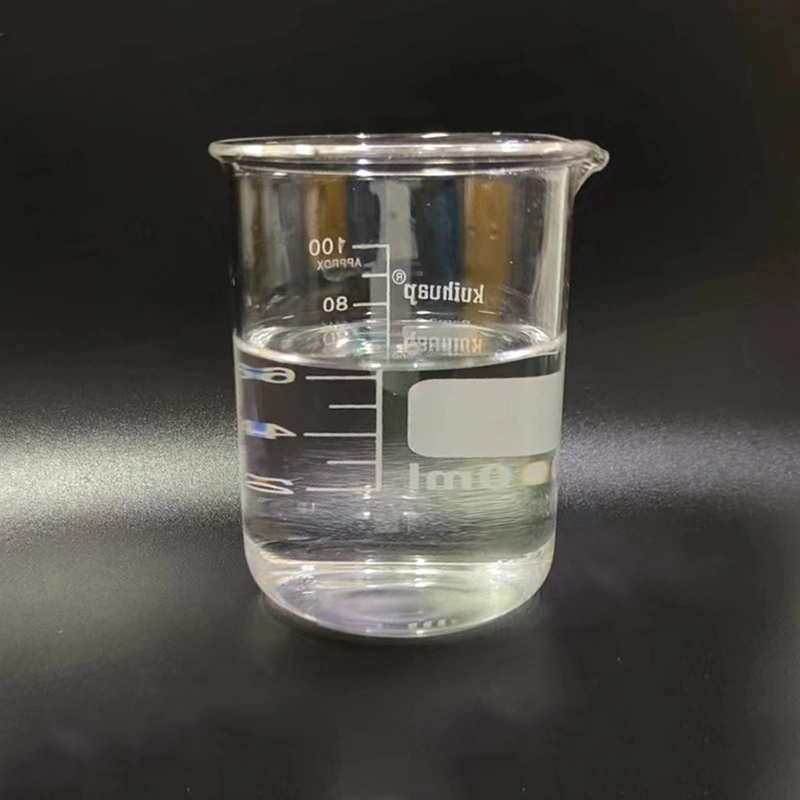
1,4-Butanediol (1,4-BD or BDO) is a colorless, viscous liquid derived from butane, with hydroxyl groups attached to both ends of its molecular chain. It is one of the four stable isomers of butanediol. The hydroxyl groups at either end of the molecule can react with various mono-functional and bifunctional reagents. For example, reactions with dicarboxylic acids produce polyesters, while reactions with diisocyanates yield polyurethanes and reactions with phosgene result in the formation of polycarbonates.
1,4-Butanediol is an important chemical intermediate with a wide range of industrial applications. Both BDO and its derivatives are extensively used in the manufacture of plastics, solvents, electronic chemicals, and elastic fibers. Furthermore, BDO serves as a key building block in the synthesis of polyester polyols and polyether polyols, which are important raw materials for producing polyurethane materials. BASF is one of the world's major manufacturers of 1,4-butanediol and its derivatives.
Chemical Properties
Melting point | 16 °C (lit.) |
Boiling point | 230 °C (lit.) |
density | 1.017 g/mL at 25 °C (lit.) |
vapor density | 3.1 (vs air) |
vapor pressure | <0.1 hPa (20 °C) |
refractive index | n20/D |
Fp | 135 °C |
storage temp. | Store below +30°C. |
form | Liquid |
pka | 14.73±0.10(Predicted) |
color | Clear colorless |
PH | 7-8 (500g/l, H2O, 20℃) |
Odor | Odorless |
explosive limit | 1.95-18.3%(V) |
Water Solubility | Miscible |
Sensitive | Hygroscopic |
BRN | 1633445 |
Dielectric constant | 30.0(30℃) |
Stability: | Stable. Combustible. Incompatible with strong oxidizing agents, mineral acids, acid chlorides, acid anhydrides. |
InChIKey | WERYXYBDKMZEQL-UHFFFAOYSA-N |
LogP | -0.88 at 25℃ |
CAS DataBase Reference | 110-63-4(CAS DataBase Reference) |
NIST Chemistry Reference | 1,4-Butanediol(110-63-4) |
EPA Substance Registry System | 1,4-Butanediol (110-63-4) |
Safety Information
Hazard Codes | Xn |
Risk Statements | 22-67 |
Safety Statements | 36-23-24/25 |
WGK Germany | 1 |
RTECS | EK0525000 |
Autoignition Temperature | 698 °F |
TSCA | Yes |
HS Code | 29053980 |
Hazardous Substances Data | 110-63-4(Hazardous Substances Data) |
Toxicity | LD50 orally in Rabbit: 1525 mg/kg LD50 dermal Rabbit > 2000 mg/kg |
Product Applications
1. Industrial Chemical Applications: 1,4-Butanediol and its derivatives have a wide range of applications in the chemical industry. They are commonly used in the production of engineering plastics, polyurethane materials, solvents, electronic chemicals, and elastic fibers.
2. Pharmaceutical and Organic Synthesis: 1,4-Butanediol is employed as an important intermediate in the synthesis of epothilones, a class of compounds investigated for their anticancer properties. It is also used in the stereoselective synthesis of (-)-brevisamide.
3. Production of Tetrahydrofuran (THF): One of the major applications of 1,4-butanediol is the manufacture of tetrahydrofuran (THF). THF is further used to produce polytetramethylene ether glycol (PTMEG), which is an essential raw material for spandex fibers, polyurethane elastomers, and copolyester ethers.
4. Solvents and Polymer Processing: 1,4-Butanediol is widely utilized as a solvent and chemical intermediate in the production of gamma-butyrolactone (GBL) and elastic fibers such as spandex. It also serves as a crosslinking agent in thermoplastic polyurethanes, as well as in the formulation of polyester plasticizers, paints, and coatings. Furthermore, dehydration of 1,4-butanediol in the presence of phosphoric acid produces tetrahydrofuran, an important industrial solvent with numerous applications.
5. Manufacture of Polymer Materials: 1,4-Butanediol acts as a versatile chemical intermediate in the production of polytetramethylene ether glycol (PTMEG), polybutylene terephthalate (PBT), and polyurethane (PU). These materials are widely used in the automotive, textile, electronics, and construction industries.
6. Other Industrial Applications: In addition to its major applications, 1,4-butanediol and its derivatives are used as plasticizers in polyester and cellulose-based materials, carrier solvents in printing inks, and components in cleaning agents and adhesives. They are also applied in leather processing, plastic and polyester laminates, polyurethane footwear, agricultural and veterinary chemical formulations, and surface coatings, including paints, varnishes, and protective films.


