Products Description
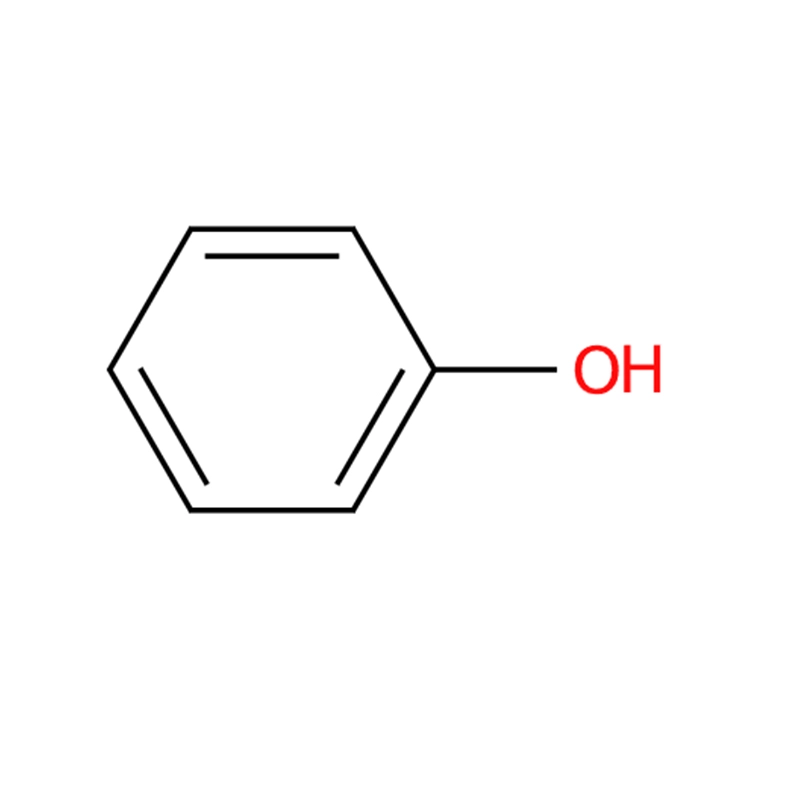
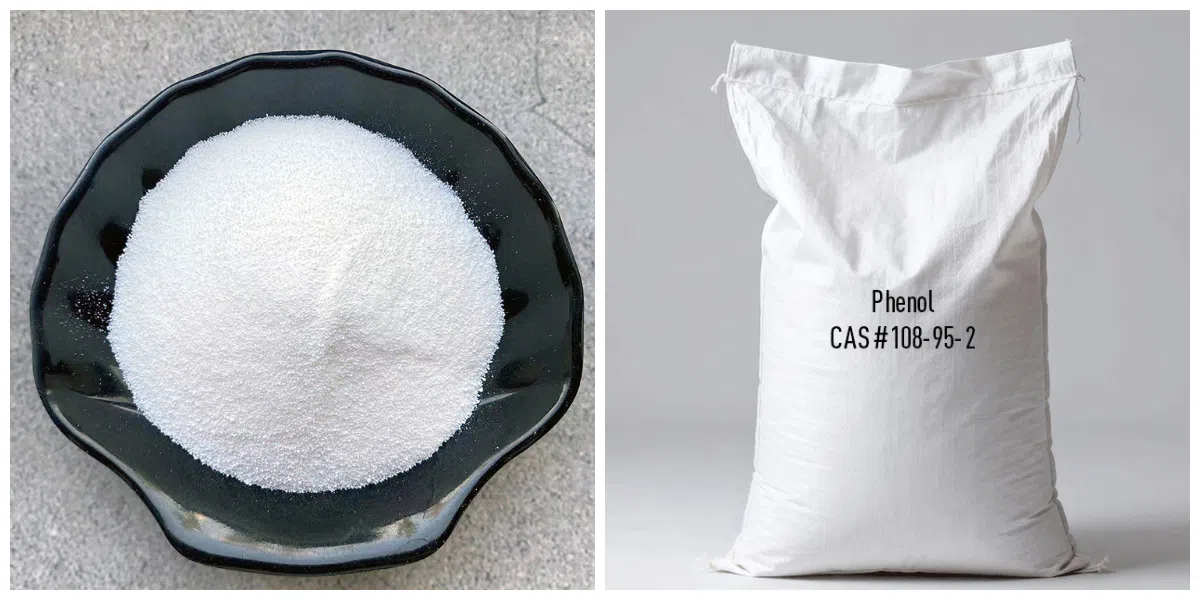
Phenol (Formula: C₆H₅OH / C₆H₆O) is a white crystalline substance. The hydroxyl group on its benzene ring endows it with great versatility and high chemical reactivity.
As a key chemical intermediate, it is widely used to manufacture pharmaceuticals such as aspirin, as well as resins, plastics and synthetic fibers including nylon. Historically, it has served as a disinfectant, as it denatures proteins and breaks down cell membranes.
It also finds applications in detergent production and analytical chemistry. Phenol carries toxicity and high reactivity, so strict handling and safety measures are mandatory. Although biodegradable, it needs proper waste disposal to reduce environmental risks. Its distinctive properties and broad usability make it an indispensable industrial raw material.
Chemical Properties
| Melting point | 40-42 °C(lit.) |
| Boiling point | 182 °C(lit.) |
| density | 1.071 g/mL at 25 °C(lit.) |
| vapor density | 3.24 (vs air) |
| vapor pressure | 0.09 psi ( 55 °C) |
| refractive index | n20/D 1.53 |
| FEMA | 3223 | PHENOL |
| Fp | 175 °F |
| storage temp. | 2-8°C |
| solubility | H2O: 50 mg/mL at 20 °C, clear, colorless |
| form | liquid |
| pka | 9.89(at 20℃) |
| Specific Gravity | 1.071 |
| color | faintly yellow |
| PH | 6.47(1 mM solution);5.99(10 mM solution);5.49(100 mM solution); |
| Odor | Sweet, medicinal odor detectable at 0.06 ppm |
| explosive limit | 1.3-9.5%(V) |
| Odor Threshold | 0.0056ppm |
| Odor Type | phenolic |
| Water Solubility | 8 g/100 mL |
| FreezingPoint | 41℃ |
| Sensitive | Air & Light Sensitive |
| Merck | 147241 |
| JECFA Number | 690 |
| BRN | 969616 |
| Henry's Law Constant | 1.09 at 5 °C (average derived from six field experiments, Lüttke and Levsen, 1997) |
| Dielectric constant | 4.3(10℃) |
| Exposure limits | TLV-TWA skin 5 ppm (~19 mg/m3 ) (ACGIH, MSHA, and OSHA); 10-hour TWA 5.2 ppm (~20 mg/m3 ) (NIOSH); ceiling 60 mg (15 minutes) (NIOSH); IDLH 250 ppm (NIOSH). |
| Stability: | Hygroscopic |
| InChIKey | ISWSIDIOOBJBQZ-UHFFFAOYSA-N |
| LogP | 1.47 at 30℃ |
| CAS DataBase Reference | 108-95-2(CAS DataBase Reference) |
| IARC | 3 (Vol. 47, 71) 1999 |
| NIST Chemistry Reference | Phenol(108-95-2) |
| EPA Substance Registry System | Phenol (108-95-2) |
Safety Information
| Hazard Codes | T,C,F,Xn |
| Risk Statements | 23/24/25-34-48/20/21/22-68-40-39/23/24/25-11-36-20/21/22-24/25 |
| Safety Statements | 26-36/37/39-45-36/37-28A-28-24/25-1/2-36-16-7 |
| RIDADR | UN 2821 6.1/PG 2 |
| OEB | A |
| OEL | TWA: 5 ppm (19 mg/m3), Ceiling: 15.6 ppm (60 mg/m3) [15-minute] [skin] |
| WGK Germany | 2 |
| RTECS | SJ3325000 |
| F | 46257 |
| Autoignition Temperature | 715 °C |
| TSCA | Yes |
| HazardClass | 6.1 |
| PackingGroup | II |
| HS Code | 29071100 |
| Hazardous Substances Data | 108-95-2(Hazardous Substances Data) |
| Toxicity | LD50 orally in rats: 530 mg/kg (Deichmann, Witherup) |
| IDLA | 250 ppm |
Product Usage
Propionic acid serves as a key feedstock for manufacturing propionates, which act as mould‑inhibiting preservatives for grain and wood‑chip materials. It is also applied to produce fruit flavours, perfume bases, and functions as an esterifying agent in synthesis processes.
Propionic acid constitutes the acid precursor for all propionate salts. In its liquid state, it features a pungent odour and corrosive properties. For preservation purposes, it is therefore commonly converted into sodium, calcium and potassium propionate salts. These salts release active propionic acid under the pH conditions of target food matrices, delivering predominant inhibitory effects against mould growth.