
Product Overview
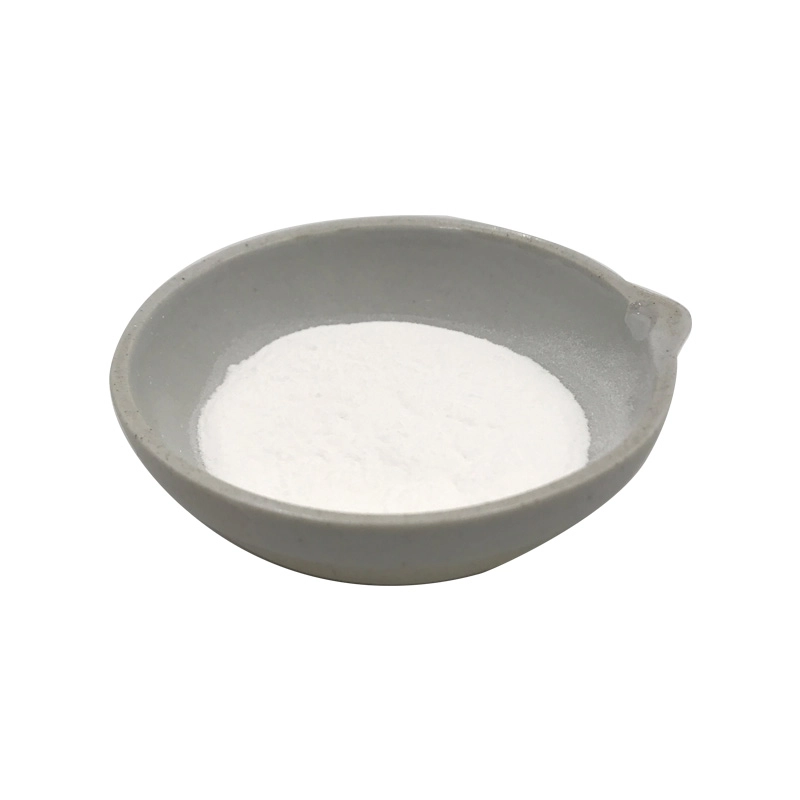
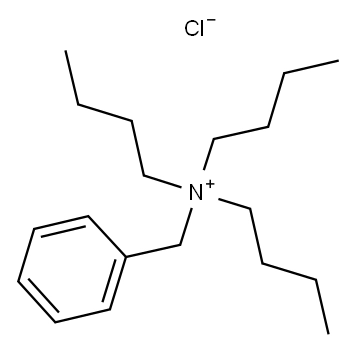
Benzyltributylammonium Chloride (CAS 23616-79-7), commonly abbreviated as BTBAC, is a quaternary ammonium salt widely used in organic synthesis and chemical research. Its molecular formula is C₁₉H₃₄ClN, and its molecular weight is 311.94 g/mol. The compound consists of a benzyl-substituted tributylammonium cation paired with a chloride anion. It is generally supplied as a white to ivory crystalline powder, with a reported melting point of approximately 155–163°C.
BTBAC is primarily recognized for its function as a phase transfer catalyst. It facilitates the transfer of ionic reactants between aqueous and organic phases, improving contact between reactants and supporting chemical transformations that may otherwise be limited by phase separation. This property makes it useful in selected nucleophilic substitution reactions and other organic synthesis processes.
The compound is also used as a quaternary ammonium reagent in laboratory research and specialty chemical development. Its benzyl and tributyl substituents contribute to its organic-phase compatibility and ion-transfer characteristics. Benzyltributylammonium Chloride is therefore relevant to organic chemistry, pharmaceutical intermediate research, fine chemical manufacturing, and catalyst-related studies. Its performance depends on reaction conditions, solvent systems, catalyst concentration, and material purity. Commercial specifications should be selected according to the intended application.
Benzyltributylammonium chloride Chemical Properties
Melting point | 155-163 °C (lit.) |
Boiling point | 466.93°C (rough estimate) |
density | 0.9523 (rough estimate) |
refractive index | 1.6000 (estimate) |
storage temp. | Sealed in dry,Room Temperature |
form | Crystalline Powder |
color | White to ivory |
Water Solubility | soluble |
Sensitive | Hygroscopic |
BRN | 3776210 |
Stability: | Stable. Combustible. Incompatible with strong oxidizing agents. |
InChI | InChI=1S/C19H34N.ClH/c1-4-7-15-20(16-8-5-2,17-9-6-3)18-19-13-11-10-12-14-19;/h10-14H,4-9,15-18H2,1-3H3;1H/q+1;/p-1 |
InChIKey | VJGNLOIQCWLBJR-UHFFFAOYSA-M |
SMILES | [N+](CCCC)(CCCC)(CCCC)CC1=CC=CC=C1.[Cl-] |
CAS DataBase Reference | 23616-79-7(CAS DataBase Reference) |
EPA Substance Registry System | Benzenemethanaminium, N,N,N-tributyl-, chloride (23616-79-7) |
Safety Information
Hazard Codes | Xn,Xi,C |
Risk Statements | 22-36/37/38-34 |
Safety Statements | 26-36-37/39-45-36/37/39 |
RIDADR | UN 3263 8/PG 2 |
WGK Germany | 3 |
F | |
Hazard Note | Irritant/Hygroscopic |
TSCA | Yes |
HazardClass | 8 |
PackingGroup | III |
HS Code | 29239000 |
Main Applications
Phase Transfer Catalysis: Facilitates chemical reactions between aqueous and organic phases.
Organic Synthesis: Used in selected nucleophilic substitution and other synthetic transformations.
Chemical Manufacturing: Applied in specialty chemical production and catalyst-assisted processes.
Pharmaceutical Intermediate Research: Supports the preparation of selected organic intermediates.
Fine Chemical Development: Used in the synthesis of specialty organic compounds.
Laboratory Research: Serves as a quaternary ammonium salt reagent in organic chemistry studies.


