
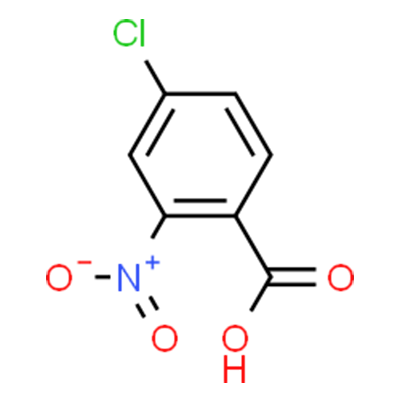
Product Overview
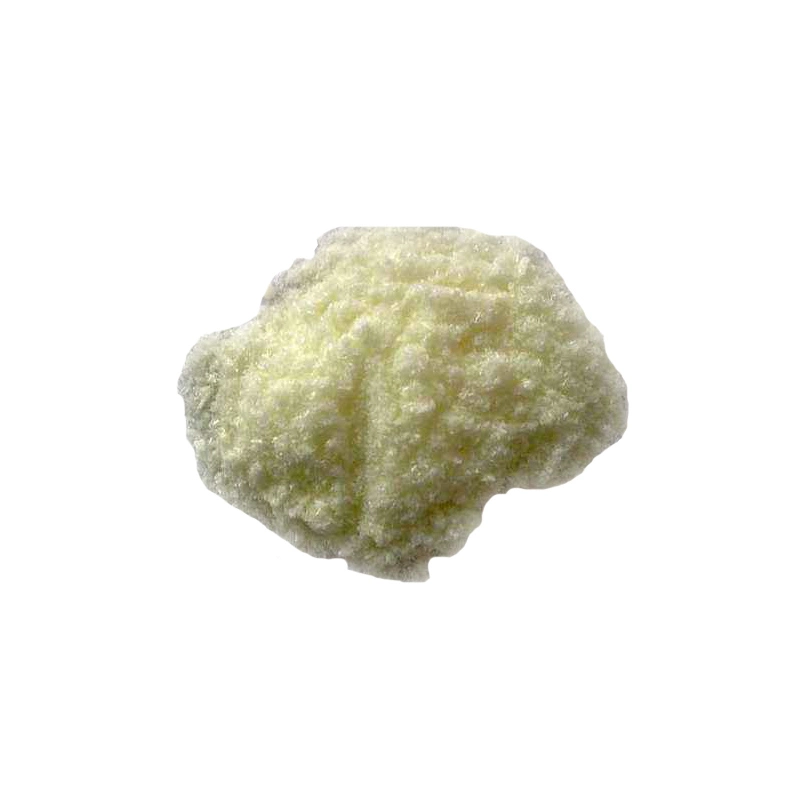
4-Chloro-2-nitrobenzoic Acid is an aromatic organic compound containing chlorine, nitro and carboxylic acid functional groups attached to a benzene ring. Its molecular formula is C₇H₄ClNO₄, and its molecular weight is 201.56 g/mol. It is also known as 4-Chloro-2-nitrobenzoate in certain chemical catalog descriptions. The product is generally supplied as a white to light-yellow crystalline powder, with a reported melting point of approximately 141–146°C. Commercial suppliers offer different grades, including products with purity specifications of 98% or higher
The combination of functional groups makes this compound a useful intermediate in organic synthesis. The carboxylic acid group can participate in esterification, amidation and other functional-group transformations. The nitro group can be reduced to an amino group under suitable reaction conditions, while the chlorine substituent provides another potential site for selected substitution reactions. These properties make the compound suitable for the preparation of more complex aromatic molecules.
4-Chloro-2-nitrobenzoic acid Chemical Properties
Melting point
| 141-143 °C (lit.) |
Boiling point | 160.5°C (rough estimate) |
density | 1.5 |
refractive index | 1.6000 (estimate) |
Fp | >100°C |
storage temp. | Sealed in dry,Room Temperature |
solubility | 5.3g/l |
pka | 1.97±0.25(Predicted) |
form | powder to crystal |
color | White to Light yellow |
Water Solubility | 0.53 g/100 mL (15 ºC) |
BRN | 2051370 |
InChIKey | JAHIPDTWWVYVRV-UHFFFAOYSA-N |
CAS DataBase Reference | 6280-88-2(CAS DataBase Reference) |
NIST Chemistry Reference | 4-Chloro-2-nitrobenzoic acid(6280-88-2) |
Safety Information
Hazard Codes | Xi |
Risk Statements | 36/37/38 |
Safety Statements | 26-36-24/25 |
RIDADR | UN 2811 6.1/PG 3 |
WGK Germany | 3 |
Hazard Note | Irritant |
HS Code | 29163900 |
Main Applications
Pharmaceutical Intermediates: Used as a building block in selected pharmaceutical-related synthesis routes.
Organic Synthesis: Applied in the preparation of substituted aromatic compounds.
Fine Chemical Manufacturing: Used as a starting material for specialty chemical production.
Aromatic Derivative Synthesis: Supports further chemical modification through its functional groups.
Chemical Research: Used in laboratory studies involving chlorinated and nitro-substituted aromatic compounds.
Intermediate Development: Applied in research and development of functionalized benzoic acid derivatives.


