
Product Overview
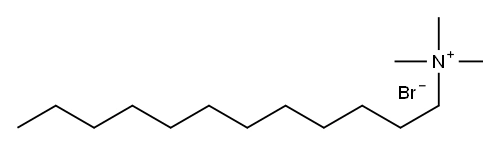
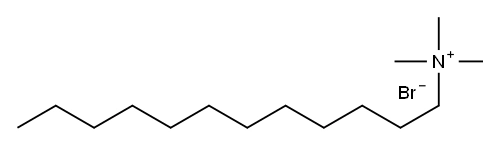
Dodecyltrimethylammonium Bromide, commonly abbreviated as DTAB or C12TAB, is a cationic surfactant belonging to the quaternary ammonium compound family. Its molecular formula is C₁₅H₃₄BrN, and its molecular weight is 308.34 g/mol. The molecule consists of a positively charged trimethylammonium head group attached to a twelve-carbon dodecyl chain, with bromide serving as the counterion.
The product is generally supplied as a white to light-yellow crystalline powder. It exhibits characteristic surface-active behavior and can form micellar systems in aqueous environments, making it useful in studies of surfactant aggregation, interfacial properties, and molecular interactions. DTAB is also used in selected biochemical research procedures, including protein solubilization and cell lysis. In synthetic chemistry, it may function as a phase-transfer catalyst in appropriate reaction systems.
Dodecyltrimethylammonium Bromide Chemical Properties
Melting point | 246 °C (dec.)(lit.) |
density | 1.1566 (rough estimate) |
vapor pressure | 0Pa at 20℃ |
refractive index | 1.5260 (estimate) |
Fp | 246°C |
storage temp. | Store below +30°C. |
solubility | H2O: 0.1 M at 20 °C, clear, colorless |
form | Powder |
color | White to slightly yellow |
Water Solubility | soluble |
Sensitive | Hygroscopic |
λmax | λ: 240 nm Amax: ≤0.2 |
BRN | 3597463 |
InChIKey | XJWSAJYUBXQQDR-UHFFFAOYSA-M |
CAS DataBase Reference | 1119-94-4(CAS DataBase Reference) |
EPA Substance Registry System | 1-Dodecanaminium, N,N,N-trimethyl-, bromide (1119-94-4) |
Safety Information
Hazard Codes | Xi,Xn,N |
Risk Statements | 36/37/38-22-50/53 |
Safety Statements | 26-36-37/39-61-60 |
RIDADR | |
WGK Germany | 3 |
RTECS | BQ3195000 |
F | 3-10 |
TSCA | Yes |
HazardClass | 9 |
PackingGroup | III |
HS Code | 29239000 |
Toxicity | LD50 orally in Rabbit: 200 - 1000 mg/kg |
Main Applications
Biochemical Research: Used in protein solubilization and cell lysis procedures.
Cationic Surfactant Systems: Applied in micelle formation and surface chemistry studies.
Phase-Transfer Catalysis: Used in selected organic synthesis reactions.
Colloid Science: Supports research into surfactant aggregation and interfacial behavior.
Chemical Research: Used in laboratory studies involving quaternary ammonium compounds.


