
Product Overview
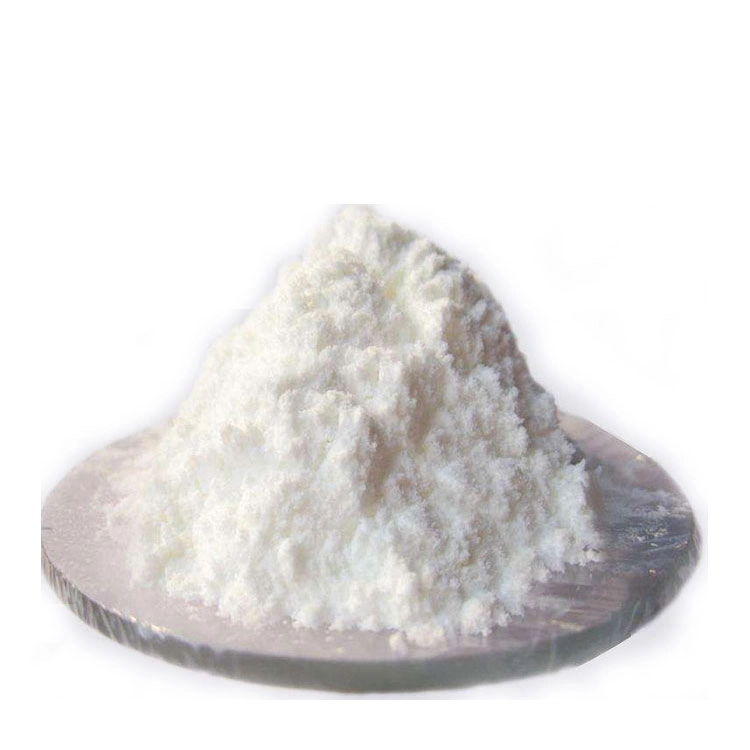
Dodecyltrimethylammonium Chloride (CAS 112-00-5), commonly abbreviated as DTAC, is a cationic surfactant belonging to the quaternary ammonium compound family. It has a molecular formula of C₁₅H₃₄ClN and a molecular weight of 263.89 g/mol. Its molecular structure consists of a positively charged quaternary ammonium head group attached to a twelve-carbon alkyl chain, with chloride serving as the counterion. The material is generally supplied as a white to off-white solid or crystalline powder and is soluble in water.
Due to its amphiphilic molecular structure, DTAC exhibits surface-active characteristics and can interact with interfaces in aqueous systems. It is used in selected formulations as a cationic surfactant, emulsifying agent, and antistatic ingredient. Its properties make it relevant to the preparation of surfactant systems, dispersion processes, and specialty chemical formulations.
Dodecyltrimethylammonium Chloride also has applications in laboratory research involving micelles, surface chemistry, colloidal systems, and interfacial behavior. In industrial applications, it may be used in selected chemical processing, textile-related formulations, and other systems requiring cationic surface activity. The appropriate concentration and grade depend on the formulation, compatibility requirements, and intended application.
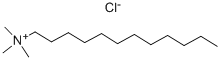
Dodecyltrimethylammonium chloride Chemical Properties
Melting point | 37 °C |
Boiling point | 412.12°C (rough estimate) |
density | 0.9265 (rough estimate) |
vapor pressure | 0Pa at 25℃ |
refractive index | n20/D 1.426 |
Fp | 19 °C |
storage temp. | Keep in dark place,Sealed in dry,Room Temperature |
solubility | H2O: 50 mg/mL, clear, colorless |
form | Powder or Chunks |
color | White to light yellow |
PH | 4.0 to 7.5(50 g/L, 25 ℃) |
Water Solubility | Soluble |
Sensitive | Hygroscopic |
BRN | 3915951 |
Stability: | Stable. Incompatible with strong oxidizing agents. Protect from moisture. |
InChIKey | DDXLVDQZPFLQMZ-UHFFFAOYSA-M |
LogP | 1.22 at 25℃ |
Surface tension | 860-1710mN/m at 52.78-105.56g/L and 25℃ |
CAS DataBase Reference | 112-00-5(CAS DataBase Reference) |
EPA Substance Registry System | Dodecyl trimethyl ammonium chloride (112-00-5) |
Safety Information
Hazard Codes | Xi,N,Xn,F |
Risk Statements | 36/37/38-50-50/53-22-67-11 |
Safety Statements | 26-61-60-37/39-36-16 |
RIDADR | UN 3077 9/PG 3 |
WGK Germany | 3 |
RTECS | JR2122500 |
F | 3-10 |
TSCA | Yes |
HazardClass | 6.1(b) |
PackingGroup | III |
HS Code | 29239000 |
Toxicity | LD50 orally in Rabbit: 200 - 1000 mg/kg |
Safety and Storage
Dodecyltrimethylammonium Chloride should be handled according to the supplier's Safety Data Sheet (SDS) and applicable chemical safety procedures. Recent supplier documentation identifies potential hazards including harmful effects if swallowed, skin irritation, serious eye irritation, and respiratory irritation. Some supplier classifications also identify significant aquatic toxicity, including long-term effects on aquatic organisms. Therefore, the material should not be released into drains, waterways, or the natural environment.
During handling, avoid generating or inhaling dust. Use appropriate personal protective equipment, including chemical-resistant gloves, safety goggles, and protective clothing. Handle the product in a well-ventilated area or under suitable local exhaust ventilation, particularly during weighing, transferring, and mixing operations. Avoid direct contact with skin and eyes. Wash hands thoroughly after handling and remove contaminated clothing before reuse. In case of eye contact, rinse cautiously with water for several minutes and seek medical attention according to the supplier's SDS.


