
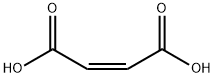
Products Description
Polymaleic acid (PMA) is a homopolymer derived from maleic acid and exhibits excellent stability in the presence of chlorine and other oxidizing biocides. It possesses effective scale-inhibition properties and good thermal resistance, making it suitable for applications in water desalination plants. It is particularly effective as a calcium carbonate antiscalant under high-temperature conditions and in highly alkaline cooling water systems. Furthermore, polymaleic acid can be combined with zinc salts to enhance corrosion inhibition. Other applications include its use as a concrete additive and in crude oil evaporation processes.
Polymaleic acid can be produced through the polymerization of maleic anhydride in an aromatic hydrocarbon medium at temperatures ranging from 60°C to 200°C.
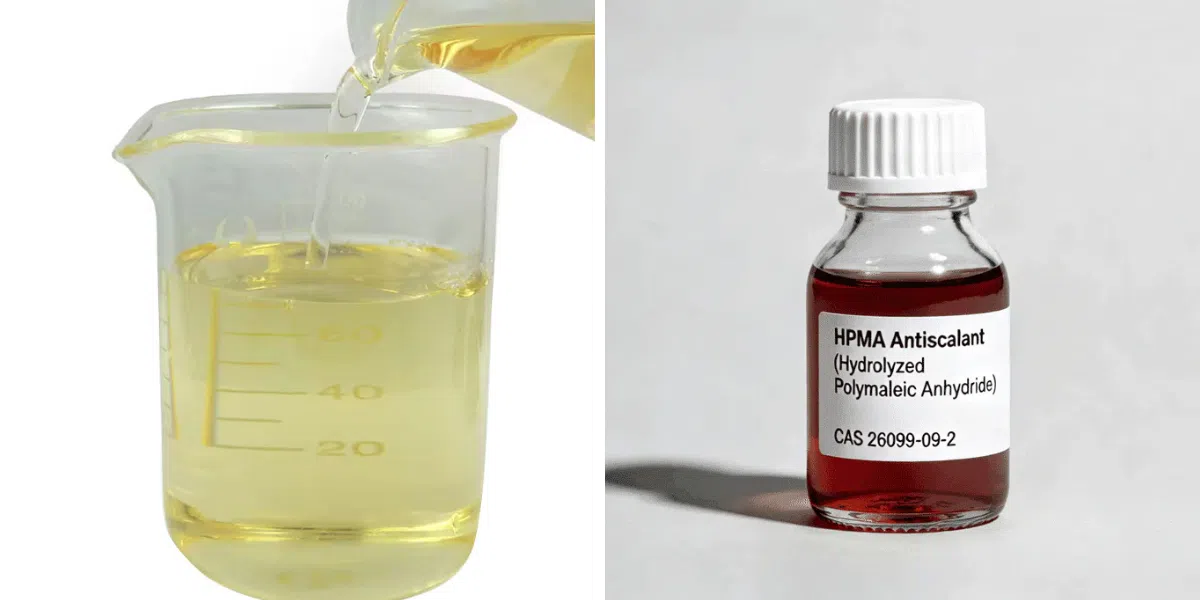
Product Name: | Polymaleic acid |
Synonyms: | Hydrolized polymaleic anhydride;2-Butenedioicacid(Z)-,homopolymer;Hydroxypropylmethacrylamide;HoMopolyMer of Maleic Acid(HPMA);POLY(MALEIC ACID);(z)-2-butenedioic acid homopolymer;poly(maleicacid)(50%aq);MALEIC ACID POLYMER |
CAS: | 26099-09-2 |
MF: | C4H4O4 |
MW: | 116.07 |
EINECS: | 607-861-7 |
Product Categories: | Water treatment;Polymers |
Mol File: | 26099-09-2.mol |
Chemical Properties
density | 1.18 (48% aq.) |
Fp | 95 °C |
storage temp. | 2-8°C |
solubility | Methanol (Sparingly), Water (Soluble) |
form | Pale Yellow to Yellow Solution |
Odor | Slight |
InChI | InChI=1S/C4H4O4/c5-3(6)1-2-4(7)8/h1-2H,(H,5,6)(H,7,8)/b2-1- |
InChIKey | VZCYOOQTPOCHFL-UPHRSURJSA-N |
SMILES | C(/C(=O)O)=C/C(=O)O |
EPA Substance Registry System | Maleic acid homopolymer (26099-09-2) |
Safety Information
Hazard Codes | C,Xi |
Risk Statements | 36-43-36/37/38 |
Safety Statements | 24/25-28-36/37/39-36/37-26 |
RIDADR | UN 3265 |
Product Applications
1. Oil Industry: Polymaleic acid (PMA) can be used in the acidizing treatment of oil wells during petroleum extraction. It helps dissolve carbonate minerals in surrounding rock formations, thereby improving reservoir permeability and facilitating oil flow, which can contribute to increased oil recovery. Additionally, it can help reduce acid-related corrosion of oilfield equipment.
2. Papermaking Industry: PMA can function as a paper-strengthening agent and retention aid. It enhances paper strength through chemical interactions or physical adsorption with cellulose fibers. Furthermore, it promotes the retention of fine fibers and fillers during the papermaking process, improving paper quality and raw material utilization. For example, it can be incorporated into the production of high-strength packaging paper and printing and writing paper.
3. Textile Industry: PMA can be used as an auxiliary agent in textile printing and dyeing processes. It helps improve dye dispersion and promote uniform dye distribution, thereby enhancing dyeing quality. In addition, it can reduce dye aggregation and precipitation on fabric surfaces, minimizing common defects such as uneven coloration and color spots.
4. Other Applications: PMA and its derivatives may also serve as polymerizable monomers or polymer modifiers in the development of other polymeric materials. Their chemical structures can be utilized in polymer synthesis or modification to introduce desirable properties, such as improved hydrophilicity and antifouling performance.


