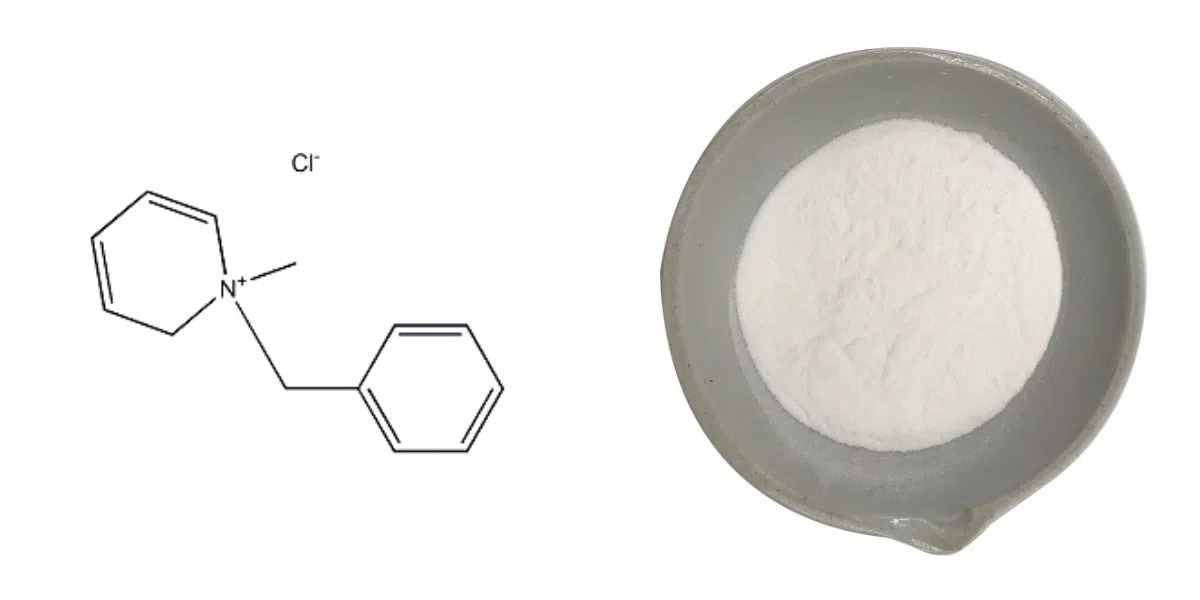
Pyridinium, 1-(phenylmethyl)-, ethyl methyl derivs., chlorides Chemical Properties
Boiling point | 116.34℃[at 101 325 Pa] |
density | 1.104[at 20℃] |
vapor pressure | 2hPa at 20℃ |
Water Solubility | 100g/L at 30℃ |
InChI | InChI=1S/C13H16N.ClH/c1-14(10-6-3-7-11-14)12-13-8-4-2-5-9-13;/h2-10H,11-12H2,1H3;1H/q+1;/p-1 |
InChIKey | NBNVYJFZJWMHPR-UHFFFAOYSA-M |
SMILES | C1[N+](CC2=CC=CC=C2)(C)C=CC=C1.[Cl-] |
LogP | 3 at 25℃ |
EPA Substance Registry System | 1-(Phenylmethyl)pyridinium Et Me derivs., chlorides (68909-18-2) |
Product Overview
Pyridinium compounds are a family of nitrogen-containing heterocyclic compounds derived from pyridine. They generally feature a positively charged nitrogen atom and an associated counterion or substituent structure.
Pyridinium compounds are typically synthesized by introducing a positive charge onto the pyridine ring, which can be achieved through quaternization or related ionization strategies. As the structure becomes more substituted or more strongly stabilized by surrounding groups, the resulting salts may show distinct solubility, melting behavior, and stability under different environmental conditions. In practical handling, the choice of counterion is especially important, because it influences hygroscopicity, crystallinity, and compatibility with solvents and substrates.In organic synthesis, pyridinium derivatives are often valued for their ability to act as catalysts, intermediates, or electrophilic reagents. The positively charged ring can enhance reactivity toward nucleophiles, enabling selective transformations under controlled conditions. Depending on the functional groups attached to the pyridinium core, these compounds may promote reactions such as alkylation, transfer processes, or activation of specific reaction partners. Researchers also consider factors like electron density distribution and steric effects when selecting an appropriate pyridinium scaffold for a given synthetic route.In specialty chemical research, pyridinium compounds are widely examined for their tuning potential and multi-functional characteristics. By varying substituents on the pyridine ring or exchanging the accompanying counterion, properties such as optical absorption, redox behavior, and surface activity can be adjusted. This tunability makes them attractive candidates for developing functional materials, including charge-conducting systems and tailored ionic additives. Additionally, their heterocyclic nature may provide useful anchoring sites for further functionalization, supporting the construction of more complex architectures.For ionic material development and formulation systems, pyridinium salts may contribute to ion transport, interfacial modulation, and improved performance in targeted applications. Their ionic character can help control viscosity, conductivity, and wetting characteristics in liquid or semi-solid formulations. When incorporated into advanced materials, pyridinium compounds can also influence morphology and compatibility between components, thereby affecting long-term durability and operating stability. Nevertheless, performance outcomes depend strongly on the specific chemical identity, purity level, and processing conditions.It is recommended to verify key product parameters before use, including structural confirmation, salt form, purity, and any available stability or safety information. Because pyridinium compounds can vary significantly between different derivatives, even small changes in substitution pattern or counterion type may lead to noticeable differences in behavior. Only after the exact product identity is confirmed can reliable predictions be made regarding suitability for intended synthesis steps, material formulations, or research applications.
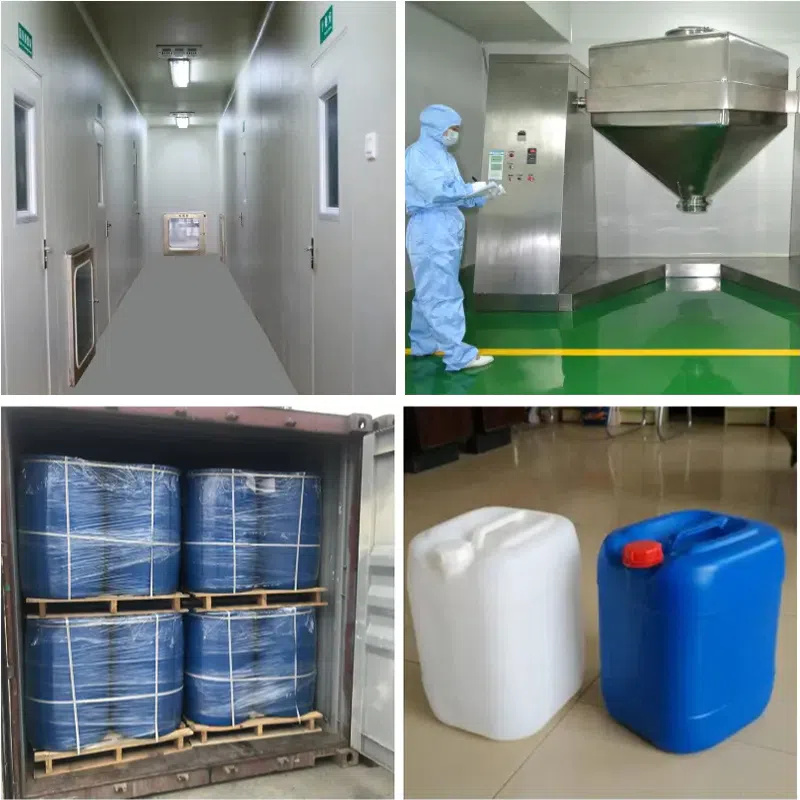
Product Manufacturing Process
Pyridinium compounds are generally prepared through chemical reactions involving pyridine derivatives and suitable reagents, followed by purification and quality testing. The specific manufacturing process depends on the molecular structure of the target compound.