
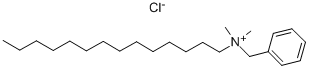
Product Overview
Tetradecyldimethylbenzylammonium Chloride, also known as Benzyldimethyltetradecylammonium Chloride or Myristalkonium Chloride, is a quaternary ammonium compound with the molecular formula C₂₃H₄₂ClN and a molecular weight of 368.04 g/mol. It consists of a tetradecyl alkyl chain, a benzyl group, and a positively charged quaternary ammonium center paired with a chloride ion.
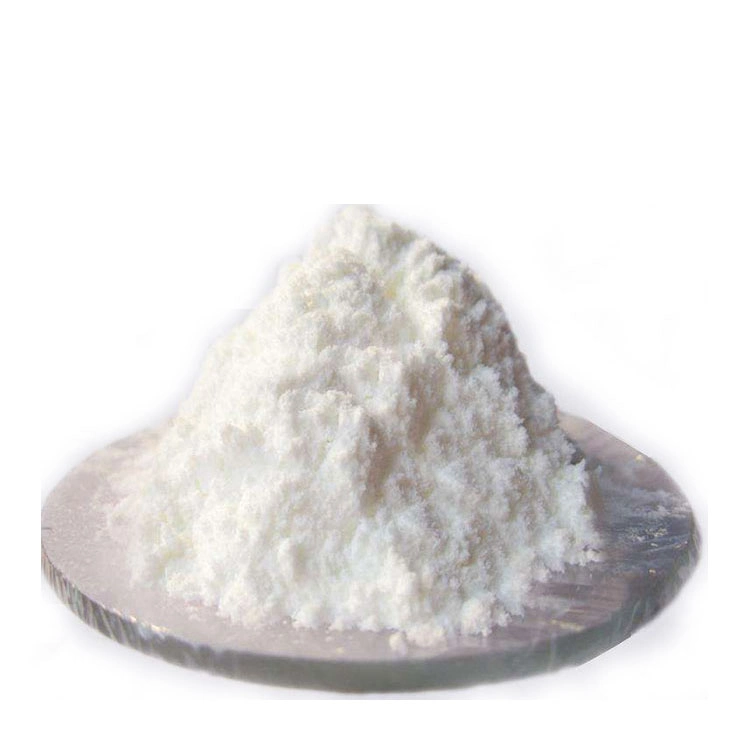
The product is generally supplied as a white to off-white powder or solid, with a reported melting point of approximately 56–62°C. It is water-soluble and exhibits characteristic cationic surface-active properties. These characteristics make it suitable for selected industrial and formulation applications.
Tetradecyldimethylbenzylammonium chloride Chemical Properties
Melting point | 56-62 °C |
density | 1.02[at 20℃] |
vapor pressure | 0Pa at 25℃ |
storage temp. | 2-8°C |
solubility | water: soluble1g/10 mL, clear, colorless |
form | White powder |
color | White to Almost white |
Water Solubility | almost transparency |
Merck | 14,1059 |
Stability: | Hygroscopic |
InChIKey | OCBHHZMJRVXXQK-UHFFFAOYSA-M |
LogP | 3.2 at 20℃ |
CAS DataBase Reference | 139-08-2(CAS DataBase Reference) |
EPA Substance Registry System | Tetradecyl dimethyl benzyl ammonium chloride (139-08-2) |
Safety Information
Hazard Codes | C,N |
Risk Statements | 21/22-34-50-50/53 |
Safety Statements | 36/37/39-45-61-60-26 |
RIDADR | UN 3261 8/PG 3 |
WGK Germany | 3 |
RTECS | BO7150000 |
F | 3 |
TSCA | Yes |
HazardClass | 8 |
PackingGroup | III |
HS Code | 29239000 |
Hazardous Substances Data | 139-08-2(Hazardous Substances Data) |
Safety and Storage
Tetradecyldimethylbenzylammonium Chloride requires careful handling because it may present significant health and environmental hazards. Supplier safety documentation identifies potential hazards including harmful effects if swallowed or absorbed through the skin, severe skin burns, serious eye damage, and toxicity to aquatic organisms. The exact classification may vary depending on the supplier, product form, and applicable regulatory system.
Avoid direct contact with skin and eyes, and do not inhale dust or aerosols. Handle the material in a well-ventilated area or under suitable local exhaust ventilation. Wear chemical-resistant gloves, protective clothing, and appropriate eye and face protection. Wash hands thoroughly after handling, and do not eat, drink, or smoke in areas where the chemical is used.


