
Products Description
N-methylaniline is the primary product in the N-alkyl aromatic amine series and serves as an important intermediate in the fine chemical industry, with a wide range of applications. The first production facility for N-methylaniline in China was established in the 1950s with assistance from the former Soviet Union. Its products were initially used mainly in the manufacture of explosive centralizers and are also commonly employed as additives in straight-run gasoline blending. Since straight-run gasoline contains a relatively high proportion of n-alkanes and consequently has a low octane rating, it is generally used as a base component in gasoline blending. To improve its octane number, some technicians add N-methylaniline to straight-run gasoline, thereby enhancing fuel performance while achieving the objectives of low investment and high efficiency.
Product Name: | N-Methylaniline |
Synonyms: | N-METHYLANILINE;N-METHYLAMINOBENZENE;N-MONOMETHYLANILINE;(Methylamino)benzene;Benzenamine, N-methyl-;Benzenenamine, N-methyl-;methylaniline(non-specificname);methylaniline-n |
CAS: | 100-61-8 |
MF: | C7H9N |
MW: | 107.15 |
EINECS: | 202-870-9 |
Product Categories: | Amines;Building Blocks;C7;Chemical Synthesis;Nitrogen Compounds;Organic Building Blocks;Fine Intermediate;Anilines, Aromatic Amines and Nitro Compounds;Organics;Intermediates of Dyes and Pigments;100-61-8 |
Mol File: | 100-61-8.mol |
Chemical Properties
Melting point | −57 °C (−71 °F; 216 K) |
Boiling point | 194 to 196 °C (381 to 385 °F; 467 to 469 K) |
density | 0.99 g/mL |
vapor pressure | 0.5 hPa (20 °C) |
refractive index | 1.57 |
Fp | 79 °C; 175 °F; 353 K |
storage temp. | Store below +30°C. |
solubility | water: slightly soluble30g/L |
pka | 4.84(at 25℃) |
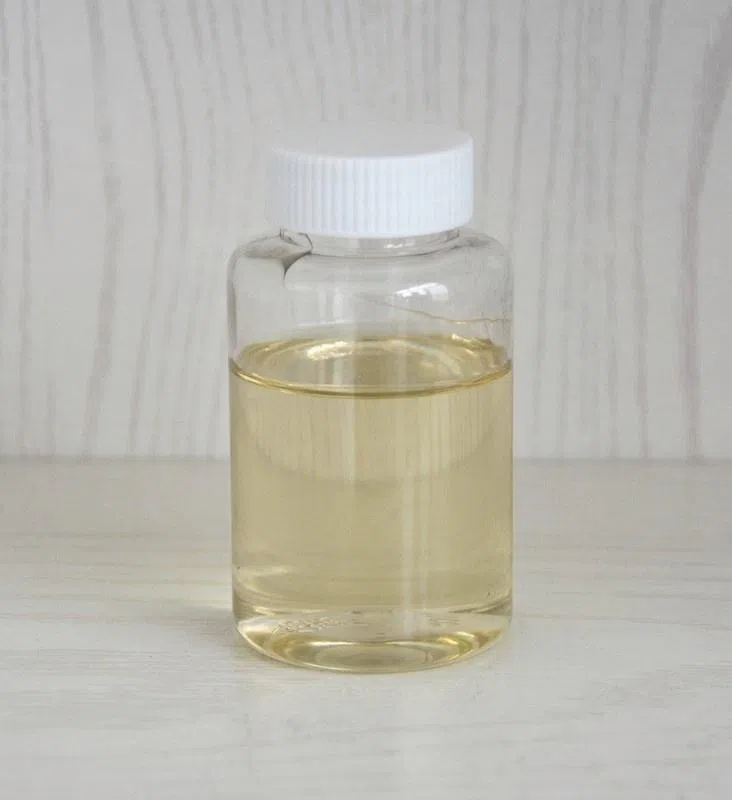
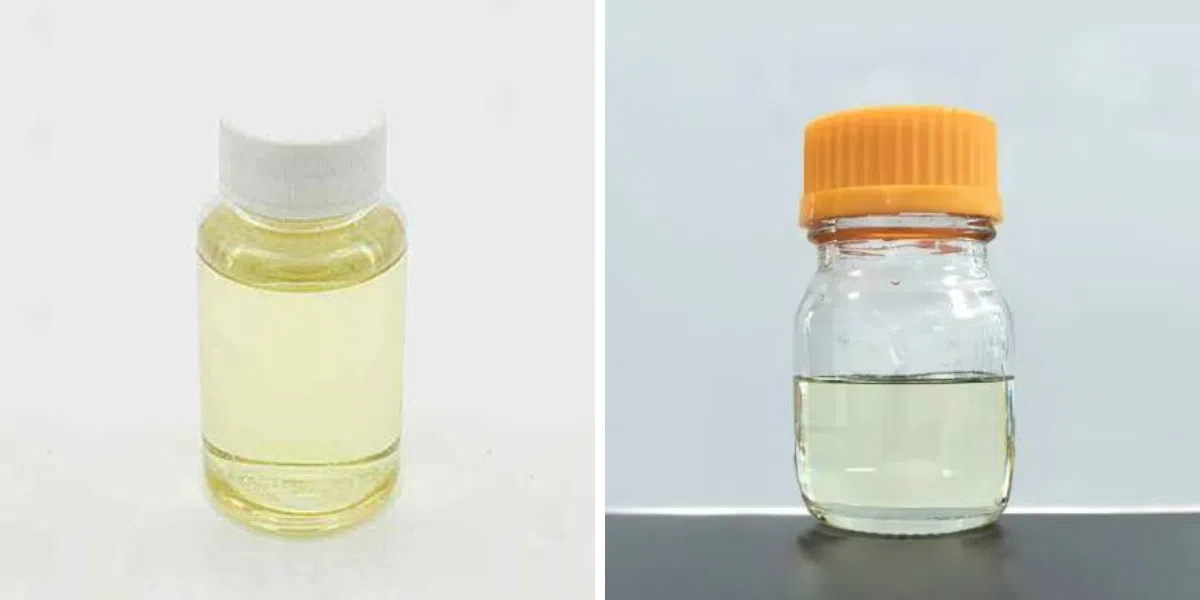
form | liquid |
color | colorless |
PH | 7.6 (1g/l, H2O, 20℃) |
Odor | Moderate aniline-type. |
Water Solubility | 30 g/L |
Specific Heat Capacity | Cp(liquid): 1.93 J/(g·K), at 25℃ |
Sensitive | Air Sensitive |
Merck | 14,6019 |
BRN | 741982 |
Henry's Law Constant | (x 10-5 atmm3/mol): 1.19 at 25 °C (approximate - calculated from water solubility and vapor pressure) |
Exposure limits | ACGIH:TLV-TWA 0.5 ppm (2.2 mg/m3) |
Dielectric constant | 6.0(22℃) |
Stability: | Incompatible with strong oxidizing agents. Discolours upon exposure to air. |
InChI | 1S/C7H9N/c1-8-7-5-3-2-4-6-7/h2-6,8H,1H3 |
InChIKey | AFBPFSWMIHJQDM-UHFFFAOYSA-N |
SMILES | CNc1ccccc1 |
LogP | 1.66 at 20℃ |
CAS DataBase Reference | 100-61-8(CAS DataBase Reference) |
NIST Chemistry Reference | Aniline, N-methyl-(100-61-8) |
EPA Substance Registry System | N-Methylaniline (100-61-8) |
Safety Information
Hazard Codes | T,N |
Risk Statements | 23/24/25-33-50/53 |
Safety Statements | 28-36/37-45-60-61-28A |
OEB | B |
OEL | TWA: 0.5 ppm (2 mg/m3) [skin] |
RIDADR | UN 2294 |
WGK Germany | 3 |
RTECS | BY4550000 |
F | 8 |
Autoignition Temperature | 500 °C |
TSCA | TSCA listed |
HazardClass | 6.1 |
PackingGroup | III |
HS Code | 2921420090 |
Storage Class | 6.1C - Combustible acute toxic Cat.3 |
Hazard Classifications | Acute Tox. 3 Dermal |
Hazardous Substances Data | 100-61-8(Hazardous Substances Data) |
Toxicity | LD in rabbits (g/kg): 0.28 orally; in rabbits, cats (mg/kg): 24, 24 i.v. (Treon) |
IDLH | 100 ppm |
Product Applications
N-methylanilineisanimportantchemicalintermediatewithapplicationsinseveralindustries.Itisusedasarawmaterialintheproductionofthepesticidebuprofen,particularlyforsynthesizingtheintermediateN-chloromethyl-N-phenylcarbamoylchloride.Inaddition,itservesasanintermediateinthesynthesisoftheherbicidephenylpropamideandiswidelyusedinthedyeindustry.


