
Products Description
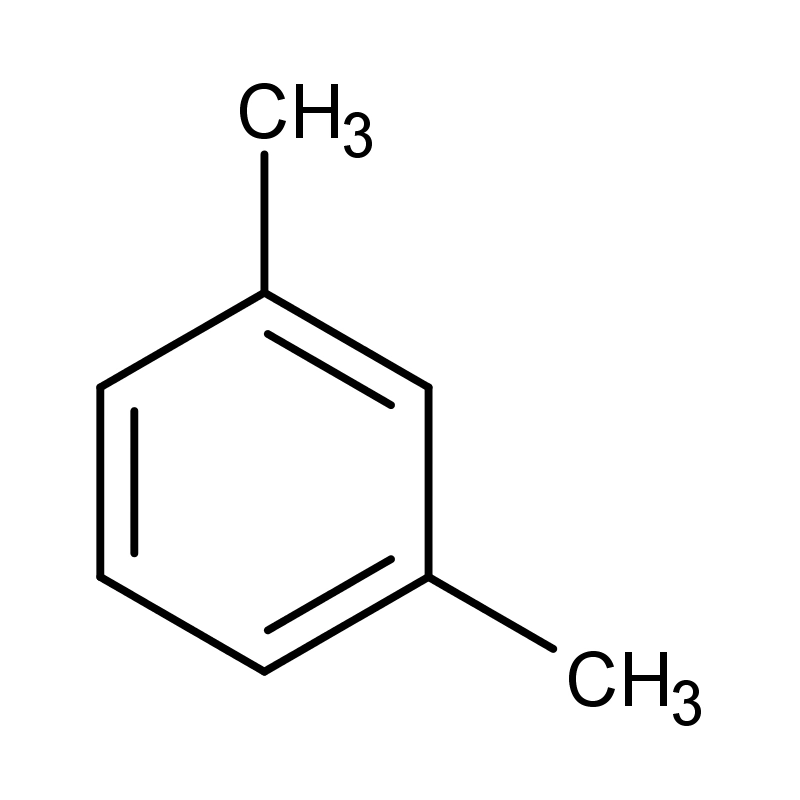
Xylene (CAS 1330-20-7, molecular formula C₈H₁₀) is a clear, colorless, flammable liquid with a characteristic aromatic odor, consisting of a mixture of ortho-, meta- and para-xylene isomers together with ethylbenzene. With a boiling range of approximately 137–144 °C and a density of about 0.86–0.87 g/cm³, it is one of the most widely used industrial solvents in the world.
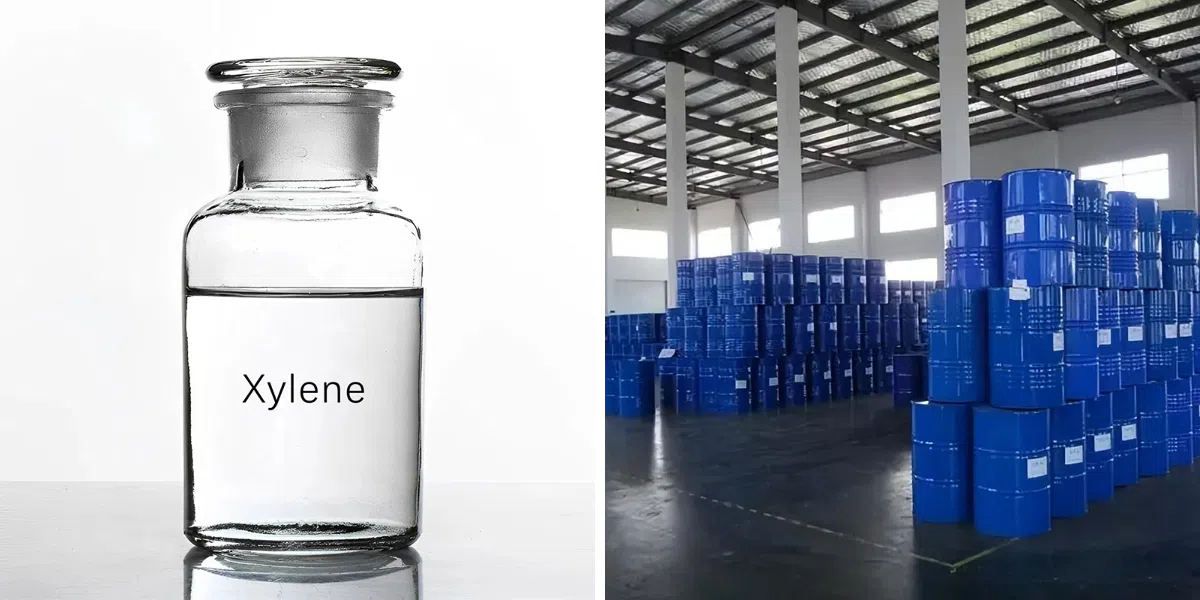
Xylene offers excellent dissolving power for resins, oils, greases and many organic compounds, making it an ideal thinner and solvent for paints, coatings, printing inks, adhesives and cleaning agents. It is also widely used in the pesticide industry for formulating emulsifiable concentrates, and serves as a key raw material in the production of phthalic anhydride, terephthalic acid and other chemical intermediates.
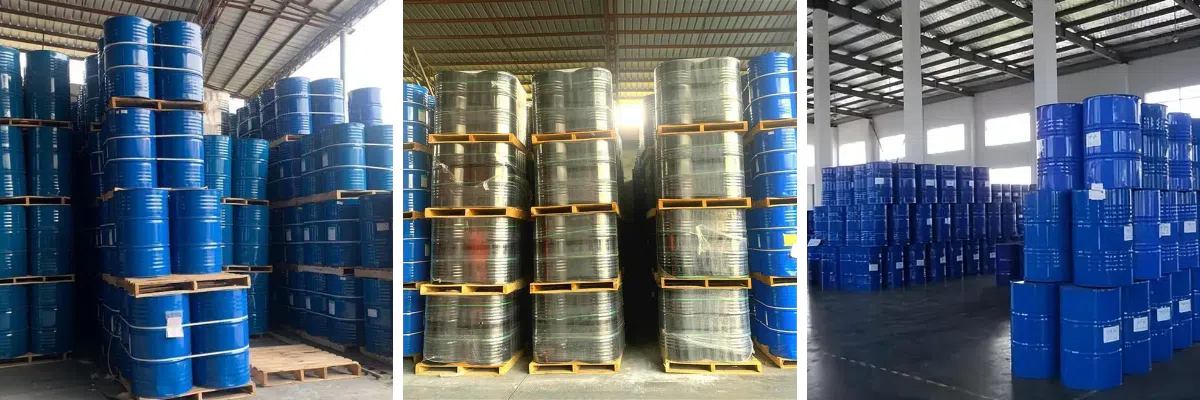
Typical specifications: purity ≥ 99.0% (mixed isomers), appearance as a clear liquid free of suspended matter, water content ≤ 0.05%. Available packaging: 180 kg steel drums, ISO tanks or bulk tanker delivery.
Chemical Properties
Property | Value |
|---|---|
Melting Point | −34 °C |
Boiling Point | 137–144 °C (mixed isomers) |
Density | 0.86–0.87 g/cm³ at 20 °C |
Vapor Density | ≈ 3.7 (air = 1) |
Vapor Pressure | ≈ 8 mmHg at 20 °C; 18 mmHg at 37.7 °C |
Refractive Index | n_D²⁰ ≈ 1.495–1.497 |
Storage Temp. | Ambient — cool, dry, well-ventilated; keep container tightly closed, away from heat, sparks, strong oxidizers |
Solubility | Miscible with ethanol, ether, chloroform and most organic solvents |
Form | Clear liquid |
Color | Colorless |
Odor | Characteristic aromatic (sweet) odor |
Explosive Limit | 1.1% – 7.0% (v/v in air) |
Water Solubility | Practically insoluble — ≈ 0.13–0.2 g/L (130–200 mg/L) at 20–25 °C |
Merck | 14, 10081 |
BRN | 1901563 (Reaxys) |
Exposure Limits | OSHA PEL: 100 ppm (435 mg/m³) TWA · ACGIH TLV: 100 ppm TWA / 150 ppm STEL (A4) · NIOSH REL: 100 ppm TWA / 150 ppm STEL, IDLH 900 ppm · EU-OEL: 50 ppm (221 mg/m³) TWA / 100 ppm (442 mg/m³) STEL (skin) · China GBZ 2.1: PC-TWA 50 mg/m³ / PC-STEL 100 mg/m³ |
Dielectric Constant | ≈ 2.4 at 20 °C (o- 2.57, m- 2.37, p- 2.27) |
Stability | Stable under normal handling and storage; incompatible with strong oxidizers and strong acids; flammable — vapors form explosive mixtures with air |
InChIKey | Mixture — no single key: o-Xylene CTQNGGLPUBDAKN-UHFFFAOYSA-N · m-Xylene IVSZLXZYQVIEFR-UHFFFAOYSA-N · p-Xylene URLKBWYHVLBVBO-UHFFFAOYSA-N · Ethylbenzene YNQLUTRBYVCPMQ-UHFFFAOYSA-N |
LogP | ≈ 3.16 at 20 °C (range 3.12–3.20) |
CAS DataBase Reference | Xylene (1330-20-7) |
IARC | Group 3 — Not classifiable as to carcinogenicity to humans (Vol. 47, 71; 1999) |
EPA Substance Registry System | Listed under EPA SRS / TSCA (CAS 1330-20-7); Hazardous Air Pollutant (HAP); CERCLA RQ = 100 lb; EPCRA Section 313 reportable |
Safety Information
Field | Value | Remarks / Source |
|---|---|---|
Hazard Codes | Xn (Harmful); F (Flammable) | Old EU classification (67/548/EEC); under GHS/CLP: Flam. Liq. 3, Acute Tox. 4, Skin Irrit. 2; Signal word: Danger |
Risk Statements | R10, R20/21, R38 | Flammable; harmful by inhalation and in contact with skin; irritating to skin |
Safety Statements | S25, S36/37 | Avoid contact with eyes; wear suitable protective clothing and gloves (some SDS also list S62) |
RIDADR | UN 1307, Class 3 | ADR/RID/IMDG/IATA: XYLENES, UN 1307 |
OEB | A | Occupational Exposure Band per ChemicalBook; employer-specific schemes may differ |
OEL | TWA: 100 ppm (435 mg/m³); STEL: 150 ppm (655 mg/m³) | ACGIH TLV; OSHA PEL: 100 ppm TWA. China GBZ 2.1: PC-TWA 50 mg/m³, PC-STEL 100 mg/m³ |
WGK Germany | 2 | "Obviously hazardous to water" (Wassergefährdungsklasse 2) |
RTECS | ZE2100000 | RTECS number for xylene (mixed isomers) |
Autoignition Temperature | 465 °C (867 °F) | Range typically 432–527 °C depending on isomer composition |
TSCA | Listed (Yes) | On US TSCA Inventory |
HazardClass | 3 | Flammable liquids (transport classification) |
PackingGroup | II / III | PG II per some sources; PG III per others (depends on flash point & isomer mix — confirm with your supplier's SDS) |
HS Code | 2902.44 | Aromatic hydrocarbons — xylene, mixed isomers (o-/m-/p-xylene: 2902.41/42/43) |
Hazardous Substances Data | Available (HSDB No. 1330-20-7) | Full toxicological data in NLM HSDB / PubChem CID 7809 |
Toxicity | Oral (rat) LD50: ~4,300 mg/kg; Inhalation (rat, 4 h) LC50: ~6,700 ppm; Dermal (rabbit) LD50: >1,700 mg/kg | Typical values from HSDB/RTECS; figures vary slightly by isomer ratio and purity |


