Chemically designated as $N$-(4-hydroxyphenyl)acetamide and commercially recognized as paracetamol, this agent belongs to the acetanilide class of antipyretic and analgesic pharmaceuticals. Originally synthesized by Morse in 1878, it was first introduced into clinical practice by Von Mering in 1893. The compound achieved over-the-counter regulatory status in the United States in 1955, whereas domestic production within China was initiated during the late 1950s.
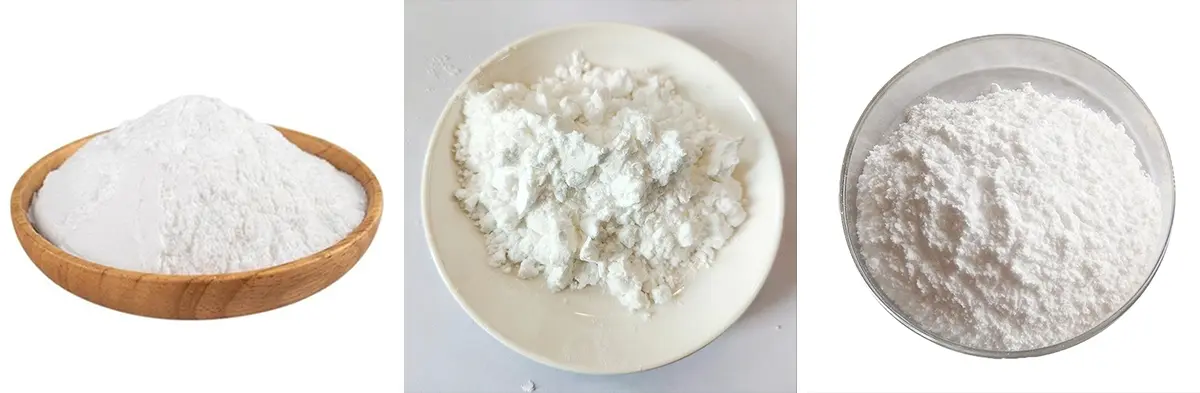
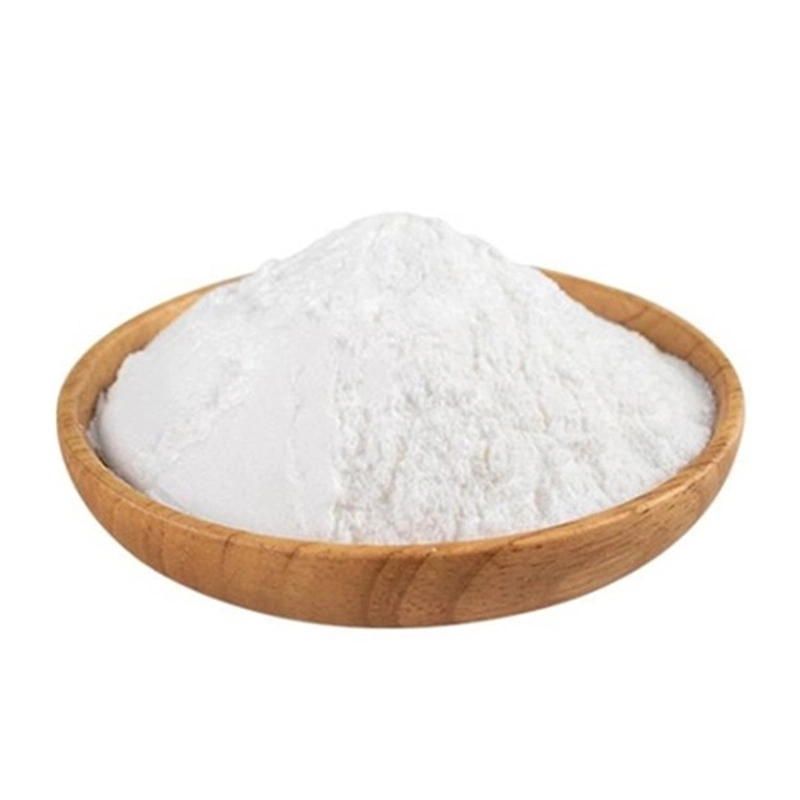
This agent manifests as white crystalline formations or fine crystal powders, characterized by a melting point range of $168\text{--}172^\circ\text{C}$. It is odorless, possesses a mildly bitter taste, and demonstrates high solubility in hot water and ethanol, moderate solubility in acetone, and virtually negligible solubility in cold water and petroleum ether. While acetaminophen remains chemically stable at temperatures beneath $45^\circ\text{C}$, exposure to moisture induces hydrolysis, yielding $p$-aminophenol, which is susceptible to subsequent oxidation. This degradative cascade is visually characterized by a progressive color transition shifting from pink to brown and ultimately black, underscoring the critical necessity for cool, dry storage conditions.
| Melting point | 168-172 °C(lit.) |
| Boiling point | 273.17°C (rough estimate) |
| density | 1,293 g/cm3 |
| vapor pressure | 0.008Pa at 25℃ |
| refractive index | 1.5810 (rough estimate) |
| Fp | 11 °C |
| storage temp. | Inert atmosphere,Room Temperature |
| solubility | ethanol: soluble0.5M, clear, colorless |
| form | Crystals or Crystalline Powder |
| pka | 9.86±0.13(Predicted) |
| color | White |
| PH Range | 5.5 - 6.5 (H?O, 20 °C) (saturated solution) |
| PH | 5.5-6.5 (H2O, 20℃)(saturated solution) |
| Odor | odorless |
| explosive limit | 15%(V) |
| Water Solubility | 14 g/L (20 ºC) |
| Merck | 14,47 |
| BRN | 2208089 |
| BCS Class | 3,4 |
| InChIKey | RZVAJINKPMORJF-UHFFFAOYSA-N |
| LogP | 1.098 at 25℃ |
| CAS DataBase Reference | 103-90-2(CAS DataBase Reference) |
| NIST Chemistry Reference | Acetaminophen(103-90-2) |
| IARC | 3 (Vol. 50, 73) 1999 |
| EPA Substance Registry System | Acetaminophen (103-90-2) |
Safety Information
| Hazard Codes | Xn,T,F |
| Risk Statements | 22-36/37/38-52/53-36/38-40-39/23/24/25-23/24/25-11 |
| Safety Statements | 26-36-61-37/39-22-45-36/37-16-7 |
| RIDADR | UN 3077 9/PG III |
| WGK Germany | 1 |
| RTECS | AE4200000 |
| Autoignition Temperature | 540 °C |
| TSCA | Yes |
| HazardClass | 9 |
| PackingGroup | III |
| HS Code | 29242930 |
| Hazardous Substances Data | 103-90-2(Hazardous Substances Data) |
| Toxicity | LD50 in mice (mg/kg): 338 orally (Starmer), 500 i.p. (Dahlin, Nelson |