
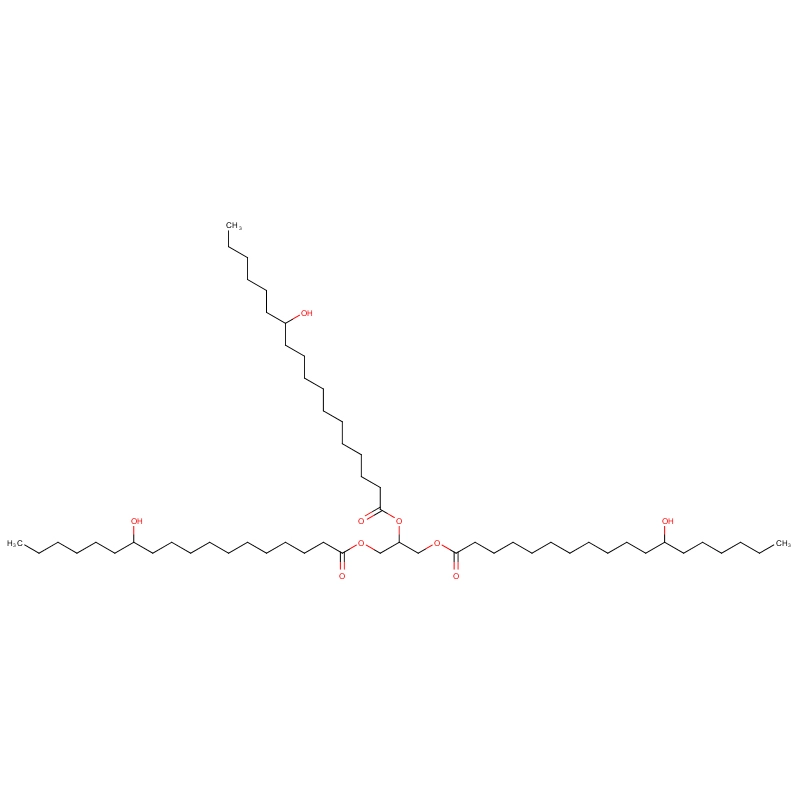
Castor oil is combustible but not highly flammable. While nearly insoluble in most standard solvents, it dissolves in ethanol and dissolves slightly in aliphatic hydrocarbons. It exhibits mild volatility, so proper storage is required. At room temperature, it is a clear, viscous liquid ranging from almost colorless to faintly yellow, characterized by a subtle odor and a light, slightly spicy flavor.
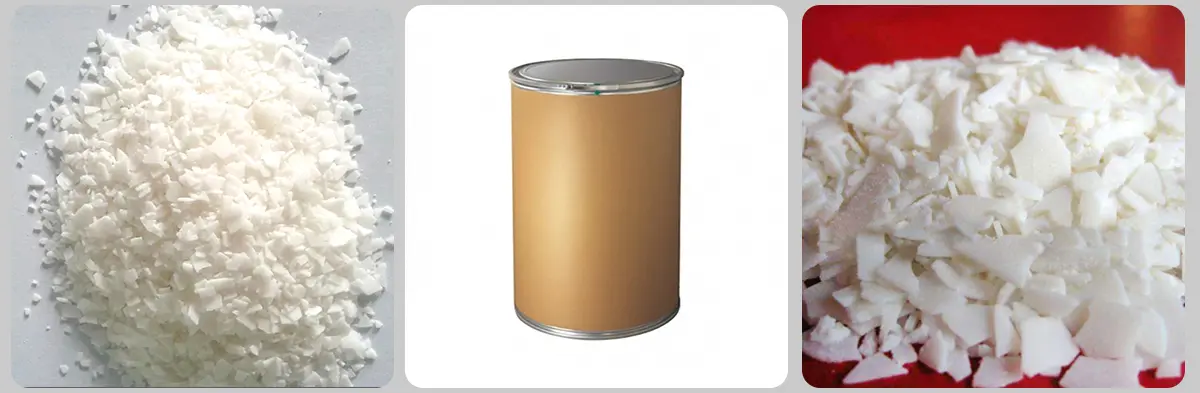
Hydrogenated castor oil Chemical Properties
| Density | 0.97g/cm3 at 20℃ |
| Vapor pressure | 0Pa at 20℃ |
| Solubility | Practically insoluble in water; soluble in acetone, chloroform, and methylene chloride. |
| Form | Powder |
| Dielectric constant | 10.3(27℃) |
| Stability | Stable. Combustible. Incompatible with strong oxidizing agents. |
| LogP | 18.75 |
| EPA Substance Registry System | Hydrogenated castor oil (8001-78-3) |

Product Application of Hydrogenated castor oil (CAS# 8001-78-3)
Hydrogenated castor oil finds extensive utility across a broad range of sectors, including personal care, pharmaceuticals, plastics, leather, and industrial lubricants. It plays a key role as a foundational material in synthesizing Turkish red oil, specialized soaps, polymeric materials, and high-performance lubrication products.
Within daily consumer and cosmetic products, it acts as an essential ingredient in cosmetics, shoe polishes, and medicinal ointment bases. Furthermore, it serves as an intermediate in manufacturing sebacic acid, low-temperature plasticizers, functional lubricants, fragrance preparations, textile penetrating agents, and industrial emulsifiers.
In pharmaceutical applications, it is utilized in laxative formulations and zinc-containing medical products. Functioning as a stimulant laxative, it acts primarily on the small intestine to encourage gastrointestinal motility. It is also employed as an anti-tack agent, mold release agent, carrier solvent, or protective coating, as well as being processed into sulfated derivatives.
For the leather and chemical processing industries, it provides effective fatliquoring, surface finishing enhancement, and high-gloss brightening. Additionally, it is used in the synthesis of specialized plasticizers, dicarboxylic acids, polyurethane coatings, elastomers, adhesives, fatty acid derivatives, surfactants, electrical insulating fluids, hydraulic fluids, and polyamide-11 synthetic fibers.