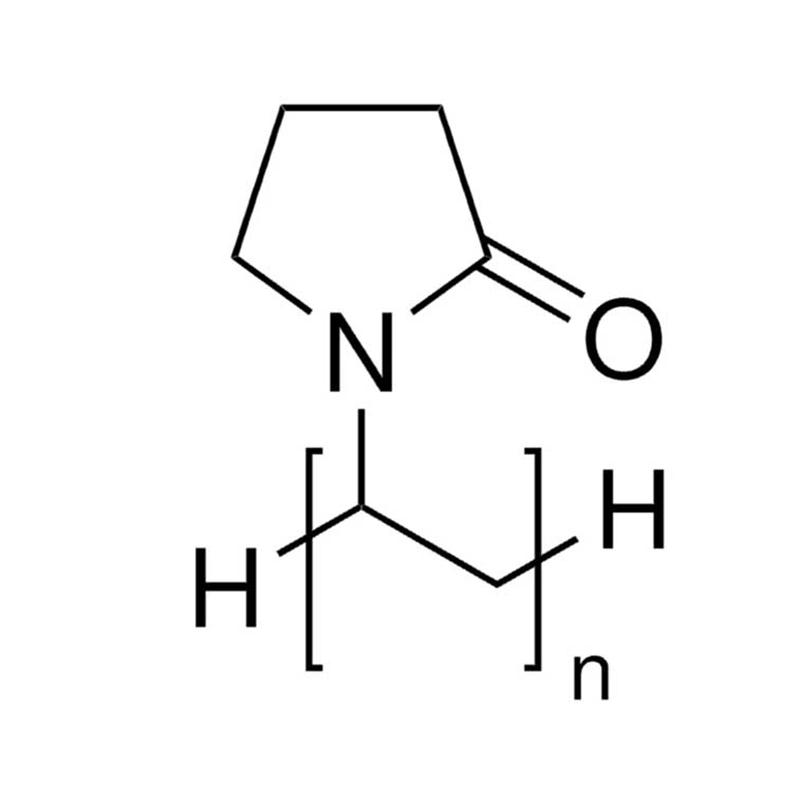
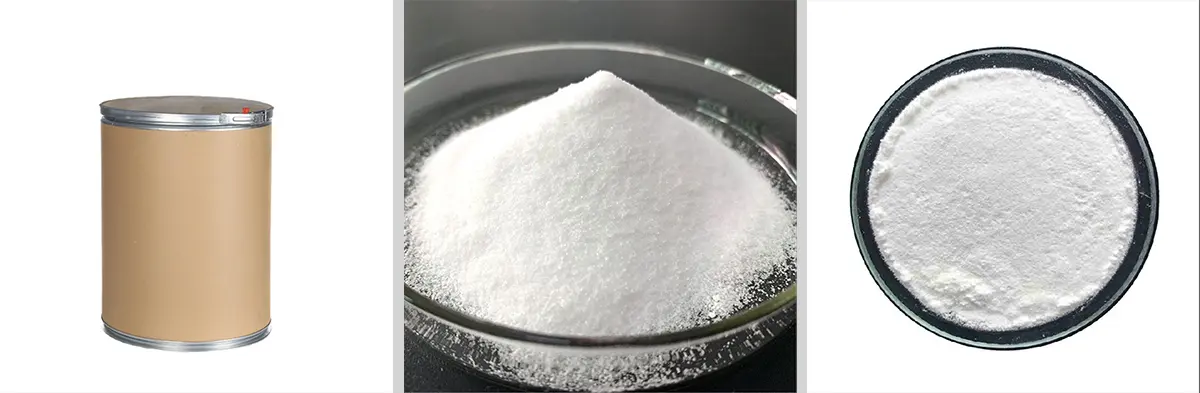
This material consists of a cross-linked homopolymer composed exclusively of pure vinylpyrrolidone, appearing as a hygroscopic, free-flowing powder ranging from white to off-white with a subtle, mild odor. Because it remains insoluble across the vast majority of standard solvents—water, ethanol, and ether alike—its molecular weight distribution is impossible to measure directly. Nevertheless, it readily forms complexes with specific compounds, such as polyphenolic elements responsible for discoloration in wines and beverages. Thanks to its complete insolubility, it can be effortlessly extracted via routine filtration methods, rendering it exceptionally well-suited for separation-dependent processes
Polyvinylpyrrolidone Chemical Properties
| Melting point | >300 °C |
| Boiling point | 90-93 °C |
| density | 1,69 g/cm3 |
| Tg | 175 |
| bulk density | 330kg/m3 |
| refractive index | (25) 1.5300 |
| refractive index | 1.5300 |
| storage temp. | 2-8°C |
| solubility | H2O: soluble100mg/mL |
| form | powder |
| color | White to yellow-white |
| PH | 3.0-5.0 |
| biological source | synthetic (oragnic) |
| Water Solubility | Soluble in water. |
| Sensitive | Hygroscopic |
| Merck | 14,7697 |
| Stability: | Stable. Incompatible with strong oxidizing agents. Light sensitive. Hygroscopic. |
| InChI | InChI=1S/C8H15NO/c1-3-7(2)9-6-4-5-8(9)10/h7H,3-6H2,1-2H3 |
| InChIKey | FAAHNQAYWKTLFD-UHFFFAOYSA-N |
| SMILES | N1(C(C)CC)C(=O)CCC1 |
| IARC | 3 (Vol. 19, Sup 7, 71) 1987 |
| EPA Substance Registry System | Polyvinylpyrrolidone (9003-39-8) |
Safety Information
| Safety Statements | 22-24/25 |
| WGK Germany | 1 |
| RTECS | TR8370000 |
| Autoignition Temperature | 440 °C |
| TSCA | Yes |
| HS Code | 39059990 |
| Hazardous Substances Data | 9003-39-8(Hazardous Substances Data) |
| Toxicity | LD50 orally in Rabbit: > 2000 mg/kg |