Product Description
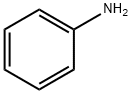
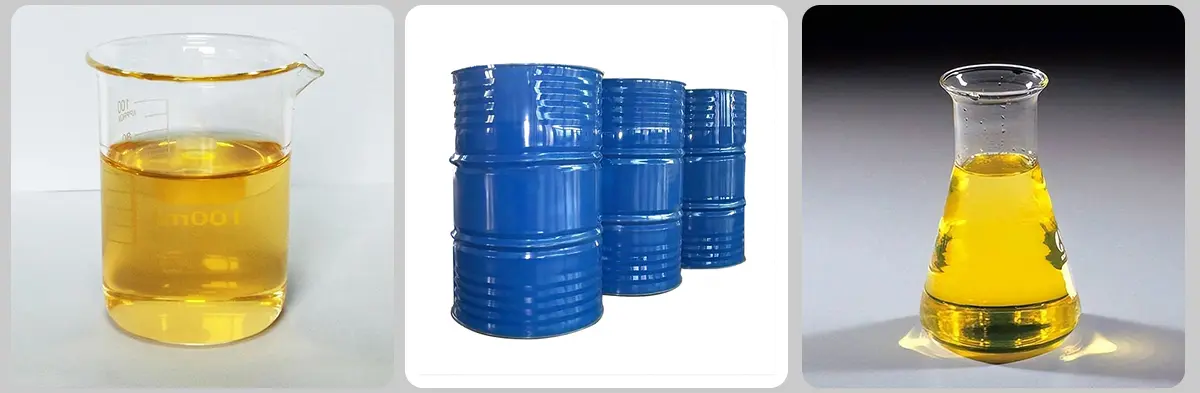
Aniline is the simplest and most important aromatic amine, consisting of a benzene ring with one hydrogen atom replaced by an amino group. It is a colorless, oily, flammable liquid with a characteristic pungent odor.
Chemical Properties
| Melting point | -6 °C (lit.) |
| Boiling point | 184 °C (lit.) |
| density | 1.022 g/mL at 25 °C (lit.) |
| vapor density | 3.22 (185 °C, vs air) |
| vapor pressure | 0.7 mm Hg ( 25 °C) |
| refractive index | n20/D 1.586(lit.) |
| Fp | 76 °C |
| storage temp. | 2-8°C |
| solubility | water: soluble |
| form | Liquid |
| pka | 4.63(at 25℃) |
| color | APHA: ≤250 |
| Specific Gravity | 1.021 |
| Odor | Sweet, amine-like odor detectable at 0.6 to 10 ppm |
| Relative polarity | 0.42 |
| PH | 8.8 (36g/l, H2O, 20℃) |
| PH Range | 8.1 |
| explosive limit | 1.2-11%(V) |
| Water Solubility | 36 g/L (20 ºC) |
| Merck | 14659 |
| BRN | 605631 |
| Henry's Law Constant | 1.91 at 25 °C (thermodynamic method-GC/UV spectrophotometry, Altschuh et al., 1999) |
| Exposure limits | TLV-TWA skin 2 ppm (~8 mg/m3) (ACGIH), 5 ppm (~19 mg/m3) (MSHA, OSHA, and NIOSH); IDLH 100 ppm (NIOSH). |
| Dielectric constant | 7.8(0℃) |
| Stability: | Stable. Incompatible with oxidizing agents, bases, acids, iron and iron salts, zinc, aluminium. Light sensitive. Combustible. |
| LogP | 0.9 |
| CAS DataBase Reference | 62-53-3(CAS DataBase Reference) |
| IARC | 2A (Vol. 27, Sup 7, 127) |
| NIST Chemistry Reference | Aniline(62-53-3) |
| EPA Substance Registry System | Aniline (62-53-3) |
| Hazard Codes | T,N,F |
| Risk Statements | 23/24/25-40-41-43-48/23/24/25-50-68-48/20/21/22-39/23/24/25-11 |
| Safety Statements | 26-27-36/37/39-45-46-61-63-36/37-16 |
| RIDADR | UN 1547 6.1/PG 2 |
| OEL | TWA: None ppm |
| WGK Germany | 2 |
| RTECS | BW6650000 |
| F | 46243 |
| Autoignition Temperature | 615 °C |
| TSCA | Yes |
| HS Code | 2921 41 00 |
| HazardClass | 6.1 |
| PackingGroup | II |
| Hazardous Substances Data | 62-53-3(Hazardous Substances Data) |
| Toxicity | LD50 orally in rats: 0.44 g/kg (Jacobson) |
| IDLA | 100 ppm |
Product Usage
Aniline has been widely used as an important industrial chemical for many years. Its major applications include the production of polyurethanes and rubber products. It is also used in smaller quantities to manufacture pesticides, such as herbicides, fungicides, and insecticides, as well as defoliants, dyes, antioxidants, antidegradants, and vulcanization accelerators.
Furthermore, aniline is used in various household and industrial products, including stove and shoe polishes, paints, varnishes, and marking inks.