
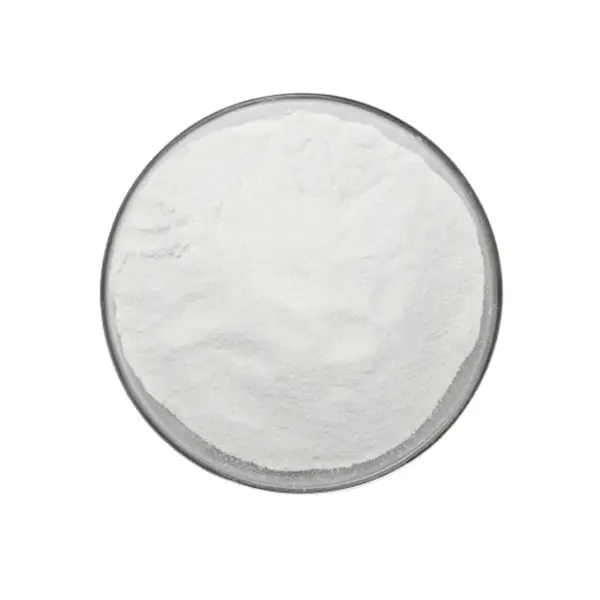
Products Description
2,3,3′,4′-Biphenyl Tetracarboxylic Dianhydride (a-BPDA) is an important high-performance polymer intermediate known for its outstanding thermal stability, chemical and solvent resistance, and radiation resistance. It also exhibits excellent mechanical strength and dielectric properties, making it a valuable material for the development of advanced polymers. Due to its superior overall performance, a-BPDA offers promising application prospects across a wide range of industries and advanced material technologies.
Product Name: | 2,3,3,4-biphenyl tetracarboxylic dianhydride |
Synonyms: | 4,5'-bi-2-benzofuran-1,1',3,3'-tetrone;2,3,3',4'-biphenyl tetraCarbocylic dianhydride;[4,5']BIISOBENZOFURANYL-1,3,1',3'-TETRAONE;1,1'-Biphenyl-2,3,3',4'-tetracarboxylic acid 2,3:3',4'-dianhydride;2,3,3',4'-Biphenyltetracarboxylic 2,3:3',4'-dianhydride;4,5'-Bi(1,3-isobenzofurandione);4,5'-Bi[isobenzofuran]-1,1',3,3'-tetrone;4,5'-Bi[isobenzofuran-1,3-dione] |
CAS: | 36978-41-3 |
MF: | C16H6O6 |
MW: | 294.22 |
EINECS: | 811-539-3 |
Product Categories: | strong recommend;36978-41-3 |
Mol File: | 36978-41-3.mol |
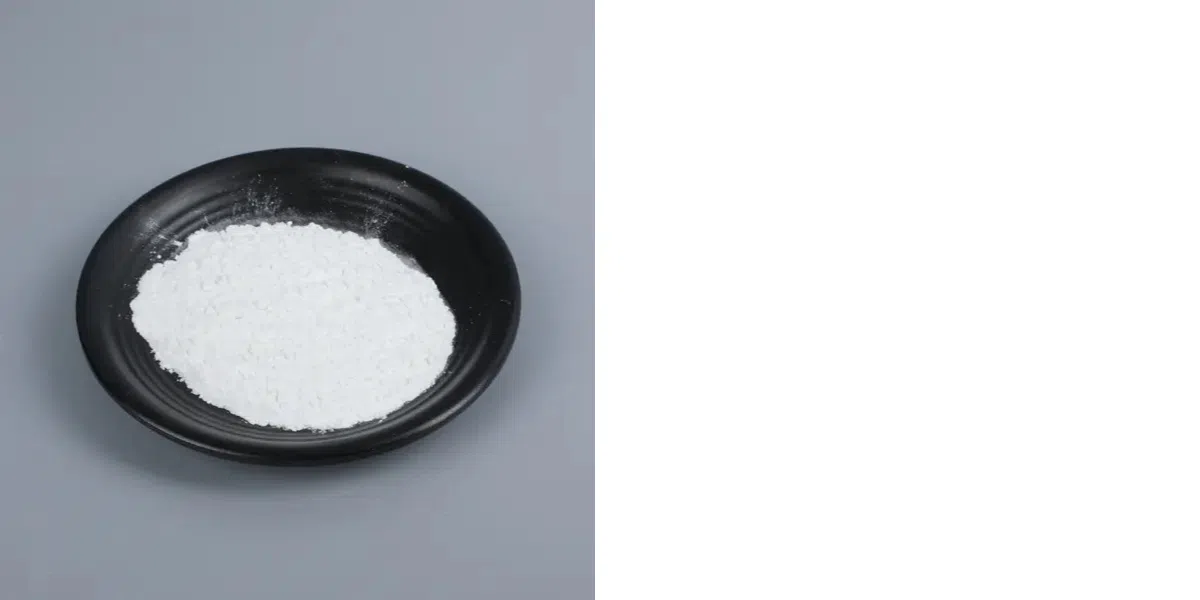
Chemical Properties
Melting point | 199 °C |
Boiling point | 609.3±48.0 °C(Predicted) |
density | 1.625±0.06 g/cm3(Predicted) |
storage temp. | Inert atmosphere,Room Temperature |
form | powder to crystal |
color | White to Almost white |
InChI | InChI=1S/C16H6O6/c17-13-9-5-4-7(6-11(9)15(19)21-13)8-2-1-3-10-12(8)16(20)22-14(10)18/h1-6H |
InChIKey | FYYYKXFEKMGYLZ-UHFFFAOYSA-N |
SMILES | C1(=O)C2=C(C(C3C=CC4C(=O)OC(=O)C=4C=3)=CC=C2)C(=O)O1 |
CAS DataBase Reference | 36978-41-3(CAS DataBase Reference) |
EPA Substance Registry System | [4,5'-Biisobenzofuran]-1,1',3,3'-tetrone (36978-41-3) |
Product Applications
2,3,3′,4′-Biphenyl Tetracarboxylic Dianhydride (a-BPDA) can undergo thermal imidization with polyamic acid (PAA) derived from p-phenylenediamine (PDA) or 4,4′-oxydiphenylamine (ODA), resulting in the formation of asymmetric biphenyl-based polyimides (PIs). Compared with the semi-rigid s-BPDA/PDA system, a-BPDA/PDA-based polyimides exhibit a more pronounced bent molecular chain structure. Interestingly, a-BPDA/PDA films annealed at 350°C demonstrate higher glass transition temperatures (Tg) than s-BPDA/PDA films prepared under identical conditions. The unexpectedly high Tg values of a-BPDA-based polyimides may be attributed to restricted conformational changes resulting from the cranked axial molecular motion. Furthermore, the diimide compound synthesized from a-BPDA and cyclohexylamine exhibits long-lasting luminescence, with an emission duration of up to 1.3 seconds following UV irradiation.


