Product Description
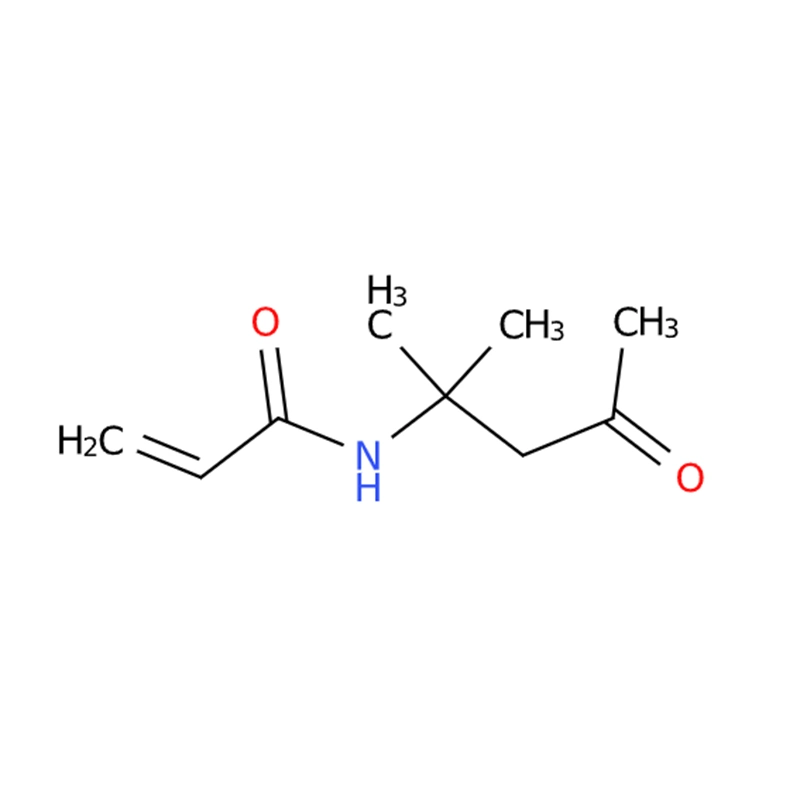
Diacetone acrylamide (DAAM) is a multifunctional monomer characterized by the presence of both an N-substituted amide group and a ketone group. Its ability to copolymerize with ethylene and various vinyl monomers makes it an effective component for introducing ketocarbonyl groups into polymer structures.
The incorporated ketocarbonyl groups can serve as active sites for crosslinking and grafting, facilitating the preparation of polymers with enhanced structural integrity and tailored performance. These properties make DAAM a valuable raw material for adhesives, thickening agents, paper-strengthening additives, crosslinking systems, and other specialty polymer applications.
Owing to its versatile reactivity and broad compatibility with different material systems, DAAM is extensively utilized in industrial coatings, adhesive formulations, household and personal care products, epoxy resin curing systems, photosensitive resin modification, textile processing additives, and materials for medical and healthcare applications.
Chemical Properties
| Melting point | 54-56 °C (lit.) |
| Boiling point | 120 °C (8 mmHg) |
| Density | 1.0873 (rough estimate) |
| Vapor pressure | 0.109Pa at 20℃ |
| Refractive index | 1.4200 (estimate) |
| Fp | >230 °F |
| Storage temp | Inert atmosphere,Room Temperature |
| Pka | 14.12±0.46(Predicted) |
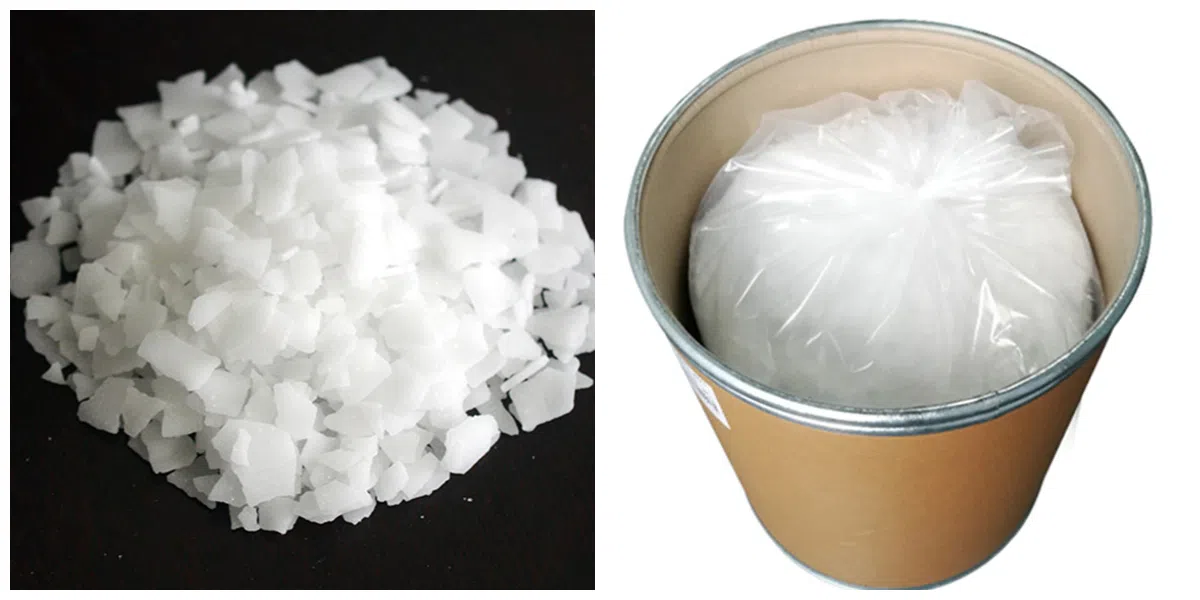
| Form | Crystalline Powder or Flakes |
| Color | White to cream |
| Water Solubility | soluble |
| Sensitive | Hygroscopic |
| Merck | 142,963 |
| BRN | 1928444 |
| InChIKey | OMNKZBIFPJNNIO-UHFFFAOYSA-N |
| LogP | 0.321 at 21℃ |
| CAS DataBase Reference | 2873-97-4(CAS DataBase Reference) |
| NIST Chemistry Reference | 2-Propenamide, n-(1,1-dimethyl-3-oxobutyl)-(2873-97-4) |
| EPA Substance Registry System | N-(1,1-Dimethyl-3-oxobutyl)acrylamide (2873-97-4) |
Safety Information
| Hazard Codes | Xn |
| Risk Statements | 22 |
| Safety Statements | 23-24/25 |
| WGK Germany | 1 |
| RTECS | AS3475000 |
| F | 3 |
| TSCA | Yes |
| HS Code | 29241990 |
| Hazardous Substances Data | 2873-97-4(Hazardous Substances Data) |
| Toxicity | LD50 orally in mice: 7.7 mmol/kg (Hashimoto) |
Product Application
Diacetone acrylamide (DAAM) is an important vinyl monomer with distinctive moisture-regulating properties. Although its homopolymer is insoluble in water, it can absorb moisture equivalent to approximately 20–25% of its own resin weight. When the relative humidity of the surrounding environment drops below 60%, the absorbed water is gradually released. Acting as a plasticizer within the polymer, water contributes to its unique physical properties and expands its potential applications across various industries.
(1) Moisture-Resistant Hair Styling and Perm Resins
In Japan, DAAM is used in the formulation of hair perm resins designed to provide enhanced moisture resistance. Hair treated with these resins can retain its intended style for longer periods, while reducing deformation caused by exposure to rain, washing, and humid conditions.
(2) Photosensitive Resin Applications
DAAM is also employed as a functional component in photosensitive resin formulations, offering several advantages:
Fast photosensitivity: Enables a rapid response during light exposure.
Excellent developability: Facilitates the removal of unexposed areas, helping produce sharp, well-defined patterns.
Reliable film performance: Contributes to the mechanical strength, solvent resistance, and water resistance of the cured material.
Beyond photosensitive systems, DAAM can also be utilized as:
A crosslinking agent for unsaturated polyester resins.
A crosslinking agent for diallyl phthalate resins.
A curing agent for epoxy resin systems.
(3) Other Industrial Applications
Owing to its distinctive moisture absorption and release behavior, as well as its versatility in polymer modification, DAAM is used in the development and manufacture of a broad range of functional materials, including:
Moisture-regulating resins, such as contact lens materials, anti-fog glass coatings, and marine antifouling or protective bottom coatings.
Pressure-sensitive adhesives and adhesive performance modifiers.
Binders for nonwoven fabrics and water-absorbing films.
Leather finishing agents and leather modifiers.
Paper-strengthening additives.
Antistatic polymers and specialty inks.
These diverse applications highlight the potential of DAAM as a functional monomer for developing polymer materials with specialized moisture management, adhesion, durability, and surface performance.