Cesium iodide (CsI) and related inorganic halide materials, particularly thallium-doped cesium iodide [CsI(Tl)], are extensively used as scintillation materials in detectors for high-energy particles and ionizing radiation. Early applications of vacuum-deposited CsI(Tl) thin films included X-ray imaging systems based on photoelectric conversion technology.
In modern digital X-ray imaging, CsI(Tl) scintillator layers play an important role due to their excellent X-ray scintillation efficiency, high spatial resolution, and compatibility with silicon-based photodetector arrays. These properties make CsI(Tl) a valuable material for advanced imaging systems that require accurate image reproduction, efficient radiation detection, and reliable signal conversion.
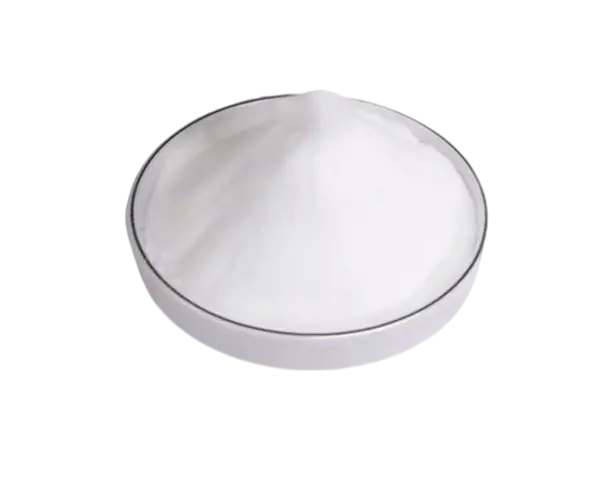
Cesium Iodide (Cs3I3) Chemical Properties
| Melting point | 626 °C (lit.) |
| Boiling point | 1280 °C |
| density | 4.51 g/mL at 25 °C (lit.) |
| refractive index | 1.7876 |
| Fp | 1280°C |
| storage temp. | Keep in dark place,Inert atmosphere,Room temperature |
| solubility | soluble in ethanol, methanol, acetone |
| form | beads |
| Specific Gravity | 4.51 |
| color | White |
| PH | pH(50g/l, 25℃) : 5.0~9.0 |
| Water Solubility | 74 g/100 mL (20 ºC) |
| Sensitive | Hygroscopic |
| Merck | 14,2014 |
| Exposure limits | ACGIH: TWA 0.01 ppm |
| Dielectric constant | 5.6(Ambient) |
| Stability: | Stable. Deliquescent. |
| CAS DataBase Reference | 7789-17-5(CAS DataBase Reference) |
| NIST Chemistry Reference | Cesium iodide(7789-17-5) |
| EPA Substance Registry System | Cesium iodide (CsI) (7789-17-5) |
Safety Information
| Hazard Codes | Xn,Xi |
| Risk Statements | 36/37/38-42/43-43 |
| Safety Statements | 22-36/37-45 |
| RIDADR | UN 3077 9 / PGIII |
| WGK Germany | 2 |
| RTECS | FL0350000 |
| F | 8 |
| TSCA | Yes |
| HS Code | 28276000 |
| Toxicity | LD50 i.p. in rats: 1.4 g/kg (Cochran) |
Cesium iodide (CsI) crystals are widely employed as scintillation materials in electromagnetic calorimeters used in particle physics research. They are also utilized as optical components in Fourier-transform infrared (FT-IR) spectrometers, where they serve as infrared-transmitting windows.
Compared with the more commonly used potassium bromide (KBr) optical components, cesium iodide offers a broader infrared transmission range, extending further into the far-infrared region. This characteristic makes it particularly useful for specialized infrared spectroscopy applications. However, CsI crystals present certain manufacturing challenges due to their relatively soft structure and lack of a distinct cleavage plane, which can make it difficult to produce smooth, flat, and precisely polished surfaces.
Because cesium iodide is sensitive to moisture, its optical crystals should be stored in dry, moisture-controlled containers to prevent water absorption and potential material degradation. Applying a thin germanium coating to the crystal surface can help reduce exposure to atmospheric moisture during handling and when replacing optical components in spectroscopic instruments.

Inventory 2-3 working days New production 7-10 working days