
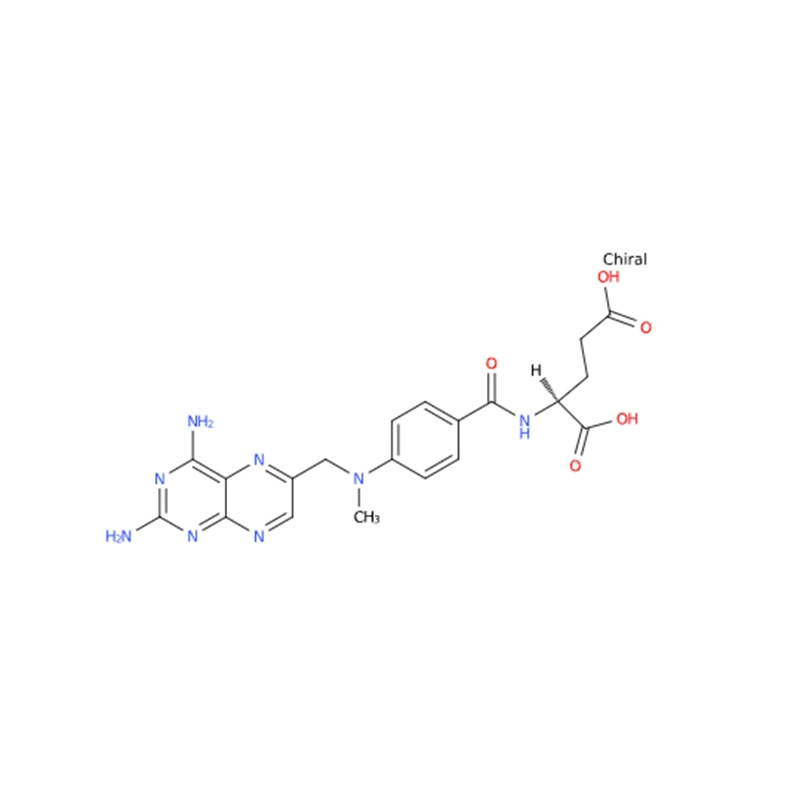
Products Description of Guanidine Hydrochloride 99.5% CAS#50-01-1
Guanidine hydrochloride, also known as carbamidine hydrochloride, is a white to slightly yellow crystalline solid that is almost insoluble in acetone, benzene, and ether. It is widely used as an intermediate in the synthesis of pharmaceuticals, pesticides, dyes, and other organic compounds.
Guanidine hydrochloride is an important raw material for the production of various medicines, including sulfadiazine, sulfamethylpyrimidine, sulfadimethylpyrimidine, and folic acid. It can also be applied as an antistatic agent for synthetic fibers.
The LD50 of methotrexate via intravenous injection in rats is 14 mg/kg.
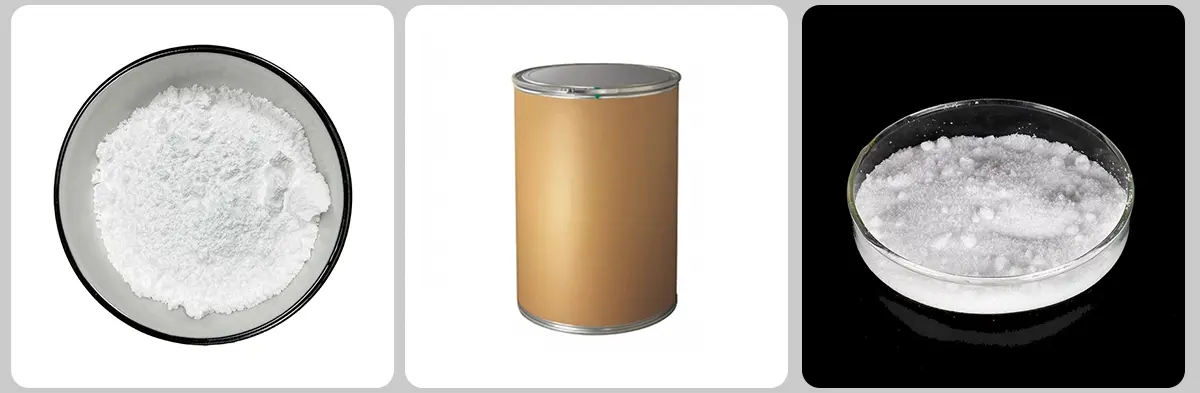
Product Parameters of Guanidinehydrochloride99.5%CAS#50-01-1
| CAS | No. 50-01-1 |
| CID | 5742 |
| EINECS(EC#) | 200-002-3 |
| Molecular Formula | CH6ClN3 (isomer) |
| Inchi | InChI=1S/CH5N3.ClH/c2-1(3)4;/h(H5,2,3,4);1H |
| InChIkey | PJJJBBJSCAKJQF-UHFFFAOYSA-N |
| Canonical Smiles | C(=N)(N)N.Cl |
| Isomers Smiles | C(=N)(N)N.Cl |
| Density | 1.18 g/mL at 25 °C(lit.) |
| Melting point | 180-185 °C(lit.) |
| Boiling point | 132.9 °C at 760 mmHg |
| Refractive index | n20/D 1.465 |
| Flash Point | 34.2 °C |
| Precise Quality | 95.025 |
| PSA | 75.89 |
| logP | 1.1409 |
| Solubility | H2O: 6?M, clear, colorless |
| Appearance | DryPowder; DryPowder, Liquid |
| Storage | Store at RT. |
| Chemical Properties | White cryst. powder |
| Color/Form | White to slightly yellow |
| Odo | Odorless |
| PH | 4.5-5.5 (100g/l, H2O, 20℃) |
| Water Solubility | H2O: 2280 g/L (20 oC) |
| Stability | Stable. Hygroscopic. Incompatible with strong oxidizing agents. |
| StorageTemp | Store at RT. |

Product Application of Methotrexate CAS#59-05-2
Leukemia Treatment: Traditionally, treatment was administered daily. Adults typically take 2.5–10 mg per day orally, with a total dose of 50–150 mg. Children receive 1.25–5 mg per day. Recent practice tends toward intermittent high-dose therapy, given orally or intramuscularly twice a week at 0.25–0.75 mg/kg per dose; adults are generally given 20–25 mg per dose. For intrathecal injection, the dosage is 10–15 mg per time for adults, while children receive 6–12 mg depending on age. Treatment is usually given once daily for 3 days, repeated every 4–8 weeks for maintenance or prevention.
Choriocarcinoma: Adults are typically given 10–30 mg orally or intramuscularly once daily for 5 consecutive days. The treatment course may be repeated depending on patient response.
Solid Tumors: Continuous intra-arterial infusion is preferred, combined with intermittent intramuscular administration of leucovorin (CF). The usual dosage is 25–50 mg/day of this product, along with 6–9 mg CF, administered intramuscularly every 4–6 hours.
Osteosarcoma: High-dose therapy is used in combination with CF rescue therapy. The dosage is generally 3–20 g/m², dissolved in 500–1000 mL of 5% glucose solution and infused intravenously over 4 hours. CF is started 2–6 hours after infusion at 6–12 mg intramuscularly (or orally), repeated every 6 hours for a total of 3 days. To ensure rapid drug elimination, electrolytes, fluids, and sodium bicarbonate should be supplemented on the first day and every 1–2 days thereafter, maintaining urine output above 3000 mL per day and ensuring alkalization. Liver function, kidney function, blood counts, and plasma methotrexate levels should be monitored daily.
Psoriasis: Due to significant side effects, it is rarely used. When applied, the dosage is 1.25 mg orally per dose, 2–3 times daily, with a treatment course of 6–9 days.