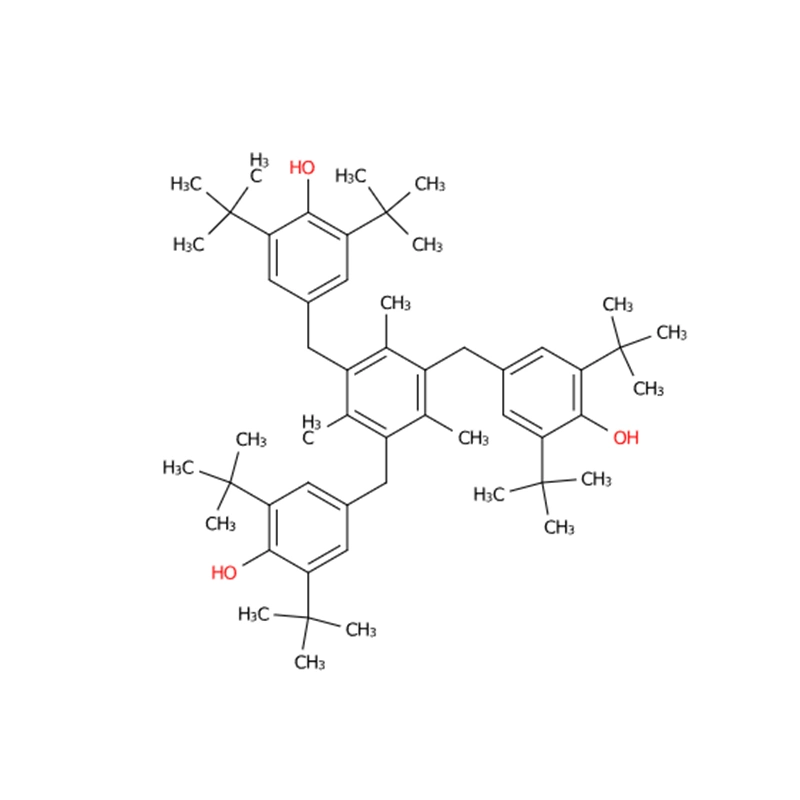
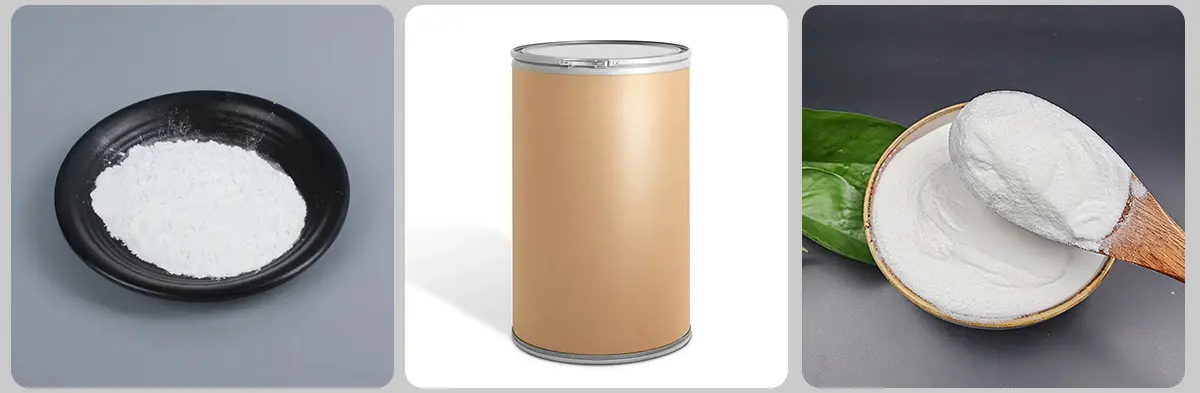
Antioxidant 1330 functions as a hindered phenolic compound that manifests as a white crystalline powder possessing a melting point exceeding 244°C. While entirely insoluble in aqueous systems, it exhibits distinct solubility profiles at 18°C across various organic media: registering 20 g per 100 g in benzene, 31.9 g per 100 g in methylene chloride, 1.7 g per 100 g in methylcyclohexane, 0.2 g per 100 g in methanol, and 0.1 g per 100 g in isopropyl alcohol.
This substance delivers dependable processability under elevated thermal conditions, exceptional resistance to thermal degradation, freedom from chromatic discoloration, zero pollutant output, and minimal toxicity, rendering it highly adaptable for an extensive array of industrial applications.
Antioxidant 1330 Chemical Properties
| Melting point | 248-250 °C(lit.) |
| Boiling point | 739.54°C (rough estimate) |
| density | 0.8883 (rough estimate) |
| refractive index | 1.5800 (estimate) |
| Fp | 321℃ |
| storage temp. | 2-8°C |
| solubility | Chloroform (Slightly), Methanol (Very Slightly, Heated, Sonicated) |
| pka | 11.91±0.40(Predicted) |
| color | White to Off-White |
| Water Solubility | 8.09μg/L at 20℃ |
| InChIKey | VSAWBBYYMBQKIK-UHFFFAOYSA-N |
| LogP | 17.17 |
| CAS DataBase Reference | 1709-70-2(CAS DataBase Reference) |
| EPA Substance Registry System | 1,3,5-Trimethyl-2,4,6-tris(3,5-di-tert-butyl-4-hydroxybenzyl)benzene (1709-70-2) |
| Hazard Codes | Xi |
| Risk Statements | 36/37/38 |
| Safety Statements | 26-36 |
| WGK Germany | 1 |
| RTECS | DC3750000 |
| HS Code | 2907299000 |
| Toxicity | LD50 oral in rat: 1500mg/kg |
Product Application of Antioxidant 1330 (CAS#1709-70-2):
Antioxidant 1330 functions as a high-molecular-weight hindered phenolic stabilizer well-suited for an extensive variety of polymeric substrates, encompassing thermoplastic polyesters, polyamides, styrenic resins, polyolefins, polyethylene terephthalate (PET), polybutylene terephthalate (PBT), alongside elastomeric systems like polyurethane and natural rubber. It achieves complete miscibility with host resins while imparting exceptional resistance to chemical extraction and corrosive degradation, minimal volatility during thermal cycling, superior antioxidative efficiency, and reliable electrical insulation properties.
This antioxidant proves especially optimal for high-temperature processed polyolefin products, including polyethylene and polypropylene piping systems, precision injection-molded structural components, electrical wiring, insulated cabling, and related high-performance industrial applications.