Products Description
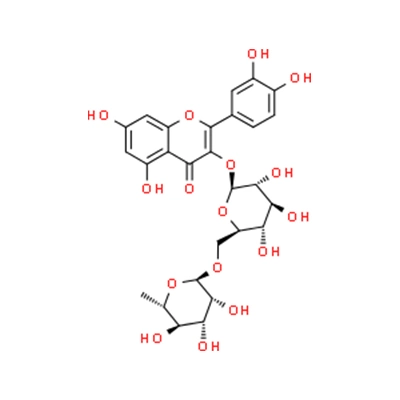
Botanical Origin: Rutin is a quercetin‑based flavonol glycoside extracted from plants. It distributes widely across rue, tartary buckwheat, pagoda‑tree buds, catalpa leaves and tomato plant parts. Around 3% rutin is found in pre‑bloom dried tartary buckwheat. Additional natural sources cover jujube, hawthorn, ginkgo, goji berry and other herbal plants. Flower buds of Sophora japonica hold over 20% rutin and serve as the principal industrial extraction material in China.
Chemical Behaviour: It is susceptible to hydrolysis in high‑acid or high‑alkali surroundings, and shows poor color stability in alkaline food media.
Functional Traits: Exhibits antioxidant activity; improves light resistance of food‑grade pigment preparations and inhibits aroma fading. Combined application with vitamin E yields synergistic enhancement of antioxidative efficacy.
Rutin Chemical Properties
| Melting point | 195 °C (dec.)(lit.) |
| alpha | D23 +13.82° (ethanol); D23 -39.43° (pyridine) |
| Boiling point | 576.13°C (rough estimate) |
| density | 1.3881 (rough estimate) |
| refractive index | 1.7650 (estimate) |
| storage temp. | Keep in dark place,Sealed in dry,2-8°C |
| solubility | pyridine: 50 mg/mL |
| Colour Index | 75730 |
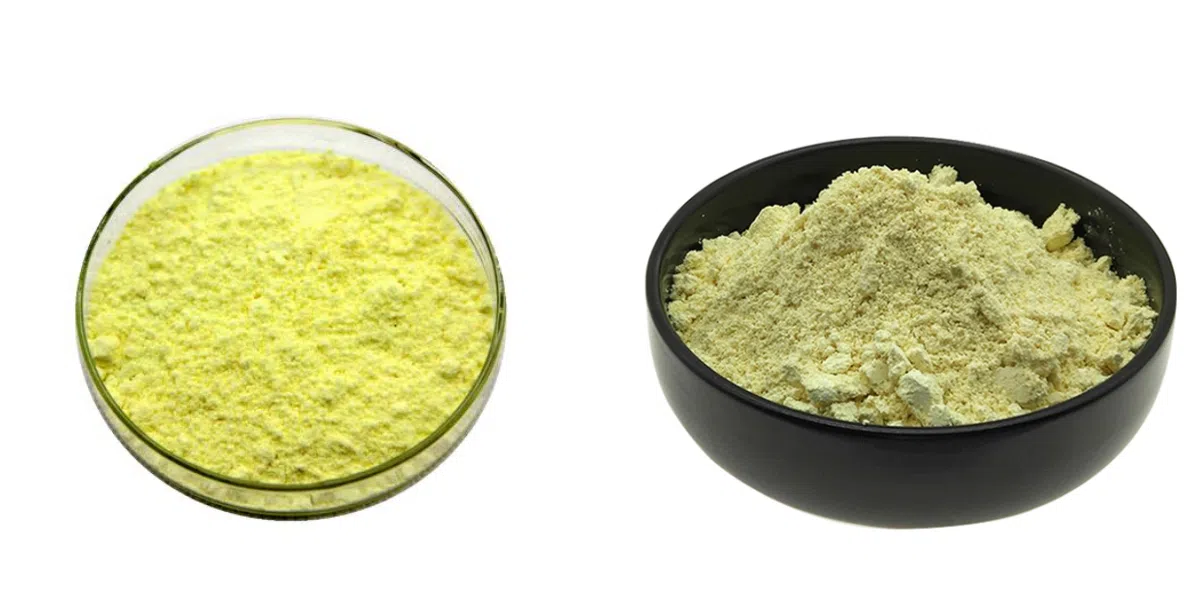
| form | powder |
| pka | 6.17±0.40(Predicted) |
| color | yellow to green |
| Water Solubility | 12.5 g/100 mL |
| Merck | 8304 |
| Stability: | Hygroscopic |
| LogP | -2.020 (est) |
| CAS DataBase Reference | 153-18-4(CAS DataBase Reference) |
| NIST Chemistry Reference | Flavone-3-rutinoside, 3,3',4',5,7-pentahydroxy(153-18-4) |
| EPA Substance Registry System | Rutin (153-18-4) |