Fructose is a naturally occurring simple sugar found in many fruits and other plant-based foods. Over recent decades, greater exposure to fructose through sweetened beverages and processed foods has attracted considerable attention in nutritional and metabolic research. In many diets, fructose is consumed not only from fresh fruit but also from sucrose and high-fructose corn syrup (HFCS). During digestion, sucrose is broken down into glucose and fructose in approximately equal proportions, whereas HFCS contains varying amounts of free glucose and fructose, depending on its formulation. For example, HFCS-55, commonly used in some beverages, typically contains about 55% fructose, 42% glucose, and small amounts of other saccharides. Historical dietary surveys in the United States documented an increase in estimated average fructose intake from approximately 37 grams per day in 1977–1978 to around 49 grams per day during 1999–2004. Higher intakes were particularly associated with young adults and frequent consumption of sugar-sweetened drinks.
| Melting point | 119-122 °C (dec.)(lit.) |
| alpha | -92.25 º (c=10,H2O,on dry sub.) |
| Boiling point | 232.96°C (rough estimate) |
| density | 1.59 |
| bulk density | 700-800kg/m3 |
| refractive index | -92 ° (C=4, H2O) |
| storage temp. | room temp |
| solubility | H2O: 1 M at 20 °C, clear, colorless |
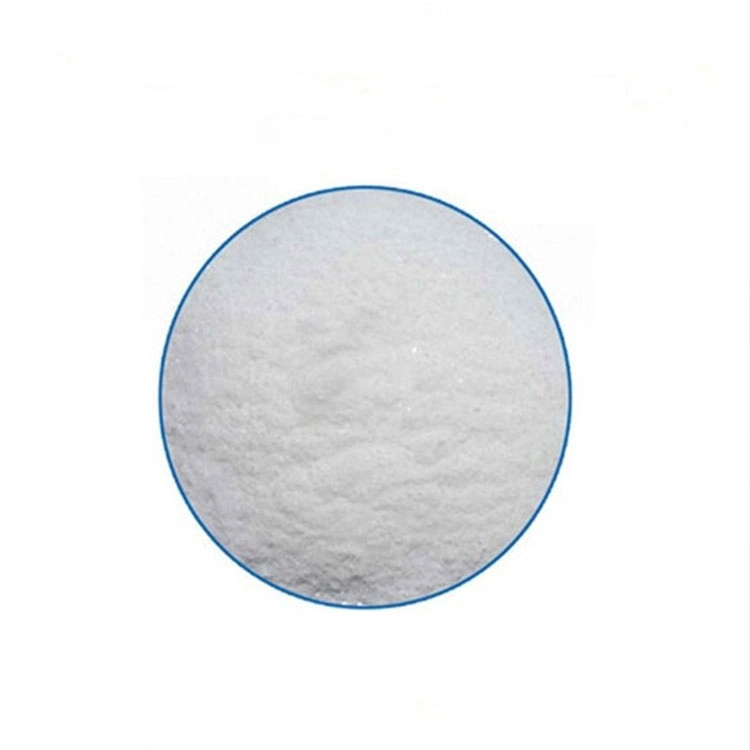
| form | Crystals or Crystalline Powder |
| pka | pKa (18°): 12.06 |
| color | White |
| PH | 5.0-7.0 (25℃, 0.1M in H2O) |
| Odor | at 100.00 %. odorless |
| Odor Type | odorless |
| biological source | natural (organic) |
| Optical Rotation | [α]20/D 93.5 to 91.0°, c = 10% in H2O |
| Water Solubility | 3750 g/L (20 ºC) |
| λmax | λ: 260 nm Amax: 0.04 λ: 280 nm Amax: 0.04 |
| Merck | 14,4273 |
| BRN | 1239004 |
| Stability: | Stable. Incompatible with strong oxidizing agents. |
| Major Application | pharmaceutical (small molecule) |
| Cosmetics Ingredients Functions | HUMECTANT |
| Cosmetic Ingredient Review (CIR) | D(-)-Fructose (57-48-7) |
| InChI | 1S/C6H12O6/c7-1-3(9)5(11)6(12)4(10)2-8/h3,5-9,11-12H,1-2H2/t3-,5-,6-/m1/s1 |
| InChIKey | LKDRXBCSQODPBY-GWVKGMJFSA-N |
| SMILES | OC[C@@H](O)[C@@H](O)[C@H](O)C(=O)CO |
| LogP | -1.029 (est) |
| CAS DataBase Reference | 57-48-7(CAS DataBase Reference) |
| NIST Chemistry Reference | «beta»-D-Fructose(57-48-7) |
| EPA Substance Registry System | D-Fructose (57-48-7) |
| Hazard Codes | C |
| Risk Statements | 34 |
| Safety Statements | 24/25-45-36/37/39-27-26 |
| WGK Germany | 3 |
| RTECS | LS7120000 |
| F | 3 |
| Autoignition Temperature | 360 °C |
| TSCA | TSCA listed |
| HS Code | 17025000 |
| Storage Class | 11 - Combustible Solids |
Fructose is a sweetener that is a monosaccharide found naturally in fresh fruit and honey. It is obtained by the inversion of sucrose by means of the enzyme invertase and by the isomerization of corn syrup. It is 130–180 in sweetness range as compared to sucrose at 100 and is very water soluble. It is used in baked goods because it reacts with amino acids to produce a browning reaction. It is used as a nutritive sweetener in low-calorie beverages. It is also termed levulose and fruit sugar.
Inventory 2-3 working days New production 7-10 working days