
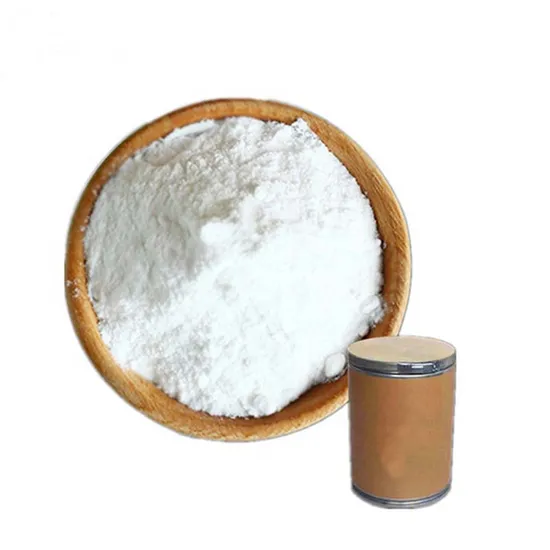
Products Description of Tetraethylammonium Chloride CAS#56-34-8
Tetraethylammonium chloride (TEAC, CAS 56-34-8), an organic quaternary ammonium salt with the molecular formula C₈H₂₀ClN. It is widely recognized as a non-selective potassium channel blocker and serves as an excellent substrate for organic cation transporters in biological research. Besides its classic pharmacological characteristics, this compound also exhibits notable antitumor activity, making it a valuable research material in biomedical and pharmaceutical development. It is commonly adopted as a biological probe for ion channel mechanism studies, as well as a key raw material for relevant pharmaceutical intermediate exploration.
Tetraethylammonium Chloride Chemical Properties
| Melting point | 39°C |
| Boiling point | 273.32°C (rough estimate) |
| density | 1.08 |
| refractive index | 1.5480 (estimate) |
| storage temp. | Inert atmosphere,Room Temperature |
| solubility | methanol: 0.1 g/mL, clear, colorless |
| form | Crystalline Powder |
| color | white to light yellow |
| PH | 4.0 to 7.0(50g/L, 25℃) |
| Water Solubility | Soluble in water, ethanol, chloroform, or acetone |
| λmax | λ: 260 nm Amax: 0.03 λ: 280 nm Amax: 0.03 |
| Sensitive | Hygroscopic |
| Merck | 14,9200 |
| BRN | 3563247 |
| Stability: | Stable. Incompatible with strong oxidizing agents. Protect from moisture. |
| InChIKey | YMBCJWGVCUEGHA-UHFFFAOYSA-M |
| CAS DataBase Reference | 56-34-8(CAS DataBase Reference) |
| EPA Substance Registry System | Tetraethylammonium chloride (56-34-8) |
Product Application of Tetraethylammonium Chloride CAS#56-34-8
Tetraethylammonium chloride functions as an effective phase‑transfer catalyst to facilitate multi‑phase polymerization reactions, improving reaction efficiency and product yields in organic synthetic workflows. In electrochemistry research, it serves as a supporting electrolyte for membrane‑transport studies, helping maintain stable ionic strength within testing systems. Within analytical chemistry, this quaternary‑ammonium salt acts as a key laboratory reagent for qualitative tests of antimony and bismuth, as well as for quantitative determination of gold; meanwhile it is widely adopted as supporting electrolyte in polarographic analysis to stabilize measuring conditions and reduce interference currents.
In neurophysiology and pharmacology research, it is well‑known as a classic potassium‑channel inhibitor. It can suppress receptor‑mediated potassium‑ion flux, and further block the physiological response triggered by acetylcholine neurotransmitter signalling. It is frequently applied as a tool compound to investigate ion‑channel mechanisms, synaptic transmission and related cellular pharmacological behaviours.


