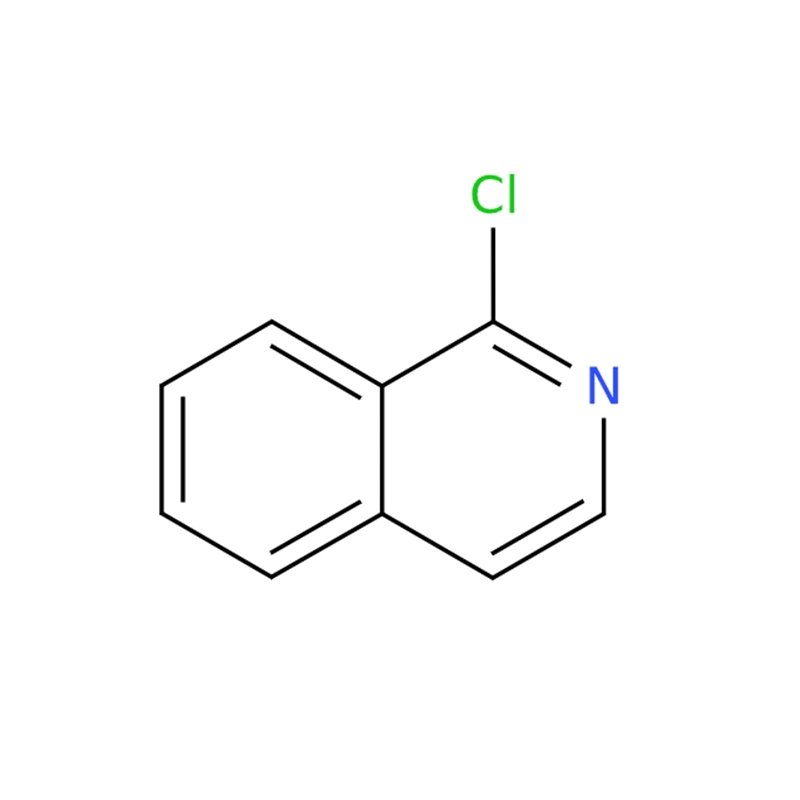
1-Chloroisoquinoline CAS#19493-44-8 Product Description
1-Chloroisoquinoline is an important nitrogen-containing heterocyclic compound widely used as an intermediate in organic synthesis and pharmaceutical research. It serves as a versatile building block for the preparation of various isoquinoline derivatives and biologically active compounds, including 1-phenylisoquinoline. The chlorine substituent at the 1-position of the isoquinoline ring provides a reactive site for further chemical modification, allowing the introduction of different functional groups and molecular structures through subsequent synthetic transformations.
In addition, 1-Chloroisoquinoline can be synthesized using N-vinylbenzamide as a starting material through suitable cyclization and chlorination chemistry. Its distinctive fused-ring structure and versatile reactivity make it a useful intermediate in heterocyclic chemistry, medicinal chemistry research, and the development of pharmaceutical compounds. It is primarily utilized in laboratory research and development, organic synthesis, and the preparation of specialized isoquinoline-based intermediates.
1-Chloroisoquinoline CAS#19493-44-8 Chemical Properties
| Melting point | 31-36 °C (lit.) |
| Boiling point | 274-275 °C/768 mmHg (lit.) |
| Density | 1.2108 (rough estimate) |
| Refractive index | 1.6342 (estimate) |
| Fp | >230 °F |
| Storage temp | Inert atmosphere,2-8°C |
| Pka | 2.03±0.30(Predicted) |
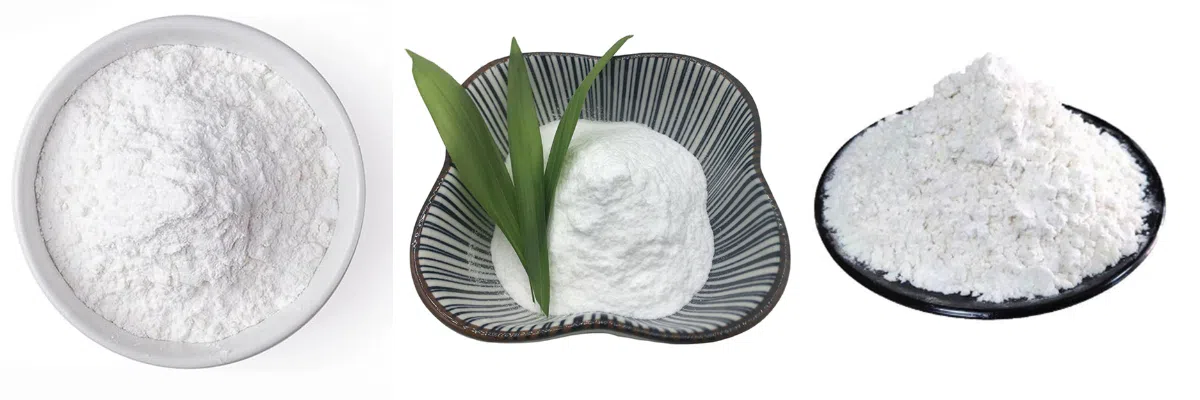
| Form | Low Melting Solid, Crystals and/or Chunks |
| Color | White to yellow |
| Water Solubility | Insoluble in water. |
| BRN | 2996 |
| InChIKey | MSQCQINLJMEVNJ-UHFFFAOYSA-N |
| CAS DataBase Reference | 19493-44-8(CAS DataBase Reference) |
1-Chloroisoquinoline CAS#19493-44-8 Safety Information
| Hazard Codes | Xi |
| Risk Statements | 36/37/38 |
| Safety Statements | 26-36 |
| WGK Germany | 3 |
| HS Code | 29334900 |
1-Chloroisoquinoline CAS#19493-44-8 Product Application
1-Chloroisoquinoline is also utilized as a versatile substrate in transition-metal-catalyzed cross-coupling reactions, providing opportunities for the preparation of structurally diverse isoquinoline derivatives. It can participate in manganese-catalyzed coupling reactions with aryl and alkyl magnesium halides, enabling the introduction of different carbon-based substituents onto the isoquinoline ring. In addition, it is employed in palladium-catalyzed cross-coupling reactions with heteroarylboronic acids and their corresponding esters, facilitating the formation of carbon–carbon bonds between isoquinoline and heteroaromatic structures. These transformations expand its synthetic utility in heterocyclic chemistry and support the development of complex organic molecules, pharmaceutical intermediates, and potentially bioactive compounds.